
by Julia Herdman | Jul 3, 2017 | Blog, Exploration and Discovery, Women in Science
Humble Beginnings
Jeanne Baret was born on July 27, 1740, in the village of La Comelle in the Burgundy region of France. Her record of baptism survives and identifies her as the legitimate issue of Jean Baret and Jeanne Pochard. Her father is identified as a day labourer and seems likely to have been illiterate, as he did not sign the parish register.
Housekeeper and Servant
At some point between 1760 and 1764, Baret became employed as housekeeper to naturalist, Philibert Commerson, who had settled in Toulon-sur-Arroux, some 20 km to the south of La Comelle, upon his marriage in 1760. Commerson’s wife, who was the sister of the parish priest, died shortly after giving birth to a son in April 1762, and it seems that Baret took over management of Commerson’s household at that time, if not before.
Lover and Friend
It seems Baret and Commerson shared a more than an interest in his household as she became pregnant in 1764. French law at that time required women who became pregnant out of wedlock to obtain a “certificate of pregnancy” in which they could name the father of their unborn child. Baret’s certificate, from August 1764, survives; it was filed in a town 30 km away and witnessed by two men of substance who likewise had travelled a considerable distance from their homes. She refused to name the father of her child, but historians do not doubt that it was Commerson and that it was Commerson who had made the arrangements with the lawyer and witnesses on her behalf.
Paris and a Child
Shortly afterward, Baret and Commerson moved together to Paris, where she continued in the role of his housekeeper having left his legitimate son in the care of his brother-in-law in Toulon-sur-Arroux and never saw him again in his lifetime. Baret apparently changed her name to “Jeanne de Bonnefoy” during this period. Her child was born in December 1764 and was given the name Jean-Pierre Baret. Baret gave the child up to the Paris Foundlings Hospital and he was quickly placed with a foster mother. The child suffered the fate of so many at that time and died in the summer of 1765.
The Expedition
That year Commerson was invited to join Bougainville’s expedition to circumnavigate the globe to claim territory for the French king similar to the expeditions of his contemporary the English Captain Cook. Commerson hesitated in accepting because he was often in poor health; he required Baret’s assistance as a nurse as well as in running his household and managing his collections and papers. Finally, he accepted and as his appointment allowed him a servant, paid as a royal expense, he decided to take his companion and helpmate Jeanne with him. The problem was that women were completely prohibited on French navy ships at this time. Together they devised a plan for Jeanne to disguise herself as a man and join the ship just before it sailed. Before leaving Paris, Commerson drew up a will in which he left to “Jeanne Baret, known as de Bonnefoi, my housekeeper”, a lump sum of 600 livres along with back wages owed and the furnishings of their Paris apartment.
Breaking the Rules
The pair boarded the ship Étoile in December 1766 and because of the vast quantity of equipment Commerson brought with him the ship’s captain, François Chesnard de la Giraudais, gave up his own large cabin to Commerson and his “assistant”. This fortuitous act gave Baret significantly more privacy than she might otherwise have expected on board and she did not have to use the shared heads like other members of the crew to relieve herself.
Surviving accounts of the expedition differ on when Baret’s gender was first discovered. According to Bougainville, rumours that Baret was a woman had circulated for some time, but her gender was not finally confirmed until the expedition reached Tahiti in April 1768. As soon as she and Commerson landed on shore to botanize, Baret was immediately surrounded by Tahitians who cried out that she was a woman. It was necessary to return her to the ship to protect her from the excited Tahitians. Bougainville recorded this incident in his journal some weeks after it happened when he had an opportunity to visit the Étoile to interview Baret personally.
Another account says that there was much speculation about Baret’s gender early in the voyage and asserts that Baret claimed to be a eunuch when confronted directly by the Captain, La Giraudais (whose own official log has not survived). After crossing the Pacific, the expedition was desperately short of food. After a brief stop for supplies in the Dutch East Indies, the ships made a longer stop at the island of Mauritius in the Indian Ocean. This island, known as Isle de France, was then an important French trading station. Commerson was delighted to find that an old friend and fellow botanist Pierre Poivre was serving as governor on the island, and Commerson and Baret remained behind as Poivre’s guests, probably encouraged by Bougainville as it allowed him to rid himself of the problem of a woman illegally on board his expedition.
Assistant and Housekeeper
On Mauritius, Baret continued in her role as Commerson’s assistant and housekeeper. It is likely that she accompanied him to botanize on Madagascar and Bourbon Island in 1770-1772. Commerson continued to have serious health problems, and he died in Mauritius in February 1773. After Commerson’s death, Baret seems to have found work running a tavern in Port Louis for a time. Then, on 17 May 1774, she married Jean Dubernat, a non-commissioned officer in the French Army who was most likely on the island on his way home to France.
Marriage and Return to France
There is no record of exactly when Baret and her husband arrived in France, thus completing her voyage of circumnavigation. Most likely it was sometime in 1775. In April 1776, she received the money that was due to her under Commerson’s will after applying directly to the Attorney General. With this money, she settled with Dubernat in his native village of Saint-Aulaye where he may have set up as a blacksmith.
State Recognition of Services to Botany
In 1785, Baret was granted a pension of 200 livres a year by the Ministry of Marine. The document granting her this pension makes clear the high regard with which she was held by this point:
Jeanne Baret, by means of a disguise, circumnavigated the globe on one of the vessels commanded by Mr de Bougainville. She devoted herself in particular to assisting Mr de Commerson, doctor and botanist, and shared with great courage the labours and dangers of this savant. Her behaviour was exemplary and Mr de Bougainville refers to it with all due credit…. His Lordship has been gracious enough to grant to this extraordinary woman a pension of two hundred livres a year to be drawn from the fund for invalid servicemen and this pension shall be payable from 1 January 1785. She died in Saint-Aulaye on August 5, 1807, at the age of 67.
Honours and Publications
Commerson named many of the plants he collected after friends and acquaintances. One of them, a tall shrub with dark green leaves and white flowers that he found on Madagascar, he named Baretia Bonafidia. But Commerson’s name for this genus did not survive, as it had already been named by the time his reports reached Paris; it is currently known as Turraea. While over seventy species are named in honour of Commerson, only one, Solanum baretiae, honors Baret.
For many years, Bougainville’s published journal – a popular best-seller in its day, in English translation as well as the original French – was the only widely available source of information about Baret. More recent scholarship has uncovered additional facts and documentation about her life, but much of the new information remained little-known and inaccessible to the general public, particularly outside France. The first English-language biography of Baret, by John Dunmore, was not published until 2002, and then only in New Zealand. Other articles appeared only in scholarly journals.
The 2010 biography of Baret by Glynis Ridley, The Discovery of Jeanne Baret, brought Baret to the attention of a wider audience and helped to overturn some of the old misconceptions about her life.
Julia Herdman writes historical fiction that puts women to the fore. Her latest book Sinclair, Tales of Tooley Street Vol. 1. is Available on Amazon
Amazon Australia
Amazon Canada
Amazon New Zealand
Amazon South Africa
Amazon USA
by Julia Herdman | May 25, 2017 | Blog, British History, Literature, Medicine, Romance
Like my hero Sinclair, the Romantic poet John Keats (1795-1821) studied to become doctor but unlike Sinclair’s his heart was not really in it. Keats’s letters to Fanny Brawne are among the most famous love letters ever written. As next-door neighbours, they exchanged numerous short notes, and occasionally more passionate letters.

Fanny Brawne
Keats trained as an apothecary at Guy’s Hospital from 1815 to 1816 and attended lectures on the principles and practice of surgery by the famous surgeon Sir Astley Cooper who also makes a brief appearance in my novel. In 1816, Keats received his apothecary’s licence, which made him eligible to practise as an apothecary, physician, and surgeon.
Keats’s desire to become a poet led him to abandon medicine soon after he completed his training. In his ‘Ode to a Nightingale’ recalls his experience of caring for the dying:
The weariness, the fever and the fret
Here, where men sit and hear each other groan;
Where palsy shakes a few, sad, last grey hairs,
Where youth grows spectre-thin, and dies.
Ironically, it was his medical training that made him such a good carer for his brother Tom when he died from tuberculosis. In giving that care Keats became infected with the disease himself; there was no inoculation at the time, the now well-know BCG vaccine was first used in humans in 1921. Infection for Keats meant certain death but not before, he fell in love and wrote some of the world’s greatest poetry and love letters. Here is one of them.
“25 College Street, London
My dearest Girl,
This moment I have set myself to copy some verses out fair. I cannot proceed with any degree of content. I must write you a line or two and see if that will assist in dismissing you from my Mind for ever so short a time. Upon my Soul I can think of nothing else – The time is passed when I had power to advise and warn you again[s]t the unpromising morning of my Life – My love has made me selfish. I cannot exist without you – I am forgetful of every thing but seeing you again – my Life seems to stop there – I see no further. You have absorb’d me. I have a sensation at the present moment as though I was dissolving – I should be exquisitely miserable without the hope of soon seeing you. I should be afraid to separate myself far from you. My sweet Fanny, will your heart never change? My love, will it? I have no limit now to my love – You note came in just here – I cannot be happier away from you – ‘T is richer than an Argosy of Pearles. Do not threat me even in jest. I have been astonished that Men could die Martyrs for religion – I have shudder’d at it – I shudder no more – I could be martyr’d for my Religion – Love is my religion – I could die for that – I could die for you. My Creed is Love and you are its only tenet – You have ravish’d me away by a Power I cannot resist: and yet I could resist till I saw you; and even since I have seen you I have endeavoured often “to reason against the reasons of my Love.” I can do that no more – the pain would be too great – My Love is selfish – I cannot breathe without you. Yours for ever, John Keats
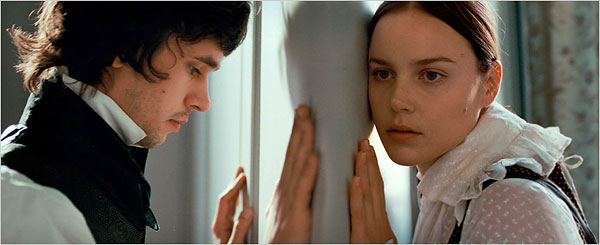
Their love story was made into a film - Bright Star in 2009. It stars Ben Whishaw as Keats and Abbie Cornish as Fanny. It was directed by Jane Campion, who wrote the screenplay inspired by Andrew Motion’s biography of Keats; Motion served as a script consultant on the film. The film was in the main competition at the 62nd Cannes Film Festival, and was first shown to the public on 15 May 2009.The film’s title is a reference to a sonnet by Keats titled “Bright star, would I were steadfast as thou art”, which he wrote while he was with Brawne.
For more see: http://englishhistory.net/keats/letters/love-letter-to-fanny-brawne-13-october-1819/
Julia Herdman writes #historical #fiction that puts women to the fore. Her latest book Sinclair, Tales of Tooley Street Vol. 1. is Available on Amazon – Paperback £10.99 Kindle £2.29 Also available on:
Amazon Australia
Amazon Canada
Amazon New Zealand
Amazon South Africa
Amazon USA

by Julia Herdman | May 19, 2017 | Blog, British History, Medicine, Politics, Science, Society, Women in Science, Writing about history
Throughout her life, Florence Nightingale’s gift for mathematics was often to be a source of frustration for her. This was because many of those she sought to influence simple did not understand numbers. In 1891 she wrote that: “Though the great majority of cabinet ministers, of the army, of the executive, of both Houses of Parliament, have received a university education, what has that university education taught them of the practical application of statistics?”
Nightingale came to prominence while training and managing nurses during the Crimean War, where she organised the tending to wounded soldiers. She gave nursing a highly favourable reputation and became an icon of Victorian culture, especially in the persona of “The Lady with the Lamp” making rounds of wounded soldiers at night. She was revered more as a representative of the female carer than the promoter of scientific medicine.
Florence Nightingale was born on 12 May 1820 into a rich, upper-class, well-connected British family at the Villa Colombaia,in Florence, Italy, and was named after the city of her birth. Florence’s older sister Frances Parthenope had similarly been named after her place of birth, Parthenope, a Greek settlement now part of the city of Naples. The family moved back to England in 1821, with Nightingale being brought up in the family’s homes at Embley, Hampshire and Lea Hurst, Derbyshire.
As a young woman, Nightingale was described as attractive, slender and graceful. While her demeanour was often severe, she was said to be very charming and possess a radiant smile. Her most persistent suitor was the politician and poet Richard Monckton Milnes, but after a nine-year courtship she rejected him, convinced that marriage would interfere with her ability to follow her calling to nursing.
In 1853, Nightingale took the post of superintendent at the Institute for the Care of Sick Gentlewomen in Upper Harley Street, London, a position she held until October 1854. Her father had given her an annual income of £500 (roughly £40,000/US$65,000 in present terms), which allowed her to live comfortably and to pursue her career. A year later, on 21 October 1854, Nightingale and a staff of 38 women volunteer nurses that she trained arrived in Scutari, the base for casualties from the war being waged in Crimea between the British, France, The Ottoman Empire and Sardinia on one side and the Russian Empire on the other.
Immediately, Florence calculated that deaths from disease were seven times those arising in battle and used the information to campaign for better food, hygiene, and clothing for the troops. She persuaded the government to commission Isambard Kingdom Brunel to design a prefabricated hospital to be shipped out to Scutari, though it arrived after hostilities had ceased.
Upon returning to England, Florence continued her work and calculated that, even in times of peace, mortality among supposedly healthy soldiers, aged 25–35 and living in barracks, was double that of the civilian population. She wrote to Sir John McNeill (who was conducting the inquiry into the mismanagement of the Crimean campaign): “It is as criminal to have a mortality of 17, 19 and 20 per thousand in the line, artillery and guards, when that in civil life is only 11 per thousand, as it would be to take 1,100 men out upon Salisbury Plain and shoot them.”
She bombarded the commissioners with questions about the relationship between the death rates in barracks and such factors as the provision of water, sewerage, ventilation, accommodation, and food, using a ‘coxcomb’ chart (a sort of pie chart) to press home her points. She used her contacts to ensure that her views received publicity in newspapers. The commission reported in 1863, accepting most of her recommendations and Florence then used her royal connections to ensure that they were put into effect. Death rates fell by 75 percent.
Florence’s campaigns continued to the end of her life,1891. She didn’t get everything right. Her analysis of the 19th‑century cholera epidemics convinced her that they were caused by foul air, not polluted water and her influence was such that she probably hampered the fight against the disease. But, despite such miscalculations, she was certainly a passionate statistician and reformer.
Sources: Wikipedia, http://www.historyextra.com/article/people-history/florence-nightingale-nursing-numbers
Illustration: A portrait of Florence aged about 20 by August Egg.c. 1840.
Julia Herdman writes historical fiction that puts women to the fore. Her latest book Sinclair, Tales of Tooley Street Vol. 1. is Available on Amazon – Paperback and Kindle. Also available on:
Amazon Australia
Amazon Canada
Amazon New Zealand
Amazon South Africa
Amazon USA

by Julia Herdman | Apr 25, 2017 | Blog, Europe, Exploration and Discovery, France, Science, Society, Women and Children, Women in Science
Astronomy, mathematics and physics were popular fields of study for many of the brightest 18th-century women with access to money and books. Gabrielle-Emilie Le Tonnelier de Breteuil was one such woman. She was the daughter of the French court’s chief of protocol and her father rather unusually for the time encouraged her education. By the time she was twelve she was fluent in Latin, Italian, Greek and German.
Gabrielle-Emilie was a precocious teenager as well as a child genius; she liked to dance, was a passable performer on the harpsichord, sang opera, and was an amateur actress. Being short of money for books, she used her mathematical skills to devise highly successful strategies for gambling. Her mother Gabrielle-Anne was horrified tried to have her clever daughter sent to a convent.
In 1725 Gabrielle-Emilie married the Marquis du Chatelet at the age of 19 and lived the life of a courtier at the French court. She bore her husband three children, but at age 27 she began studying mathematics seriously and then branched into physics. This interest intensified when she started an affair with the philosopher Voltaire. Their friendship, if not their relationship, was lifelong and one of mutual respect and admiration.
Her philosophical magnum opus, Institutions de Physique or Foundations of Physics, was published in 1740 when she was 34. It was an immediate success, circulated widely, and republished and translated into several other languages within two years of its publication. With a growing reputation in the world of men, she participated in the famous vis viva debate concerning the calculation of the motion of orbiting bodies - the planets. However, Du Chatelet’s most lasting contribution to science was her French translation of Isaac Newton’s Principia, which is still in use today.
At age 43, she fell in love with a young military officer and became pregnant; she died following complications during the birth of their child. Posthumously, her ideas were included in the Encyclopédie of Denis Diderot and Jean le Rond D’Alembert.
Sources: Smithsonian Magazine, Wikipedia, Illustration: The Granger Collection, New York.
Iona McNeal, is a character in my new novel, Sinclair. Iona is a bright young woman, the daughter of the head of Edinburgh’s medical school. She studies mathematics, physics and astronomy at home. You can find out what happens to her in my latest book Sinclair, Tales of Tooley Street Vol. 1. Available on Amazon – Paperback £10.99 and on Kindle
Also available on:
Amazon Australia
Amazon Canada
Amazon New Zealand
Amazon South Africa
Amazon USA
From Housemaid to Commit Catcher - Caroline Herschel
Witch or Saint ? Maria Gaetana Agnesi
Nursing by Numbers
Byron’s Daughters - A Tale of Three Sisters
by Julia Herdman | Apr 9, 2017 | Blog, British History, Disasters, Science, Writing about history
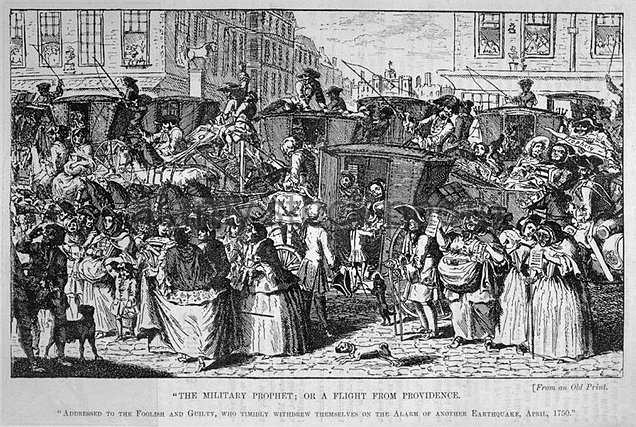
On the 8th of March, 1750, an earthquake shook London. The shock was at half past five in the morning. It awoke people from their sleep and frightened them out of their houses. A servant maid in Charterhouse-square, was thrown from her bed, and had her arm broken; bells in several steeples were struck by the chime hammers; great stones were thrown from the new spire of Westminster Abbey; dogs howled in uncommon tones; and fish jumped half a yard above the water. London had experienced a shock only a month before, namely, on the 8th of February 1750, between 12 and 1 o’clock in the day and at Westminster, the barristers were so alarmed that they imagined the hall was falling!
Most people (including academics) saw the tremors as the work of God. However, The Gentleman’s Magazine, (founded by Edward Cave, alias ‘Sylvanus Urban’, in 1731) which was interested in everything, told its readers that there were three kinds of earthquake; the ‘Inclination’, which was a vibration from side to side, the ‘Pulsation’, up and down, and the ‘Tremor’, “when it shakes and quivers every way like a flame.” Scholars were agreed that the origins of earthquakes were to be found in the underground voids with which the earth was believed to be honeycombed, especially in mountainous regions; but whether it was the surges of air, water or fire within these caverns that were the actual cause of the shock was still disputed.
Despite only the minor damage, Londoners were worried. One earthquake was remarkable, but two earthquakes in a month was unprecedented. Were they a warning from God? Thomas Sherlock, the Bishop of London, was sure of it. In a letter to the clergy and inhabitants of London, he called on them to “give attention to all the warnings which God in his mercy affords to a sinful people…by two great shocks of an Earthquake”. He pointed out that the shocks were confined to London and its environs, and were therefore ‘immediately directed’ at that city.
On Sunday, March 18, at about 6 pm, Portsmouth and the Isle of Wight were shaken, and, as they trembled, the air vibrated to a noise like the firing of great guns. The shock was even felt, though faintly, at Bath. On Monday, April 2, at about 10 pm, Liverpool and an area about 40 miles round vibrated to ‘a smart shock of an earthquake’ for two or three seconds.
1750 was a year when the earth trembled up and down the land. The weather was also considered freakish. People lived in trepidation waiting for the next catastrophe.
The last, and strongest, English earthquake of 1750 shook Northamptonshire and several other counties, just after noon on September 30. It was ‘much stronger than that felt in London”, and lasted nearly a minute. Part of an old wall in Northampton was thrown down, a lady in Kelmarsh was tossed from her chair, and all over the shaken district people ran into the street. At Leicester, a rushing noise was heard, and the houses heaved up and down. The convulsion caused terror, but passed off with only the loss of some slates, chimney parts, and a few items of glassware. Near Leicester, an unfortunate child was shaken out of a chair into a fire, and was ‘somewhat burnt’.
Sinclair, Tales of Tooley Street Vol. 1 is Available on Amazon – Paperback £10.99 Kindle £2.29
Amazon Australia
Amazon Canada
Amazon New Zealand
Amazon South Africa
Amazon USA

by Julia Herdman | Apr 8, 2017 | Blog, British History, Literature, Marriage, Medicine, Politics, Romance, Science, Women and Children, Writing about history
Tooley Street in Southwark is the location of my new novel Sinclair. Today is it’s one of London’s best known streets, home to London Bridge Station and the London Dungeon, and is close to the London Shard and City Hall.
Running parallel to the Thames on the south side Tooley Street is one of the oldest streets in London. Its name is said to be a strange corruption of its former name, St. Olave’s Street, which is hard to believe but I suppose we’ll just have to accept what the local experts tell us on that one.
It’s a thriving place today with state of the art offices, clean and tidy streets and modern communications and although it was no less thriving in the past it was a very different place then. Here are some of the residents and trades listed as living and operating in the area in the 18th and 19th century:
Wharfingers (warehouse owners), merchants, instrument makers, factors, and agents; outfitters, biscuit-bakers, store-shippers, ship-chandlers, slop-sellers, block-makers, rope-makers, engineers, and then there were the surgeons who worked at the great charitable hospitals: Guy’s, St Thomas’ and the London.
My novel is set in eighteenth century Tooley Street in a house inhabited by my family’s ancestors for three generations. They owned an apothecary shop at No. 65 and worked as surgeons at Guy’s Hospital just a stone’s throw away. Members of the Leadam family pop in and out of the historical record; appearing in trade directories, hospital correspondence, or as witnesses in Old Bailey cases or giving evidence to Government enquiries on issues such as public health.Some members of the family are mentioned in magazine and newspaper articles of the day and some have published obituaries and their own publications.
In my story which is a fiction not a family history, a Scottish doctor down on his luck comes to live at No 65 Tooley Street after the unexpected death of Christopher Leadam who is based on the real Christopher Leadam who was born in Yorkshire and worked at Guy’s hospital as a surgeon and was secretary to one of its weekly committees. He died young leaving a widow, whom I have called Charlotte Leadam in the book and a teenage son. My story focuses on his widow’s struggle to keep the apothecary shop open and get her son, John, trained as a surgeon.
Illustration: Guy’s Hospital, London, opened 1725.
You can read my fictionalised account of life at No. 65 Tooley Street in Sinclair.
Available on Amazon – Paperback £10.99 Kindle £2.29
Amazon Australia
Amazon Canada
Amazon New Zealand
Amazon South Africa
Amazon USA

Recent Comments