by Julia Herdman | Jul 28, 2017 | Blog, British History, British Royal Family, Europe
Rebellion
The Jacobite movement started when the Stuart King, James II was deposed in 1688.
Parliament, not wanting a Roman Catholic king gave the throne of Great Britain and Ireland to his daughter Mary II and her husband and first cousin William of Orange.
King James and his family left England and went into exile. The Stuarts were not without their supporters, however. There were people who thought that Parliament had no business interfering with the natural line of succession. These people became known as Jacobites - the supporters of James.
Jacobite support was strongest in parts of the Scottish Highlands, lowland northeast Scotland, Ireland, and parts of northern England. In England, support for James came mostly from Northumberland and Lancashire. James also had some supporters in Wales and southwest England.
To be a Jacobite supporter was a very dangerous game. The stakes were high. If you were discovered you would be guilty of treason, and the death penalty would undoubtedly await you. Expressing allegiance, therefore, had to be done covertly through secret rituals, secret symbols, and secret messages.
The Jacobites had many secret symbols, including the sunflower to symbolise loyalty, as a sunflower always follows the sun and moths or butterflies whose emergence from a chrysalis symbolised the hope for the return to power of the Stuart family. The Merovingian bee was adopted by the exiled Stuarts in Europe, and engraved bees are still to be seen on some Jacobite glassware.
The Jacobite White Cockade
In the years leading up to the Jacobite Rebellion of 1745 Jacobites were forced to meet and plot in secret, and the white rose or white cockade (a flower made from ribbon, often worn on a hat) was a way of identifying those who supported the cause.The emblem of the Jacobites was the White Cockade.
All 69 Scottish Nationalist Party members of parliament wore white roses in their lapels at the swearing-in ceremony of the Scottish parliament a few years back. When asked about the significance of the Nationalists wearing of the white rose Scotland’s First Minister at the time, Alex Salmond, denied that the flower was a reference to the Jacobites. Instead, he cited the poem “The Little White Rose”, written by the Scottish poet Hugh MacDiarmid, and claimed the rose stood for “all of Scotland”. MacDiarmid (1892-1978) was a committed Nationalist. In 1928 he helped found the National Party of Scotland, the forerunner of today’s Scottish National Party.
Rosa x alba grows all over Scotland. It is a bushy shrub-like rose with dark, grey-green foliage and a small five-petalled flower, similar to a dog rose, which can be white or pale pink. They only flower in spring and have a beautiful scent with notes of citrus. The plants are hardy, thrive in poor soil, can tolerate shade and drought and are for the most part resistant to disease.
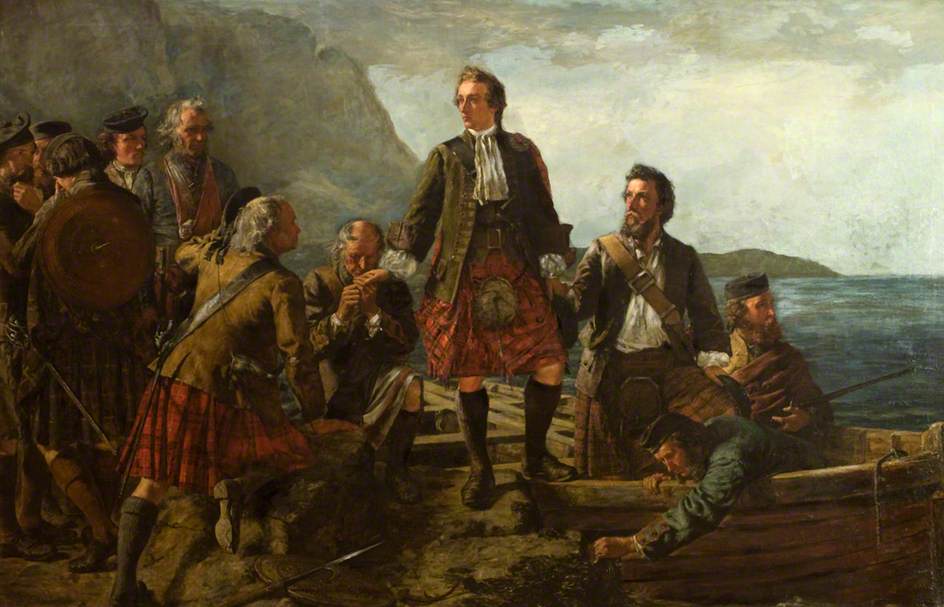
The origins of the rose as a symbol are somewhat lost in myth and legend. It is said that one of the earliest references refers to the birth of James Francis Edward Stuart, son of the deposed King James II, who was born on 10th June in 1688, said to be “the longest day of the year in which the white rose flowers”. Another legend tells how Bonnie Prince Charlie plucked a white rose from the roadside and stuck it in his hat as he made his way south from Glenfinnan to start the Jacobite Rebellion of 1745.
English, Irish and Welsh Jacobites
Jacobitism was attractive to members of the English aristocracy who had chosen to remain Catholic after the Reformation.
About 2-3% of the English population remained Catholics at the time of the Glorious Revolution in 1688. The highest concentration of Catholics was in the north of England.
The movement also found support in the Catholic populations of Ireland and rural Wales because they hoped the return of a Stuart king would end their exclusion from many aspects of civic and political life under the Recusancy Acts.
In Ireland, James was supported for his 1687 Declaration of Indulgence or, as it is also known, The Declaration for the Liberty of Conscience. This declaration promised an Irish Parliament.
Scottish Jacobites
Catholic country gentry tended were James most ideologically committed supporters. Drawing on almost two centuries of suffering as a religious minority persecuted by the state they rallied enthusiastically to the Jacobite cause.
Highland clans such as the MacDonnels and MacDonalds of Clanranald, Keppoch, Glengarry and Glencoe; the Clan Chisolm, and the clan Ogilvy were largely still Catholic. Other clans, such as the powerful Camerons, were Episcopalian, and as staunch in their Jacobitism as their allies the Catholic MacDonalds.
Scottish Episcopalians provided over half of the Jacobite forces in Britain. As Protestants, they could take part in Scottish politics, but as a religious minority, they were repeatedly discriminated against in legislation which favoured the established Presbyterian Church of Scotland. About half the Episcopalians supporting the Jacobite cause came from the Lowlands, but this was obscured in the risings by their tendency to wear the Highland dress.
In the Gaelic-speaking Scottish Highland clans, Jacobites were known as Seumasaich. The clan chiefs ran their own private armies and there was often conflict between them. This conflict was more about political power and money than religion as most were Catholic.
A significant source of friction was the territorial ambitions of the Presbyterian Campbells of Argyll. Another was James VII’s sympathetic treatment of the Highland clans. Monarchs since the late 16th century had been antagonistic to the Gaelic-Highland way of life but James had worked sympathetically with the clan chieftains. He had put in place the Commission for Pacifying the Highlands but that had now been abandoned. Some Highland chieftains, therefore, viewed Jacobitism as a means of resisting hostile government interference in their territories. These private armies would go onto provide the bulk of Jacobite manpower in both the 1715 and 1745 rebellions.
Although most support for the Stuart cause came from Tories there were some notable Whig exceptions most notably the Earl of Mar. Most sympathetic Whigs were merely keeping their options open in case the Stuarts returned.
Jacobite Romance
Jacobites were definitively romantic. They were the underdogs in the battle with the British state. They fought heroically for their rights and their country. They were brave and dashing in their Highland garb but they weren’t what would pass as the good guys today. They were distinctly unenlightened and un-democratic.
They believed in:
• the divine right of kings and the accountability of Kings to God alone;
• inalienable hereditary right; and the unequivocal scriptural injunction of non-resistance and passive obedience to the crown.
Sources:
Scotland, A Concise History, Fitzroy Maclean, Thames and Hudson
Bonnie Prince Charlie, Fitzroy Maclean, Canongate Books Ltd.
The Jacobites, Britain and Europe 1688–1788, Daniel Szechi, Manchester University
The Myths of the Jacobite Clans, Murray G. H. Pittock, Edinburgh University Press
Julia Herdman writes historical fiction that puts women to the fore. Her latest book Sinclair, Tales of Tooley Street Vol. 1. is Available on Amazon – Paperback £10.99 Kindle £2.42 Also available on:
Amazon Australia
Amazon Canada
Amazon New Zealand
Amazon South Africa
Amazon USA
Also on Smashwords

by Julia Herdman | Jul 14, 2017 | Blog, British History, British Royal Family, Marriage, Medicine, Romance, Science, Society, Women and Children
As the daughter of a king Princess Augusta was denied access to men of her own rank except those in her immediate family for most of her life. Like several of George III’s daughters she found herself lonely and drawn into romances with gentleman at court whether they were suitable or not.
It is believed that Princess Augusta first met Sir Brent Spencer, an Irish general in the British Army, around 1800. Augusta later told her brother, the future George IV, the two entered into a relationship in 1803 while Spencer was stationed in Britain. Although the couple conducted their relationship with the utmost privacy, Augusta did petition the Prince Regent in 1812 to be allowed her to marry Spencer, promising further discretion in their behaviour. While no official record of a marriage between the two exists, it was noted at the court of Hesse-Homburg at the time of her sister Elizabeth’s marriage in 1818 that Augusta was “privately married.”
Princess Augusta Sophia was born at Buckingham House, London, the sixth child and second daughter of George III (1738–1820) and his wife Queen Charlotte. The young princess was christened on 6 December 1768, by Frederick Cornwallis, The Archbishop of Canterbury, in the Great Council Chamber at St. James’s Palace. Princess Augusta had an older sister Charlotte (born 1766) and her younger sister Elizabeth (born 1770). In 1771, the two oldest princesses started travelling to Kew to take lessons under the supervision of Lady Charlotte Finch and Miss Planta. The pair, who had formerly been very close to their older brothers now saw little of them, except when their paths crossed on daily walks. In 1774, Martha Goldsworthy, or “Gouly” was put in charge of their education which included the feminine pursuits of deportment, music, dancing, and the arts. Their mother also ensured that they learned English, French, German, and Geography.
In 1782, aged 14, Augusta made her court debut on the occasion of her father’s birthday. Being terrified of crowds; the princess was painfully shy, and stammered when in front of people she didn’t know; her mother gave her only two days notice of the event. That year she lost her two baby brothers, Prince Alfred and Prince Octavius. Alfred had a bad reaction to his inoculation against smallpox and died aged nearly two. Six months after Alfred’s death, her younger brother Octavius and her sister Sophia were taken to Kew Palace in London to be inoculated with the smallpox virus. (This may seem irresponsible today but smallpox was virulent and no respecter of rank so inoculation, even with its risks was still probably a better bet than not being inoculated at all.) Sophia recovered without incident, but like his brother, before him, Octavius became ill and died several days later, he was just four years old. As was traditional at the time, the household did not go into mourning for the deaths of royal children under the age of fourteen but Augusta, who had loved the children dearly, was distraught.
Her formal education now came to an end. Now her duty was to join her elder sister and her parents at court and accompany them to the theatre and the Opera. With six daughters to clothe and educate the royal budget was stretched. The royal princesses often appeared in what was basically the same dress each in a different colour to save money and at home, they wore plain, everyday clothes unlike their royal contemporaries in Europe.
By 1785, Augusta and Charlotte were reaching an age where they could be considered as potential brides for foreign princes. In that year the Crown Prince of Denmark (later King Frederick VI) indicated to her father that he was interested in Augusta but George decided he could not allow his lovely daughter to go to Denmark after his sister’s disastrous marriage to King Christian VII. As their friends at court found husbands the sisters began to wonder when their turn would come. Their father it seems was reluctant to see them leave and the subject was not one for discussion in case it disturbed the often addled mind of their sick father. So, the years slid by with neither of them married. This was when pretty Augusta made her own arrangements with the dashing officer, Brent Spencer.
Spencer was upper middle class not royal; he became a commissioned officer in 1778 and fought with great credit in the West Indies in 1779–1782 during the American Revolutionary War and again in 1790–1794 during the War of the First Coalition. He was a professional soldier who rose through the ranks, first to Brigadier General, serving in the wars against Napoleon in Europe and Egypt. He was eight years older than Augusta and served with Wellington as his second in command during the Peninsular War where he became a full General. After the war, he became the MP for Sligo.
Such a match would be considered wholly acceptable today but not in the 18th century. It is said that he and Augusta maintained their relationship through these years of separation and that he died with a picture of her in his hand at the age of 68. Augusta died on 22 September 1840 at Clarence House, aged 71.
Source: Wikipedia. Illustration: Augusta Sophia of the United Kingdom. Copy of the portrait exhibited at the Royal Academy in 1819 and now in the Museum of Fine Arts, Baltimore.
Julia Herdman writes historical fiction that puts women to the fore. Her latest book Sinclair, Tales of Tooley Street Vol. 1. is Available on Amazon
Amazon Australia
Amazon Canada
Amazon New Zealand
Amazon South Africa
Amazon USA
by Julia Herdman | Jul 13, 2017 | Blog, British History, British Royal Family, Marriage, Politics, Romance, Society, Women and Children
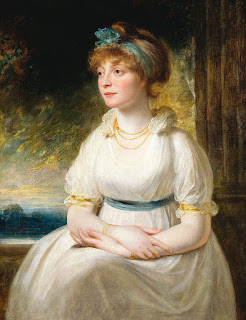
This is the sad story of Princess Sophia daughter of George III
Sophia was an unworldly and shy woman who was seduced by a man 33 years her senior. She gave birth to his illegitimate child who grew up to blackmail her to pay his father’s debts.
Sophia’s childhood
According to her biographer Christopher Hibbert, in her young adulthood Princess Sophia, the 5th daughter of King George III, was a “delightful though moody girl, pretty, delicate and passionate.” She was devoted to her father, though she occasionally found him exasperating. She wrote that “the dear King is all kindness to me, and I cannot say how grateful I feel for it.”
The King had told Sophia he would take her and her sisters to Hanover and find them suitable husbands. Her father intended to be circumspect in his choice of his children’s spouses because he was well aware of his own sisters’ marriage experience.
His eldest sister, Augusta had never fully adapted to life in Brunswick after her marriage to Charles William Ferdinand Prince of Brunswick-Wolfenbüttel despite her marriage settlement of £80,000 from the British government. Her husband took two mistresses; Maria Antonia von Branconi and Luise von Hertefeld. Augusta was never comfortable in Hanover and her German relatives were not keen on her. Her situation was made worse by the fact that her eldest sons were born with disabilities.
Augusta’s fate was unpleasant but not as bad as his other sister Caroline’s fate. Caroline had suffered a far worse. At the age of 15, she was married to her cousin, Christian VII of Denmark in 1766. A year later her husband abandoned her for his mistress Støvlet-Cathrine publicly declaring that he could not love Caroline because it was “unfashionable to love one’s wife”. Caroline was left neglected and unhappy as her young husband sank into a mental stupor of paranoia, self-mutilation, and hallucinations. Caroline took comfort with her husband’s doctor, Johann Friedrich Struensee, an Enlightenment man who ran Denmark with the half-crazed King introducing widespread reforms.
The affair between Caroline and Struensee resulted in Caroline giving birth to his child, her divorce, and Struensee’s execution in 1772. Caroline retained her title but not her children, eventually, she left Denmark and passed her remaining days in exile at Celle Castle in Hanover. She died there of scarlet fever on 10 May 1775, at the age of 23.
The Purple Light of Love
George was unable to keep his promise due to his own ill health. He had however arranged a dowery and allowance of £6,000 a year for her with Parliament. This should have made her an attractive match but Sophia was shy and she ruined what prospects she had when she met and fell in love with one of her father’s equerries, Colonel, Thomas Garth, a man thirty-three years her senior. Garth had a large purple birthmark on his face, causing Sophia’s sister Mary to refer to him as “the purple light of love.” Courtier and diarist Charles Greville, on the other hand, described him as a “hideous old devil.” One of her ladies-in-waiting wrote “The princess was so violently in love with him that everyone saw it. She could not contain herself in his presence.”
The Downfall
Sophia’s downfall came when she found herself pregnant with Garth’s child. Although there has been much debate amongst historians as to whether the child was Garth’s or her uncle’s, the Duke of Cumberland’s, Thomas Garth adopted the child, educated him and brought him into his regiment calling him his nephew.
Dorothy Margaret Stuart, in her book The Daughters of George III, reports the claim of the Corry family that Sophia Princess had secretly married Issac Corry, Groom of the Bedchamber to the Duke of Cumberland. Corry was a barrister and later became Chancellor of the Irish Exchequer. His family claim that he and Sophia had three children together but there is no real evidence to support such an idea. What we can be sure of is that Sophia never married and remained at court until her mother Queen Charlotte died. After the queen’s death, Sophia lived in Kensington Palace next to her niece Princess Victoria of Kent, the future Queen Victoria. Like her sister-in-law the Duchess of Kent, Sophia fell under the spell of Victoria’s comptroller Sir John Conroy and let him manage her money. The lonely and unworldly Sophia fell under Conroy’s spell too and he used her affection to rob her of most of her money.
Her son, Tommy Garth of the 15th Hussars (1800-1873), learned of his true heritage when his father thought he was on his deathbed in 1828. With the family deep in debt, he tried to blackmail the royal family with evidence of his mother’s true identity. As historian Flora Fraser writes, ‘all parties played unfairly’. The royal family offered young Garth £3,000 for his box of evidence. They took the box but did not pay him so he went to the papers. The press dug up the gossip concerning the possibility of the Duke of Cumberland, her uncle, being his true father making the latter part of Sophia’s life very difficult.
Charles Greville summed Sophia up with he wrote in his diary in May 1848, shortly after she died: “Princess Sophia died a few days ago, while the Queen [Victoria] was holding the Drawing-room for her Birthday. She [Sophia] was blind, helpless, and suffered martyrdom; a very clever, well-informed woman, but [one] who never lived in the world.”
Sources:
Fraser, Flora (2004). Princesses: The Six Daughters of George III. London: John Murray. ISBN 0-7195-6109-4.
Hibbert, Christopher (2000). George III: A Personal History. Basic Books. ISBN 0-465-02724-5.
Hibbert, Christopher (2001). Queen Victoria: A Personal History. De Capo Press. ISBN 0-306-81085-9.
Dorothy Margaret Stuart, The Daughters of George III, Fonthill Media Ltd, 2016.
Illustration: Princess Sophia, 1792 by Sir William Beechey, The Royal Collection
Julia Herdman writes historical fiction that puts women to the fore. Her latest book Sinclair, Tales of Tooley Street Vol. 1. is Available on Amazon
Amazon Australia
Amazon Canada
Amazon New Zealand
Amazon South Africa
Amazon USA

by Julia Herdman | Jun 20, 2017 | Blog, British History, British Royal Family, Fashion, Society
Ascot Racecourse pronounced /ˈæskət/, by those in the know is close to Windsor Castle and is the Queen of England’s favourite racecourse. The most famous and prestigious race is The Gold Cup.
Ascot Racecourse was founded in 1711 by Queen Anne. The first race, “Her Majesty’s Plate”, had a purse of 100 guineas, was held on 11 August 1711. Seven horses competed, each carrying a weight of 12 stones (76 kg). This first race comprised three separate four-mile (6437 m) heats. It’s changed a lot since then.
Every year Royal Ascot is attended by Elizabeth II and other members of the British Royal Family such as The Prince of Wales, arriving each day in a horse-drawn carriage with the Royal procession taking place at the start of each race day and the raising of the Queen’s Royal Standard. It is a major event in the British social calendar, and press coverage of the attendees and what they are wearing often exceeds coverage of the actual racing. There are three enclosures attended by guests on Royal Ascot week.
The Royal Enclosure is the most prestigious of the three enclosures, with recent visits from the Queen and Royal Family members. Access to the Royal Enclosure is restricted, with high security on the day. First-time applicants must apply to the Royal Enclosure Office and gain membership from someone who has attended the enclosure for at least four years. Those in the Royal Enclosure have the options of fine dining and hospitality, and a selection of bars. The dress code is strictly enforced. For women, only a day dress with a hat is acceptable, with rules applying to the length and style of the dress. In addition, women must not show bare midriffs or shoulders. For men, black or grey morning dress with top hat is required.
Over 300,000 people make the annual visit to Berkshire during Royal Ascot week, making this Europe’s best-attended race meeting. There are eighteen group races on offer, with at least one Group One event on each of the five days. The Gold Cup is on Ladies’ Day on the Thursday of the meet, hats are the order of the day - the more outrageous the better.
In 2012, the Golden Jubilee Stakes was renamed the Diamond Jubilee Stakes, to commemorate Queen Elizabeth II’s Diamond Jubilee. In 2013, the Windsor Forest Stakes was renamed the Duke of Cambridge Stakes, with the Queen’s consent, recognising the new title given to Prince William; in 2015, the newly created Commonwealth Cup became the eighth Group One race at Royal Ascot, replacing the Buckingham Palace Stakes. In 2016, total prize money across the five days of Royal Ascot was £6,580,000. This year the prize money is expected to be higher. Races with notable prize money increases for 2016 included the Prince of Wales’s Stakes (£750,000 from £525,000), the Queen Anne Stakes (£600,000 from £375,000) and the Diamond Jubilee Stakes (£600,000 from £525,000), while the other Group One races all had their prize money increased to £400,000. The Gold Cup in 2016 was run as “The Gold Cup in Honour of The Queen’s 90th Birthday”.
Ascot racecourse closed for a period of twenty months on 26 September 2004, for a £185 million redevelopment funded by Allied Irish Bank and designed by Populous and Buro Happold. As the owner of the Ascot estate, Her Majesty Queen Elizabeth reopened the racecourse on Tuesday 20 June 2006. Upon re-opening the new grandstand attracted criticism for failing to provide sufficiently raised viewing for patrons to watch the racing, and devoting too much space to restaurants, bars, and corporate hospitality facilities. At the end of 2006, a £10 million programme of further alterations was announced to improve the viewing from lower levels of the grandstand.
Julia Herdman writes historical fiction. Sinclair is a second chance romance set in Georgian London and Yorkshire with horse racing and doctors that puts women to the fore. Available on Amazon – in Paperback and o Kindle. Also available on:
Amazon Australia
Amazon Canada
Amazon New Zealand
Amazon South Africa
Amazon USA
by Julia Herdman | Jun 5, 2017 | Blog, British History, British Royal Family, Crime and Punishment, Europe, European Royal Families, Marriage, Society, Writing about history
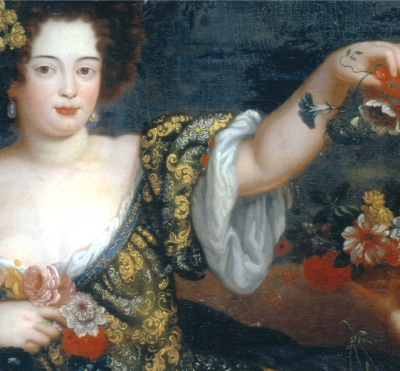
This is the shocking case of the Princess who was married against her will, spurned, divorced, and imprisoned for 33 years.
In August 2016, a human skeleton was found under the Leineschloss (Leine Palace, Hanover) during a renovation project; the remains are believed to be those of Swedish count, Philip Christoph von Königsmarck, (1665-1694) a soldier in the Hanoverian army and the lover of Princess Sophia Dorothea, the wife of the first Hanoverian king of Britain.
Early Life
Sophia Dorothea was just sixteen years old when she was married to her cousin, George Louis of Hanover, the future king of Great Britain and Ireland in 1705.
Poor Princess Sophia Dorothea did not get a good start in life; she was born illegitimately; the daughter of her father’s long-term mistress, Eleonore d’Esmier d’Olbreuse, Countess of Williamsburg (1639–1722) on 15 September 1666, and was considered an inconvenient royal bastard. Without a wife and an heir her father, Prince George William, Duke of Brunswick Lüneburg, eventually did the right thing and married his mistress which had the effect of legitimising his only child.
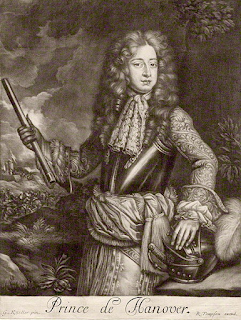 |
| George I of Britain |
Her Father’s Legitimate Heir
Sophia Dorothea was ten years old when she became heir to her father’s kingdom, the Principality of Lüneburg. This made her a good catch despite her problematic origins because Lüneburg was a wealthy principality and Sophia Dorothea, like her mother, was attractive and lively.
Along with her legitimacy came talk about her marriage. In the six years between her acceptance into the royal family and her eventual marriage, three prospective husbands were considered for her.
Marriage Proposals
First, there was talk of marriage to the Danish heir presumptive. Some years later her engagement to the Duke of Brunswick-Wolfenbüttel was broken off by her father after her aunt, Duchess Sophia of Hanover, convinced him she should marry her cousin, George Louis of Hanover to join their two duchies together. Duchess Sophia hated her niece, whom she considered brazen, coquettish, and uneducated. When told of the change of plan, sixteen-year-old, Sophia Dorothea shouted, “I will not marry the pig snout!”
Twenty-two-year-old George Louis was not keen on the match either; he already had a mistress and was happy with his life as a soldier. Although he was a prince, he was ugly and boring, even his mother didn’t like him. Nevertheless, Duchess Sophia was determined to keep the family fortune together, and despite both Sophia Dorothea’s and her son’s objections, the pair were married on 22 November 1682, in Celle. For his pains, George Louis received a handsome dowry and was granted his father-in-law’s kingdom upon his death, and Sophia was left penniless.
 |
| The state parliament in the former Leineschloss /
Leine Castle in Hannover Lower Saxony Germany |
An Unhappy Marriage
The unhappy couple set up home in Leine Palace in Hanover where Sophia Dorothea was under the supervision of her odious aunt, Duchess Sophia, and spied on by her husband’s spies when he was away on campaign. Despite their unhappiness, the pair produced two children; George Augustus, born 1683, who later became King George II of Great Britain and a daughter born 1686 when Sophia Dorothea was twenty.
 |
| Sophia Charlotte
von Keilmannsegg |
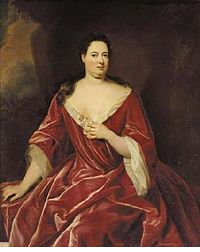
Having produced two children, George became increasingly distant from his wife spending more time with his dogs and horses and his nights with his mistress, the married daughter of his father’s mistress, a woman called Sophia Charlotte von Keilmannsegg, who was rumoured to be George Louis’ half-sister.
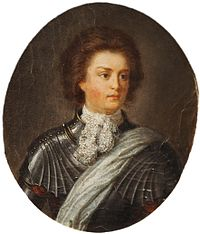
Aggrieved, lonely, and unhappy Sophia Dorothea found a friend in the Swedish count Philip Christoph von Königsmarck, (1665-1694) who was a soldier in the Hanoverian army. Philip was a year older than Sophia Dorothea and the antithesis of her ugly, boorish husband.
 |
| Countess of Platen |
The Fatal Affair
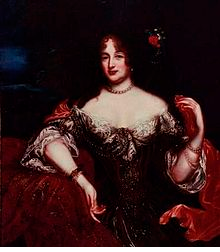
Sophia Dorothea was no saint. She was quick-tempered and rarely discrete, and her choice of Von Königsmarck as a lover was not the best. Königsmarck was a dashing, handsome gigolo and the former lover of her father-in-law’s mistress, the Countess of Platen and the Countess had a jealous nature.
Königsmarck and Sophia Dorothea began a love affair of clandestine trysts, real love, and their coded correspondence facilitated by a trusted go-between. Their love affair was uncovered in 1692 when the Duchess of Platen presented a collection of their letters to her lover, Sophia Dorothea’s father-in-law the Elector of Hanover. Von Königsmarck was banished from the Hanoverian court but soon found a position in the neighbouring court of Saxony where one night when he was buried in his cups he let slip the state of affairs in the bedchambers of the royal house of Hanover. George Louis got wind of what had been said and on the morning of 2 July 1694, after a meeting with Sophia at Leine Palace, Königsmark was seized. No one except his murderers knew what happened to him next.
 |
| Philip Christoph von Königsmarck,
(1665-1694) |
A Sad and Lonely Death
Dorothea never saw her lover again. George Louis divorced her in December, and early the following year she was confined her to Schloss Ahlden a stately home on the Lüneburg Heath in Lower Saxony. She stayed there for the rest of her life. Her children were taken away from her, and she was forced to live alone.
When Sophia Dorothea died in 1726, she had spent 33 years in her prison. Before she died, she wrote a letter to her husband, cursing him for his treatment of her. A furious George forbade any mourning of her in Hanover and London.
George, I died shortly after the Countess of Platen exonerated him of any involvement in Von Königsmark’s death. Two of her henchmen made deathbed confessions to the crime. Although George I was cleared of Von Königsmark’s death, his son George II never forgave his father for the treatment he had meted out to his mother.
Sources:
https://en.wikipedia.org/wiki/Sophia_Dorothea_of_Celle
Notorious Royal Marriages: A Juicy Journey Through Nine Centuries of Dynasty By Leslie Carroll
The Georgian Princesses By John Van der Kiste
Julia Herdman writes historical fiction. Her latest book Sinclair, Tales of Tooley Street Vol. 1. is Available on Amazon – Paperback £10.99 Kindle.
Sinclair is available of Amazon. Click here to get your copy.
Sinclair is set in the London Borough of Southward, the Yorkshire town of Beverley and in Paris and Edinburgh in the late 1780s. Strong female leads include the widow Charlotte Leadam and the farmer’s daughter Lucy Leadam. Sinclair is a story of love, loss and redemption. Prodigal son James Sinclair is transformed by his experience of being shipwrecked on the way to India to make his fortune. Obstacles to love and happiness include ambition, conflict with a God, temptation and betrayal. Remorse brings restitution and recovery. Sinclair is an extraordinary book. It will immerse you in the world of 18th century London where the rich and the poor are treated with kindness and compassion by this passionate Scottish doctor and his widowed landlady, the owner of the apothecary shop in Tooley Street. Sinclair is filled with twists and tragedies, but it will leave you feeling good.
Amazon Australia
Amazon Canada
Amazon New Zealand
Amazon South Africa
Amazon USA
Princess Anne - The Princess Who Married a Hunchback

by Julia Herdman | May 30, 2017 | Blog, British History, British Royal Family, Marriage, Politics, Romance, Society
Secret and Clandestine Marriage
A clandestine or illicit marriage is a plot device in many 18th and 19th-century stories, think of Jayne Eyre and Mr Rochester, but what seems like the work of fiction was a fact of life for women from all social classes in 18th Century Britain. No one knew who was married to whom until the law of marriage was changed. Even the Prince Regent tried to marry a woman clandestinely and illegally.
On May 11, 1786, the Coachmakers’ Hall, Debating Society debated the following proposition: “Are not the Restraints contained in the Marriage Act, and every other Restriction on the Matrimonial Contract, contrary to the natural Rights of Mankind, and injurious to Conjugal Felicity?” Someone at the Coachmakers’ Hall was clearly stirring the pot of civil discord that evening as the formalities prescribed by the Act were hardly novel, and had been observed even when they were not essential to the validity of a marriage, and the protection afforded by the previous law was not as generous as many who wished to deviate from the new law claimed.
The Marriage Act
The Marriage Act 1753, popularly known as Lord Hardwicke’s Marriage Act, was the first statutory legislation in England and Wales to require a formal ceremony of marriage. The Act came into force on March 25, 1754, making compulsory the reading of the banns, and the registration of a marriage and its witnesses for the first time.
Before the Act, the legal requirements for a valid marriage in England and Wales had been governed by the canon law of the Church of England. This had stipulated that banns should be called or a marriage licence should be obtained before marriage and that the marriage should be celebrated in the parish where at least one of the parties was resident. However, these requirements were not mandatory and the absence of banns or a licence – or even the fact that the marriage was not celebrated in a church – did not render the marriage void. The only essential requirement was that the union be celebrated by an Anglican clergyman. So this left a lot of scope for clandestine marriages and for the wedding of those who were technically under the age of legal consent which was 21 at the time.
The King’s Secret Marriage
Maria Fitzherbert (July 26 1756 - March 27 1837) became the wife of George, Prince of Wales, the future George IV in extraordinary circumstances. Maria came from a respectable Roman Catholic family and was educated in France. She had been married twice before when she met Prince George. Maria married Edward Weld, who was sixteen years her senior, and the wealthy Catholic owner of Lulworth Castle in July 1775. Weld died just three months later after falling from his horse leaving Maria penniless. Her new husband had failed to sign his Will, so his estate went to his younger brother.
Maria, now a widow was left effectively destitute. She received little or no financial support from the Weld family and was obliged to remarry as soon as she could. Three years later, she married again. Her second husband was Thomas Fitzherbert of Swynnerton, Staffordshire who was ten years her senior. They had a son but he died young and then she was widowed again in 1781, but this time she got an annuity of £1000 and a townhouse in Park Street, Mayfair.
In 1783 George, Prince of Wales became infatuated with her after meeting her at the opera. The licentious Prince, he wanted her to become his mistress, but Maria’s devout Catholic beliefs would not allow it. So on December 15, 1785, they were married in a secret ceremony conducted by Robert Burt, an impoverished curate who set aside his scruples for the £500 fee.
The marriage was not legal. It not only contravened the 1753 Marriage Act it was also in breach of the Act of Settlement of 1701, preventing a Roman Catholic from ascending the British throne and the Royal Marriage Act of 1772. How George thought he was going to get away with is a mystery and how Maria could believe she was being married to a Prince of the realm legitimately in such circumstances is beyond belief.
The Illegally Married Couple
George and Maria spent much of their newly married life in Brighton where Mrs Fitzherbert was treated like a queen. Whether she was ignorant or deluded concerning her position is unknown, she never spoke of it. George’s intentions were never earnest, he always had an eye for the ladies.
The couple finally separated when George’s affections turned to Frances, Countess of Jersey in 1794. Their illegal marriage was finally put asunder when George married his cousin Caroline of Brunswick in 1795.
Five years later, in 1800, Maria and George were reunited as George could not stand the sight of his legal wife, Caroline.
By 1807, the Prince’s affections were wandering again, this time towards Lady Hertford. Unable to bear any further humiliation, on December 18 1809, Maria sent George a farewell letter and departed from Brighton where she and the Prince were living.
Following the death of George IV on June 26 1830, it was discovered that he had kept all of Fitzherbert’s letters, and steps were taken to destroy them. Fitzherbert told George IV’s brother, King William IV, about their marriage and showed him the documents in her possession. He asked Fitzherbert to accept a dukedom, but she refused, asking only for permission to wear widow’s weeds and to dress her servants in royal livery. The architect William Porden created Steine House for her, on the west side of Old Steine in Brighton where she lived from 1804 until her death in 1837. The king’s unofficial wife was buried at St John the Baptist’s Church in the Kemp Town area of Brighton.
Julia Herdman writes historical fiction. Her latest book Sinclair, Tales of Tooley Street Vol. 1. is Available on Amazon – Paperback £10.99 and on Kindle.
Also available on:
Amazon Australia
Amazon Canada
Amazon New Zealand
Amazon South Africa
Amazon USA
Princess Sophia Dorothea the Uncrowned Queen of Britain
Dress to Impress Princess


Recent Comments