
by Julia Herdman | Sep 5, 2017 | Arts and Literature, Blog, British History, British Royal Family, Crime and Punishment, Politics, Society, Visual arts
The retribution that followed the defeat of the Jacobite Army at Culloden in 1746 has passed into legend for its brutality and savagery and has formed the backdrop to many classic stories including Robert Louis Stevenson’s Kidnapped and more recently Diana Gabaldon’s Outlander series of novels.
Today, we are so accustomed to the picture of the suppression of the Highlands by the British Army painted in these novels that we are hardly surprised by it. However, when I looked at the records in the Scottish National Archive for this article I found the pastiche of brutality in the films and TV shows suddenly and shapely transformed from fiction to fact and the true horror of what took place became fresh and alive once more.
I have chosen some examples from the records of the Fraser Clan to illustrate what happened as there is currently so much interest in it due to the success of the Starz Outlander TV series.
I am sure that if I had been alive at that time I would not have been a Jacobite. But that does not mean I condone what took place in 1746. Neither, I’m glad to say did some of the people involved in it at the time as these accounts of the death of Charles Fraser, the Younger of Inverallochy show. The most basic record reads;
“Aged 20 years. Killed at Culloden on 17 April 1746. While lying grievously wounded on Culloden battlefield was shot in cold blood at the order of Cumberland or General Hawley. The future General Wolfe had previously refused to act as executioner. In the Muster Roll, there is a suggestion (false) that he was not killed but escaped to Sweden.”
In A Short but Genuine Account of Prince Charlie’s Wanderings from Culloden to his meeting with Miss Flora MacDonald, by Edward Bourk the story is further elaborated.
‘But soon after, the enemy appearing behind us, about four thousand of our men were with difficulty got together and advanced, and the rest awakened by the noise of canon, which surely put them into confusion. After engaging briskly there came up between six and seven hundred Frazers commanded by Colonel Charles Frazer, younger, of Inverallachie, who were attacked before they could form a line of battle, and had the misfortune of having their Colonel wounded, who next day was murdered in cold blood, the fate of many others’. (folio 327).
In Lyon in Mourning, Vol. III a collection of stories, speeches, and reports by Robert Forbes the following version taken from Bourk in person in 1747 expands the previous versions.
‘The Duke himself (Cumberland) rode over the field and happened to observe a wounded Highlander, a mere youth, resting on his elbow to gaze at him. He turned to one of his staff and ordered him to “shoot that insolent scoundrel.’ The officer, Colonel Wolfe (later General) flatly refused, declaring that his commission was at the service of His Royal Highness, but he would never consent to become an executioner. The other officers of his suite, to their credit, followed the noble example of the future Hero of Louisburg and Quebec, but Cumberland, not to be baulked of his prey, ordered a common soldier to do the odious work, which he did without demur. The young victim was Charles Fraser, younger of Inverallochy, an officer in Lord Lovat’s Regiment.’
The story of Ensign, Alexander Fraser prisoner 950 and his comrades from Lord Lovat’s Regiment is no less disturbing. He was shot through the thigh or (knee) at Culloden and ‘carried off in the heat of the action to a park wall pointing towards the house of Culloden.
‘‘A short time after the battle he and 18 other wounded officers who had made their escape to a small plantation of wood near to where Fraser was lying. He was taken prisoner and carried with the others to Culloden House, where he lay for two days without his wounds being dressed.’ ‘On 19 April 1746, Fraser along with 18 other prisoners that were held in Culloden House were put in carts to be taken, so they thought, to Inverness to have their wounds treated. The carts stopped at a park dyke some distance from Culloden House. The whole of them were taken out and placed against a dyke. The soldiers immediately drew up opposite them. They levelled their guns and fired among them. Fraser fell with the rest. ‘
‘The soldiers were ordered by their officers to go among the dead and ‘knock out the brains’ of such that were not quite dead. Observing signs of life in John Fraser one of the soldiers, using his gun butt, struck on the face dashed out one of his eyes, beat down his nose flat and shattered his cheek and left him for dead.’ ‘Lord Boyd riding out with his servant espied some life in Fraser as he had crawled away from the dead. Lord Boyd asked him who he was. Fraser told him he was an officer in the Master of Lovat’s corps. He was offered money but Fraser said he had no use for it and asked to be carried to a certain cottar house where he said he would be concealed and taken care of. Lord Boyd did as asked. Fraser was put in a corn kiln where he remained for three months. He was able to walk with the aid of crutches’.
The Duke of Cumberland’s callousness and willingness to engage in what we would call war crimes today won him the soubriquet ‘the butcher.’
The Scottish History Society has published, in three well-documented volumes, “Prisoners of the ’45”, a list of 3,470 people known to have been taken into custody after Culloden. The list includes men, women and children combatants and supporters alike. It was decided by the Privy Council in London that the prisoners should be tried in England and not Scotland which was a breach of the Treaty of Union and on 10th June, the prisoners held at Inverness were loaded onto seven leaky ships named Margaret & Mary , Thane of Fife, Jane of Leith, Jane of Alloway, Dolphin, and the Alexander & James and transported to England. They eventually landed at Tilbury Fort or were kept in prison ships on the Thames. Accounts show that the prisoners held at Tilbury were selected for trial on the basis ‘lotting.’ This was a process in which 19 white slips and 1 black slip of paper where placed in a hat and the prisoners were invited to draw lots to see who would go before the Commission.
Records show that one hundred and twenty prisoners were executed: four of them, peers of the realm, were executed on Tower Hill including the 80-year-old Lord Lovat, who was the last person to be beheaded in public in England, beheading being a privilege of their rank.
The others such as Francis Townley, Esquire, Colonel of the Manchester regiment who suffered the barbaric ritual of hanging, drawing, and quartering after his claim to be a French Officer was rejected by the court on the evidence of Samuel Maddock, an ensign in the same regiment, who, to save his own life, turned king’s evidence against his former comrades.
Of the remainder 936 were transported to the colonies, to be sold to the highest bidder: 222 were banished, being allowed to choose their country of exile: 1,287 were released or exchanged: others died, escaped, or were pardoned and there were nearly 700 whose fates could not be traced.
After the defeat of the Jacobite army, the British government started the systematic dismantling of the ancient social and military culture of the Highland clans. The wearing of Highland garb, particularly tartan plaid, was banned, and the semi-feudal bond of military service to the Clan chief was removed. But despite the widespread and systematic oppression, it was the peace between Great Britain and France in 1748 that finally finished off the 1745 rebellion. Without the hope of French money and support the Stuart cause was lost.
This did not stop the reckless Bonnie Prince from trying again. It seems that he turned up in London in 1750, probably in disguise once more as he was what we might call, ‘Britain’s Most Wanted’ at the time and tried to drum up support for another rising. Luckily, this madcap scheme to kidnap or kill King George II in St. James’s Palace on 10 November 1752 petered out through lack of support and money. But the British Government kept their eye on the conspirators through a spy in the Princes’s camp known only by his nom de guerre of “Pickle”, who kept his employers informed of every Jacobite movement that came to his notice for years.
See also:
Bonnie Prince Charlie and Toad Escape Dressed as Women
Sources:
http://www.jacobites.net/prisoners.html
http://www.historyextra.com/article/feature/10-facts-jacobites-bonnie-prince-charlie-culloden
https://www.thurrock.gov.uk/historical-figures/jacobites-culloden-and-tilbury-fort
http://www.electricscotland.com/history/charles/100
by Julia Herdman | Sep 3, 2017 | Arts and Literature, Blog, British History, Crime and Punishment, Literature, Performing Arts, Society, Visual arts
Pirates and Smuggling Fact and Fiction
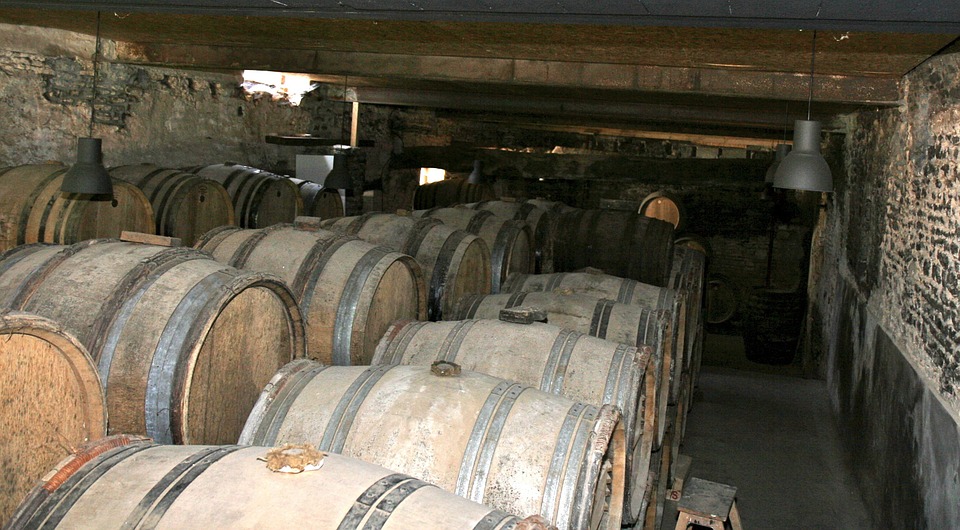
In the 18th century, the British government collected a good deal of its income from customs duties - tax paid on the import of goods such as tea, cloth, wine, and spirits.
The tax on imported goods could be up to 30% so smuggled goods were a lot cheaper than those bought through official channels. Smugglers operated all around the coasts of Britain. They worked in aggressive, well-organised gangs along the south coast, only a night’s sail from France. The gangs were often too big for the Customs officials to deal with as with the death penalty was a certainty if they were caught so the smugglers were prepared to use violence.
Many ordinary people approved of smuggling or took part in it. Labourers could earn more in a night’s work carrying brandy barrels up from the beach than they could in a month’s hard work in the fields. Others left their barns or cellars unlocked and didn’t ask questions about what was put in there.
Quite respectable people were involved: sometimes for money, sometimes because they didn’t regard smuggling as a crime.
Britain’s most infamous smuggler
Born in 1778 Britain’s most famous smuggler was a man called Rattenbury. He started his life at sea as a fisherman but soon progressed to the more interesting and lucrative trade of defrauding the king.
When he was fifteen he was part of the crew of a privateer but was captured and was taken prisoner by the French, and thrown into gaol. Rattenbury escaped and got back to England.
Rattenbury’s journal recounts many adventures including one where he tricked his drunken French captures into believing they were heading back to France when all the time he was steering the ship to England. As they approached the coast he made his escape by diving into the sea and swimming into Swanage harbour. Once ashore, he raised the alarm and notified the customs authorities that there was a hostile French ship in the harbour!
When Prime Minister William Pitt lowered duties in the 1780s, smuggling became less profitable and gradually the trade began to fall away. Further removal of duties in the 19th century put an end to the kind of smuggling which went on so openly in the 18th century. It seems to be the case that smuggling is always with us. Whenever governments try to stop, or tax, the movement of goods people really want, smugglers will move in no matter how high the stakes.
Fictional Smugglers
Smuggling and smugglers have been a vast source of inspiration for fiction writers. Perhaps the most famous fictional smuggler being, The Reverend Doctor Christopher Syn by Russell Thorndike. The idea for the novel came from smuggling in the 18th century Romney Marsh, where brandy and tobacco were brought in at night by boat from France. Minor battles were fought between gangs of smugglers, such as the Hawkhurst Gang and the Revenue, supported by the army and local militias in South Kent and West Sussex.
The first book, Doctor Syn: A Tale of the Romney Marsh was published in 1915. Three film adaptations have been made of Dr. Syn’s exploits.Doctor Syn (1937) featured noted actor George Arliss. Captain Clegg (1962) known as Night Creatures in the U. S., was produced by Hammer Film Productions with actor Peter Cushing in the lead role; and The Scarecrow of Romney Marsh (1963) starring Patrick McGoohan in the title role.
Modern Smuggling
Smuggling today is probably just as risky as it was in the past, if not more so. Smugglers today use their bodies as a vehicle for drugs and put their own lives on the line in the same way as the smugglers of old.
The number of swallowed drug packages recovered by customs officers at Heathrow airport is usually between 80 and 150 a year. The drugs are wrapped in condoms, balloons or cling-film, forming neat packages about the size of a large grape, and swallowed with syrup to make them more palatable. Couriers take a constipating agent before they embark and tend not to eat during the flight.
In March 2015 the Daily Telegraph online reported on a strange case of modern smuggling. A man was caught trying to enter Spain through Madrid airport with a suspiciously large bulge between his legs in much the same vein as the fictional Derek Smalls played by Harry Shearer in the film Spinal Tap. In this case, the hidden appendage turned out to be half a kilo of cocaine whereas Smalls’ turned out to be cucumber if I remember it rightly.
Julia Herdman writes historical fiction that puts women to the fore. Her latest book Sinclair, Tales of Tooley Street Vol. 1. is Available on Amazon – Paperback £10.99 Kindle £2.42 Also available on:
Amazon Australia
Amazon Canada
Amazon New Zealand
Amazon South Africa
Amazon USA
Also on Smashwords

by Julia Herdman | Aug 7, 2017 | American History, Arts and Literature, Blog, Europe, Fashion, Visual arts
Turquerie was the fashion for all things Turkish. It started in the late sixteenth century and lasted well into the nineteenth. unconcerned with the realities of life in the east it was rather a product of European fantasies about the luxuries of the Orient. Turkey was a supplier of exotic goods such as coffee, perfumes, spices, and tea.
First diplomatic relations with the far east started near the end of the sixteenth century with Sir Robert Shirley going to Persia in 1599 to train the Persian army in the ways of English military warfare.
The West had a growing interest in Turkish-made products and art, including music, visual arts, architecture, and sculptures.
This fashionable phenomenon became more popular through trading routes and increased diplomatic relationships between the Ottomans and the European nations, exemplified by the Franco-Ottoman alliance in 1715 when Louis XIV received the first Persian ambassadors to France.
European portraits of the 18th century were used to portray social position and wealth. Dress, posture, and props were carefully selected in order to communicate the appropriate status. Choosing the exotic turquerie style to express one’s elite position in society involved wearing loose, flowing gowns belted with ornate bands of embroidered cloth. Some sitters donned ermine-trimmed robes while others chose tasselled turbans. Scandalously, most have abandoned their corsets and attached strings of pearls to their hair. (There has always been one law for the rich and one for the lower classes when it comes to letting one’s social hair down.) Many portraits have Turkish carpets displayed on the floor, woven with bright colours and exotic designs. The loose clothing and the unorthodox styles added to the lewd perceptions of the Ottomans.
At the same time portraits of real Turkish people by European artists were a la mode. They were often depicted as exotic, and it was rare that portraits were painted without wearing their traditional cultural clothing.
Perhaps the most influential transformation into the turquerie vogue in Europe was done by Lady Mary Wortley Montagu. Montagu went to Turkey in 1717 when her husband was posted as ambassador there. Her collected letters while there, describing Turkish fashion were distributed widely in manuscript form. They were then printed after her death in 1762. These letters helped shape how Europeans interpreted the Turkish fashion and how to dress. This phenomenon eventually found its way across the Atlantic and in colonial America, where Montagu’s letters were also published.
Julia Herdman writes historical fiction that puts women to the fore. Her latest book Sinclair, Tales of Tooley Street Vol. 1. is Available on Amazon – Paperback £10.99 Kindle £2.42 Also available on:
Amazon Australia
Amazon Canada
Amazon New Zealand
Amazon South Africa
Amazon USA

by Julia Herdman | Aug 1, 2017 | Arts and Literature, Blog, British History, British Royal Family, Politics, Society, Visual arts
Chocolate Drinking in St James’s
For a city with little tradition of hot drinks, chocolate was an alien, suspect substance drink associated with popery and idleness. The principal chocolate houses were Ozinda’s and White’s, both on St James’s Street, and the Cocoa Tree on Pall Mall. As befitted their location their interiors were a cut above the wooden, workmanlike interiors of the City coffeehouses. They boasted Queen Anne sofas, polished tables, dandyish waiters and, at least in Ozinda’s case, a collection of valuable paintings for the customers to admire.
The St James area was the invention of Henry Jermyn in 1661. St James’s Square was a self-contained aristocratic estate of ‘great and good houses’ for nobles and gentry. It was within spitting distance of Charles II’s favourite London palace and replete with its own Christopher Wren church. The physical fabric of the area was revolutionary. St James’s was an urban paradise of wide, paved streets, lamps encased in crystal globes. Fleets of sedan chairs were carried around a central terraced square of fine neoclassical townhouses. The communal garden was renowned for its firework displays and perfumed sheep.
St James’s became the meeting place of crypto-Jacobites, secret supporters of the ‘King overseas’ who huddled together, sipping chocolate, and plotting the Hanoverian’s downfall. At the height of the Jacobite Rebellion in 1715, the king’s messengers burst into a packed Ozinda’s and dragged away its proprietor along with some of his customers. They were taken the Newgate and charged as traitors.
The Cocoa Tree was thought to be more respectable. In the early 18th century, it was the informal headquarters of the Tory party. Policy and parliamentary strategy were concocted over chocolate and newspapers. However, it may not have been that respectable after all. 18th century Tories were always prone to a treachery. In 1932, The Manchester Guardian reported that workmen drilling into St James’s Street discovered a secret underground passage (or ‘bolt hole’) leading from the site of the Cocoa Tree to a tavern in Piccadilly for Jacobites to flee to safety.
For Samuel Pepys, chocolate was the perfect cure for a hangover, relieving his ‘sad head’ and ‘imbecilic stomach’ the day after Charles II’s bacchanalian coronation. The commonest claim, however — one inherited from the Aztecs and still perpetuated by chocolate companies the world over today — was that chocolate was a supremely powerful aphrodisiac. Chocolate Houses, unlike the Coffee Houses, never took off except for around St James’s Square. Chocolate houses were for the super-elite, unlike the mercantile coffee houses. They became known for ‘kamikaze-style gambling.’
The inner room at White’s Chocolate House was depicted in the sixth episode of Hogarth’s Rake’s Progress in all its debauched glory. It is a picture of greed and despair; the posture of the ruined rake, hands held high as though pleading for divine intercession. White’s was depicted a man-made ‘Hell’ where the rich and reckless were the authors of their own destruction.
The legendary White’s betting book, an archive of wagers placed between 1743 to 1878, by which point the chocolate house had evolved into a club, lends credence to Hogarth’s attacks. Much of the time, it reads like a litany of morbid and bizarre predictions: ‘Mr. Howard bets Colonel Cooke six guineas that six members of White’s Club die between this day of July 1818 and this day of 1819’, reads one typical entry (Colonel Cooke won). Elsewhere there are bets on which celebrities will outlive others; the length of pregnancies; the outcomes of battles; the madness of George III; and the future price of stock.
White’s still exists today as a super-exclusive private members’ club at 37 St James’s Street with 500 members and a nine-year waiting list; the only woman ever to have visited is a certain Elizabeth Windsor in 1991.
Source: Dr. Matthew Green, The Daily Telegraph, 11 March 2017

by Julia Herdman | Jul 24, 2017 | Arts and Literature, Blog, Europe, European Royal Families, Literature, Marriage, Politics, Romance, Visual arts, Women and Children, Writing about history
This story is about an Empress with a taste for the common man. Just like Jarvis Cocker’s Greek girl in the Pulp classic, ‘She wanted to sleep with the common people’.
Daughter of a Housemaid and an Emperor
Elizabeth Petrovna was born at Kolomenskoye, near Moscow, on 18 December 1709. She was the daughter of Peter the Great, Tsar of Russia, by his second wife, Catherine, a maid in the household. Her parents were said to have married secretly at the Cathedral of the Holy Trinity in St. Petersburg at some point of time between 23 October and 1 December 1707 then they married officially 5 years later when Peter legitimised his daughters, Anna and Elizabeth.
Although Catherine bore five sons and seven daughters for Peter only two daughters, Anna (b. 1708) and Elizabeth (b. 1709) survived to adulthood. As a child, Elizabeth was the particular favourite of her father. She resembled him both physically and temperamentally. She was a bright girl, if not brilliant, but received only an imperfect and desultory formal education.
Even though he adored his daughter Peter did not devote time or attention to her education. He had a son and a grandson from his first marriage and did not anticipate that a daughter born to his second wife might one day inherit his throne. Indeed, no woman had ever sat upon the throne of Russia and there was no expectation one ever would.
Empress Elizabeth as a Child
As a child, the young Empress Elizabeth had a French governess and grew fluent in Italian, German and French. She was also an excellent dancer and rider. Like her father, Elizabeth was physically active and loved riding, hunting, sledding, skating, and gardening. The wife of the British ambassador described Elizabeth as “fair, with light brown hair, large sprightly blue eyes, fine teeth, and a pretty mouth. She is inclinable to be fat, but is very genteel and dances better than anyone I ever saw. She speaks German, French and Italian, is extremely gay and talks to everyone…”
In 1724 Peter betrothed his daughters to two young princes, first cousins to each other, from the tiny north German principality of Holstein-Gottorp. Anna Petrovna, aged 16, was to marry Charles Frederick, Duke of Holstein-Gottorp, who was then living in Russia as Peter’s guest after having failed in his attempt to succeed his maternal uncle as King of Sweden. Sometime later the young Empress Elizabeth was betrothed to Charles Frederick’s first cousin, Charles Augustus of Holstein-Gottorp, the eldest son of Christian Augustus, Prince of Eutin. Anna’s wedding took place in 1725 as planned, even though her father had died only a few weeks before the nuptials. In the future Empress Elizabeth’s case, however, the planned marriage never happened as her fiancé died on 31 May 1727 before the wedding could be held. Unfortunately Elizabeth’s mother Empress Catherine I (who had succeeded Peter the Great to the throne) also died on 17 May 1727 just two weeks before Elizabeth’s fiancé.
Empress Elizabeth as a Teenager
Thus, by the end of May 1727, Empress Elizabeth, aged 17, had lost both her parents and her fiancé, and her half-nephew Peter II was on the throne. Her marriage prospects immediately dried up. They did not improve when, three years later, Peter II died and was succeeded by the soon to be Empress Elizabeth’s first cousin, Anna wife of Peter the Great’s elder brother and her infant grandson Ivan. There was little love lost between the cousins and no prospect of either any Russian nobleman or any foreign prince seeking Elizabeth’s hand in marriage with her cousins on the throne. Nor could Elizabeth marry a commoner because it would cost her her title, claim to the throne and royal status.
Empress Elizabeth as a Woman

The Emperor of the Night
The woman who would one day be Empress Elizabeth’s solution was to take refuge in relationships with the lower classes. First, she took Alexis Shubin, a handsome sergeant in the Semyonovsky Guards regiment, as her lover. When Empress Anna found out she had Shubin’s tongue cut out and he was banished to Siberia. Elizabeth then threw herself into the arms of a handsome coachman and then to a footman. Eventually, she found her long-term companion in Alexis Razumovsky, a young and handsome Ukrainian peasant with a good bass voice. Razumovsky had been brought from his village to St. Petersburg by his master, a nobleman, to sing for a church choir. Elizabeth purchased the talented serf from the nobleman and put him in her own choir. Razumovsky, a good-hearted and simple-minded man, never showed any personal ambition or interest in affairs of state during all the years of his relationship with Elizabeth. In return, Elizabeth was devoted to Razumovsky, and there is reason to believe that she might even have married him in a secret. In 1756 Elizabeth would make him a Prince and a Field Marshal and in 1742 the Holy Roman Emperor made him a Count of the Holy Roman Empire but at court, he was always known as the “the Emperor of the Night.”
When Empress Anna died her daughter-in-law, another Anna, became regent to her young son Ivan. It was a period of poor government, taxes were high and Anna was unpopular at court. A circle of the disaffected began to gather around Elizabeth and plans for a coup began.
Empress Elizabeth Seizes Power
On 25 November 1741, Elizabeth seized power with the help of the Preobrazhensky Regiment. Arriving at the regimental headquarters wearing a warrior’s metal breastplate over her dress and grasping a silver cross she challenged them: “Whom do you want to serve: me, your natural sovereign, or those who have stolen my inheritance?” Won over, the regiment marched to the Winter Palace and arrested the infant Emperor, his parents, and their own lieutenant-colonel, Count von Munnich. It was a daring coup and, amazingly, succeeded without bloodshed. Elizabeth had vowed that if she became Empress she would not sign a single death sentence, an extraordinary promise for the time but one which she kept throughout her life.
The question of Razumovsky and Elizabeth’s children remains unresolved and subject to many legends. The best-known pretenders were Augusta who became a nun under the name Dosifeya. She died in 1810 and was buried in the Romanov family crypt; another Princess Elizabeth was arrested in Livorno, Tuscany by Aleksei Grigoryevich Orlov and returned to Russia in February 1775, presumably she was trying to escape. She was then imprisoned in the Peter and Paul Fortress, where she died from tuberculosis. The legend of her being drowned during the floods of 1777 was the subject of a painting by artist Konstantin Flavitsky, 1864, which now hangs in the Tretyakov Galler.
Unmarried and Childless

As a supposedly unmarried and childless empress, it was imperative for Elizabeth to find a legitimate heir to secure the Romanov dynasty. She chose her nephew, Peter of Holstein-Gottorp her sister’s son. Elizabeth was only too aware that the deposed Ivan VI, whom she had imprisoned in the Schlusselburg Fortress was a threat to her throne. Elizabeth feared a coup in his favour and set about obliterating him from history with orders that he should only be killed if he tried to escape, which of course he did when he tried to claim the throne after her death. The new queen Catherine gave the order and he was secretly executed and buried within the fortress.
Her nephew Peter was brought to Russia from Holstein and educated in Russian ways. He married Princess Sophie Friederike Auguste von Anhalt-Zerbst-Dornburg; she was nicknamed “Figchen” the daughter of Christian August, Prince of Anhalt-Zerbst of Anhalt. Her two of her first cousins became Kings of Sweden: Gustav III and Charles XIII and eventually, she would become Catherine the Great Empress of Russia.
The marriage took place on 21 August 1745. Nine years later, a son, the future Paul I, was finally born on 20 September 1754. There is considerable speculation as to the actual paternity of Paul I. It is suggested that he was not Peter’s son at all, but that his mother had engaged in an affair—to which Elizabeth had consented—with a young officer named Serge Saltykov, and that he was Paul’s real father. In any case, Peter never gave any indication that he believed Paul to have been fathered by anyone but himself. Elizabeth removed the young Paul and acted as if she were his mother and not Catherine. When the child was born the Empress had ordered the midwife to take the baby and to follow her. Catherine was not to see her child for another month and then on the second time briefly for the churching ceremony. Six months later Elizabeth let Catherine see the child again. The child had become a ward of the state to be brought up by Elizabeth as she believed he should be — as a true heir and great-grandson of her father, Peter the Great.
Empress Elizabeth’s Court
Under Elizabeth, the Russian court was one of the most splendid in all Europe. Foreigners were amazed at the sheer luxury of the sumptuous balls and masquerades and Elizabeth was said to be “the laziest, most extravagant and most amorous of sovereigns. Elizabeth created a world in which aesthetics reigned supreme. Historian Mikhail Shcherbatov wrote that her court was “arrayed in cloth of gold, her nobles satisfied with only the most luxurious garments, the most expensive foods, the rarest drinks, that largest number of servants and they applied this standard of lavishness to their dress as well.”
Clothing soon became the chosen means in Court by which to display wealth and social standing. Elizabeth is reported to have owned 15,000 dresses, several thousand pairs of shoes, and a seemingly unlimited number of stockings. She was known to never wear a dress twice and to change outfits anywhere from two to six times a day. Since the Empress did this her courtiers did as well. It is reported that to ensure no one wore a dress more than once to any ball or notably formal occasion, the Empress had her guards stamp each gown with special ink. Men at court were known to wear diamond buttons, own jewelled snuff boxes, and adorn their servants in uniforms made of gold.
Empress Elizabeth’s Decline and Death
In the late 1750s, Elizabeth’s health started to decline. She began to suffer a series of dizzy spells and refused to take the prescribed medicines. She forbade the word “death” in her presence. She died on 5 January 1762 and was buried in the Peter and Paul Cathedral in Saint Petersburg on 3 February 1762 after six weeks lying in state.
Not surprisingly her life has been dramatised in several films and novels. She appears in the 1934 film Catherine the Great (based on the play The Czarina by Lajos Bíró and Melchior Lengyel) which starred Flora Robson as Elizabeth. 1934 also saw the release of The Scarlet Empress, another filmed version of Catherine the Great’s story, this time with Louise Dresser in the role of Elizabeth. She was played by Olga Chekhova in the 1936 German film The Empress’s Favourite. The 1991 TV miniseries Young Catherine features Vanessa Redgrave in the role. Jeanne Moreau portrayed Elizabeth in the 1995 television movie Catherine the Great. She is also a major character in several episodes of the Japanese animated series, Le Chevalier D’Eon.
Elizabeth appears as a character in the historical fiction novel “The Winter Palace” by Eva Stachniak and as a character in the novel “The Mirrored World” by Debra Dean and in “A Princess at the Court of Russia” by Eva Martens.
Source: Wikipedia.
Julia Herdman writes historical fiction that puts women to the fore. Her latest book Sinclair, Tales of Tooley Street Vol. 1. is Available on Amazon – Paperback £10.99 Kindle £2.42 Also available on:
Amazon Australia
Amazon Canada
Amazon New Zealand
Amazon South Africa
Amazon USA
Also on Smashwords
by Julia Herdman | Jul 18, 2017 | Arts and Literature, Blog, Europe, European Royal Families, Marriage, Romance, Visual arts, Women and Children

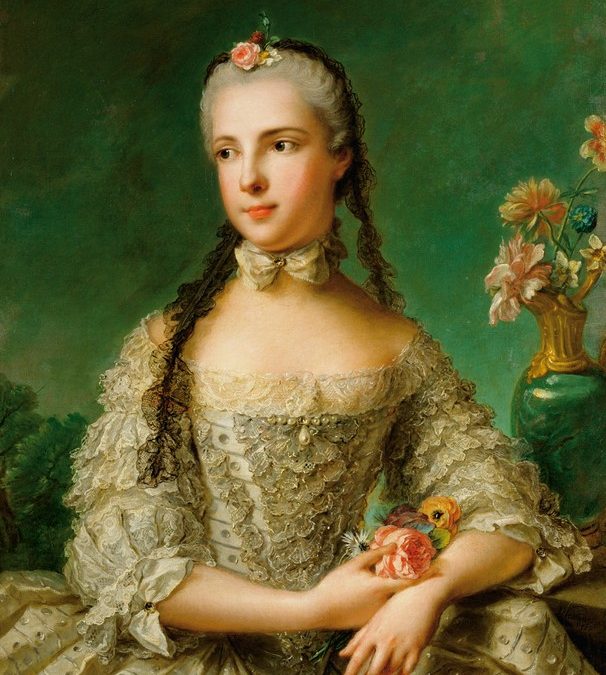
Maria Christina or Mimi
Archduchess Maria Christina was born on her mother’s 25th birthday at the Imperial Palace in Vienna, she was her fifth child and fourth daughter of Maria Theresa of Austria and Francis I, Holy Roman Emperor.
Maria Christina Johanna Josepha Antonia was born on 13 May 1742 at Vienna, Austria. The next day she was baptised in the Hofburg under the watchful gaze of her grandmother Elisabeth Christine, the dowager Holy Roman Empress.
Known simply as Mimi she was a capricious and spirited and her mother’s favourite child. Beautiful, highly intelligent and artistically gifted, Mimi mastered Italian and French and spoke good English. She was also talented with the paintbrush; she painted the Imperial family at work and play and copied the paintings of Dutch and French masters.
Mimi was in love with life and in love with love. At 17-years-old she had a romance with Duke Louis Eugene of Württemberg, but a marriage between them was dismissed. The third son of the Duke of Württemberg wasn’t good enough for an Archduchess. Mimi’s broken heart was soon mended with the arrival of the Princes Albert and Clemens of Saxony in at the Imperial Palace in 1760.
Mimi first met Albert at a concert during the Christmas celebrations and the attraction it seems was instant and mutual. However, at the end of January Albert and his brother returned to Saxony.
In the same year Mimi’s brother Archduke Joseph of Austria, heir to the Habsburg Monarchy was married to Isabella of Parma. The marriage took place by proxy and then Isabella was escorted from Italy to Austria. The formal wedding celebrations began on 6 October 1760 and lasted several days. Isabella was 18 homesick and still mourning the death of her mother. Joseph was thrilled with his new bride but Isabella did not feel the same.
Instead, she formed an almost immediate and strong attachment to Mimi which Mimi reciprocated. The pair became very close, some say they were lovers. The played music together and enjoyed each other’s company. Isabella was beautiful, educated, and very sensitive. She detested court ceremonial and her position as the wife of the Habsburg heir. While her husband loved her very deeply, she was cold towards him and focussed her attention on Mimi. The pair wrote over 200 letters to each other.
In one such letter, Isabella wrote:
“I am writing to you again, cruel sister, though I have only just left you. I cannot bear waiting to know my fate, and to learn whether you consider me a person worthy of your love, or whether you would like to throw me into the river…. I can think of nothing but that I am deeply in love. If I only knew why this is so, for you are so without mercy that one should not love you, but I cannot help myself.“.
In a different letter, she wrote: “I am told that the day begins with God. I, however, begin the day by thinking of the object of my love, for I think of her incessantly.“.
Only the letters of Isabella have been preserved; those of Maria Christina were destroyed after her death.
Isabella despite her coolness towards her husband eventually became pregnant. On March 20, 1762, after nine months of mental and physical strain, Isabella gave birth to a daughter they named Maria Theresia. Isabella remained bedridden for 6 weeks after giving birth. In August 1762 and January 1763 Isabella suffered two separate miscarriages then she fell pregnant again that year with a baby girl. Six months pregnant she contracted smallpox. On 22 November 1763 premature labour began. The child survived less than a day and was named after Mimi. Isabella followed her daughter to the grave five days later. Mimi was devastated.
Less than a month later in December 1763, Prince Albert of Saxony returned to Vienna. He comforted Mimi in her desolation. He too had liked Isabella and shared Mimi’s sadness in her passing. The pair met at court through 1764 and gradually Mimi’s affection for Albert grew. Albert was not sure he would be able to marry her as although he was prince he was only a minor one. Nevertheless the pair took their chances especially when Albert was invited to join the Imperial family whilst stationed in Vienna in the Imperial Cavalry. Her mother liked Albert but her father had greater ambitions for Mimi he wanted her to marry her first-cousin Prince Benedetto of Savoy, Duke of Chablais. The Empress advised her impatient daughter to appear calm and cautious with regard to her liaison with Albert; however Maria Christina found it extremely difficult to conceal her feelings for her Saxon prince.
In July 1765 the Imperial family travelled to Innsbruck for the wedding of Archduke Leopold, Grand Prince of Tuscany to the Infanta Maria Luisa of Spain. Albert was also invited to the wedding and the lovers had to play it cool. Mimi returned home to Vienna without her love wondering what would happen to her next. She could not have imaged that her path to happiness would be paved with her own father’s sudden death on 18 August.
After a suitable period of mourning, Mimi was married to Albert. She was the only child of Francis I to marry for love. To aid the couple’s happiness Albert was appointed Field Marshal and Statthalter of Hungary; these posts forced him and his future wife to live in Pressburg but provide them with a healthy income. The castle was renovated at a cost of 1.3 million guldens, and the Dowager Empress even personally took care of the furniture and tableware. Finally, Maria Christina received from her mother a rich dowry: the Silesian Duchy of Teschen –whereupon Albert became entitled as Duke of Saxe-Teschen–, the towns of Mannersdorf, Ungarisch Altenburg and other lordships, and the amount of 100,000 guldens. The household of the couple included about 120 people making her brothers and sisters pea-green with envy.
Maria Christina gave birth to a daughter named Maria Christina Theresa on 16 May 1767, but the child lived one day. She survived the puerperal fever that followed the birth but it left her barren. Unable to have any more children she persuaded her brother Leopold, Grand Duke of Tuscany to let her and her husband adopt one of his youngest sons, Archduke Charles, as their heir.

Prince Albert of Saxony
Sources: Wikipedia.
Julia Herdman writes historical fiction that puts women to the fore. Her latest book Sinclair, Tales of Tooley Street Vol. 1. is Available on Amazon – Paperback £10.99 Kindle £2.42 Also available on:
Amazon Australia
Amazon Canada
Amazon New Zealand
Amazon South Africa
Amazon USA
Also on Smashwords

Recent Comments