by Julia Herdman | May 2, 2017 | Blog
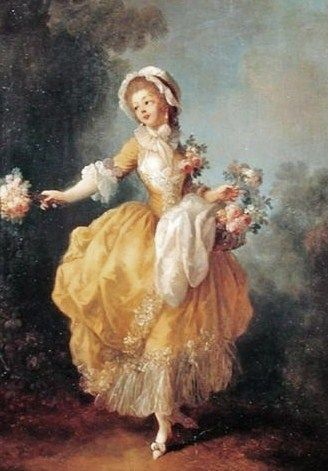
The Royal Swedish Ballet is one of the oldest ballet companies in Europe. Based in Stockholm, Sweden, King Gustav III founded the ballet in 1773 as a part of his project to bring his kingdom to the fore in European culture. Gustav III wanted to create Swedish ballet dancers and to do this he encouraged foreign dancers to live and work in Sweden and Giovanna Bassi (1762–1834), an Italian trained ballet dancer, responded to the king’s request as her brother; the architect Carlo Bassi (1772–1840); was already living there.
Giovanna who had trained in Italy moved to Paris where she was the student of Jean Dauberval the creator of La Fille Mal Gardée, one of the most enduring and popular works of the ballet repertoire today. Giovanna became a star of the Paris Opera then in 1783, at the age 19, she moved to Sweden.
Her technique was entirely Italian; she was described as noble with beautiful black hair. At her debut in Stockholm, the applause was said to loud enough “to outdo the thunder”, and caused what was to be referred to as the “Bassi fever” to begin. She danced many roles and gave dancing classes for girls from the upper classes, and occasionally performed as an actor at the French Theatre. All this work made Giovanna a very wealthy woman.

She began an affair with one of the king’s close friends, Adolf, Count Munck. Munck was a notorious womaniser, the king even asked him to give sex lessons so that he could consummate his marriage to Sophia Magdalena of Denmark. Munck himself writes in his written account, which is preserved at the National Archives of Sweden, that in order to succeed, he was obliged to touch them both physically. This “aid” resulted in the birth of the future King Gustav IV in 1778. The story of baby Gustav’s conception did not however remain private and scandal erupted with rumours circulating that Munck was either the child’s father or the lover of both the king and queen. Accusations from the political opposition were circulating as late as 1786 and in 1789 there were still claims that the King had asked Munck to make the Queen pregnant.
Bassi had a daughter, Johanna Fredrika, by Munck in 1787; she was 25 and he was 38. Bassi’s daughter was said to have a strong resemblance to baby Gustav so Munck might have been his father after all. Munck was forced to leave Sweden 1792 when Gustav III died, he was too tainted with scandal and the rumours about the Regent’s parentage just would not go away. Bassi left the Swedish Ballet and followed him to Rome where she expected him to formally acknowledge their daughter and to marry her. He did neither.
During her stay in Italy, she received large sums of money from the Swedish government to spy on their ambassador Gustaf Mauritz Armfelt in Naples who was courting the support of Catherine the Great for a military intervention to change the Swedish government. With Bassi’s help the plot was discovered. The Swedes sent a man-of-war to Naples to seize him but he escaped with the help of the exiled British Queen Caroline and fled to Russia. At home, he was condemned to death as a traitor and his property confiscated. His mistress, Magdalena Rudenschöld, was judged for complicity and pilloried on the Riddarhus Square before being imprisoned for two years in Stockholm.
Bassi returned to Sweden in 1794 and re-entered the Swedish Ballet, but she was only to remain there for a short while. Munck later made her daughter a beneficiary in his will, but Bassi refused to accept it and denied Munck’s claim on her daughter. She made her break with Munck final in 1794, when she married the German-Swedish merchant Peter Hinrik Schön (1765–1821) following her last performance. In her marriage contract, Bassi stipulated that her spouse should acknowledge her daughter with Munck as his, and that her great fortune should remain her personal and sole property. Schön was bankrupt at the time of the marriage, but was afterwards able to buy Ekholmsnäs Manor at Lidingö; an island in the inner Stockholm archipelago, northeast of Stockholm; where Bassi spent the rest of her life as a business woman, attending to her manor, a brick factory and a snuff factory. She lived with her mother and her friend, the actress Elise Dubelloi from the French Theatre in Sweden and had three sons with Schön. She died a wealthy and successful woman in 1834, aged 72.
Sources: Wikipedia
Illustrations: Ballet Dancer, Jean-Frederic Schall 1752-1825, miniature of Giavanna Bassi
Julia Herdman writes historical fiction that puts women to the fore. Her latest book Sinclair, Tales of Tooley Street Vol. 1. is Available on Amazon – Paperback £10.99 Kindle £2.29 Also available on:
Amazon Australia
Amazon Canada
Amazon New Zealand
Amazon South Africa
Amazon USA

by Julia Herdman | May 2, 2017 | Blog
The Blue Stockings Society was founded in the early 1750s by Elizabeth Montagu (seen above), Elizabeth Vesey and others as a women’s literary discussion group, a revolutionary step away from traditional, non-intellectual, women’s activities. They invited both women and men to attend, including botanist, translator and publisher Benjamin Stillingfleet. One story tells that Stillingfleet was not rich enough to have the proper formal dress, which included black silk stockings, so he attended in everyday blue worsted stockings. The term came to refer to the informal quality of the gatherings and the emphasis on conversation over fashion.
Diarist, James Boswell wrote, “It was much the fashion for several ladies to have evening assemblies, where the fair sex might participate in conversation with literary and ingenious men, animated by a desire to please. These societies were denominated Bluestocking Clubs”.
It was a loose organisation of privileged women with an interest in education to gather together to discuss literature while inviting educated men to participate. The women involved in this group generally had more education and fewer children than most English women of the time. These women preferred to challenge the traditional view of what was ‘becoming’ such as proficiency in needlework and knitting preferring to read Greek or Latin, and many of the most immodest texts so they had their critics. Among them was one of their own members Mrs. Barbauld. Anna Laetitia Barbauld (1743 – 1825) was a prominent “woman of letters” who published in multiple genres; Barbauld had a successful writing career at a time when female professional writers were rare. To find out more about her read my blog No Exaggerated Praise. Barbauld wrote, “The best way for a woman to acquire knowledge is from conversation with a father, or brother, or friend.”
The original bluestocking circle included Hester Thrale, Hannah More, Hester Chapone, Mary Delany, Margaret Bentinck, Duchess of Portland, Elizabeth Carter, Sir Joshua Reynolds and his sister Frances, Fanny Burney, Samuel Johnson, William Pulteney, 1st Earl of Bath, James Boswell, David and Eva Garrick, Edmund Burke, George Lyttelton, Mrs Ord, Mrs Crewe and Benjamin Stillingfleet the man with the blue stockings.
The group has been described by many historians and authors as having preserved and advanced feminism due to the advocacy of women’s education, social complaints of the status and lifestyle expected of the women in their society as expressed by Elizabeth Montague in 1743. “In a woman’s education little but outward accomplishments is regarded … sure the men are very imprudent to endeavour to make fools of those to whom they so much trust their honour and fortune, but it is in the nature of mankind to hazard their peace to secure power, and they know fools make the best slaves.”
By the early 1800s, this sentiment had changed, and it was much more common to question “why a woman of forty should be more ignorant than a boy of twelve?”
The term ‘Blue Stocking’ today refers to an intellectual woman and the name is used frequently by feminist organisations and businesses, for example:
- Bluestockings (bookstore), a feminist bookshop in New York
- Bluestocking (magazine), a Japanese feminist magazine, Bluestocking (Seitō; 青鞜) was a Japanese feminist magazine founded in 1911 by a group of 5 women including Raichō Hiratsuka, Yasumochi Yoshiko, Mozume Kazuko, Kiuchi Teiko and Nakano Hatsuko, all founding members of the Bluestocking Society (Seitō-sha;青鞜社).Many members were referred to and referred to themselves as “New Women” (shin-fujin;新婦人). This term denoted women who wore fashionable Western dress, socialized with men in public, and chose their own romantic partners. Many in the press used this term pejoratively, but the members of the Seitō-sha rejected these negative connotations and embraced an identity as leaders in the reform of gender relations.
Though originally focusing on women’s literature, the magazine soon shifted focus towards women’s liberation, and the pages of Seitō are filled with essays and editorials on the question of gender equality. In many of these, members of the group air their differing opinions on issues of the day, such as the importance of a woman maintaining her virginity before marriage. Legalized prostitution, abortion, and women’s suffrage were also the subject of animated discussion. Such writings caught the attention of the Ministry of Home Affairs because criticism of the system of private capital (capitalism) was banned under the Public Order and Police Law of 1900. Two other issues would be banned by the Ministry’s censorship bureau and removed from store shelves because their frank expressions of female sexuality were deemed threats to public morality.
Even more than the content of the journal, the private behavior of the core members of the Bluestocking society drew public criticism. Several of them engaged in affairs with married men, rumors of which the press exploited with gusto. But this was not separate from the journal, because members of Bluestocking often wrote essays and semi-autobiographical stories that described their struggles to form equal relationships based on mutual romantic attachment (rather than through arranged marriage) both inside and outside of marriage. Their frank discussions about premarital sex and their advocacy for women’s independence in this regard led to further public condemnation.
An exhausted Hiratsuka turned over the reins to Noe Itō in 1915. Ito produced the journal with little assistance for almost another year. Its last issue was published in February 1916.
- M.P., an 1811 comic opera by Thomas Moore and Charles Edward Horn, subtitled The Blue Stocking
- Bluestockings: the Remarkable Story of the First Women to Fight for an Education, a 2009 book by Jane Robinson
- Blue Stockings (play), a 2013 play by Jessica Swale
Julia Herdman writes historical fiction that puts women to the fore. Her latest book Sinclair, Tales of Tooley Street Vol. 1. is Available on Amazon – Paperback £10.99 Kindle £2.42 Also available on:
Amazon Australia
Amazon Canada
Amazon New Zealand
Amazon South Africa
Amazon USA

by Julia Herdman | Apr 27, 2017 | Blog
Between 1780 and 1810, many French women painters reached impressive heights of artistic achievement and professional success. They achieved this despite a cap on the number of women admitted to France’s prestigious Académie Royale de Peinture et de Sculpture, and restrictions that barred women from the life drawing classes. At the end of the eighteenth century, women ranked among the most sought-after artists in Europe.
One such was Élisabeth Louise Vigée Le Brun. Le Brun was born in Paris on 16 April 1755, the daughter of a portraitist and fan painter and a hairdresser. Her early childhood was spent in the country where she attended a residential convent school until she was eleven. When she returned home, her father recognised his daughter’s natural skills and ability to paint and gave her access to his studio to develop her skills. Unfortunately, her father died a couple of years later, but luckily her mother married Jacques Le Sèvre, a highly successful jeweller a year later and the family moved to the Rue Saint-Honoré, close to the Palais Royal where Elisabeth continued to paint. By the time she was in her early teens, Elisabeth was painting portraits professionally although ran into trouble with the Paris artists’ guild for practising without a license.

Elisabeth married Jean-Baptiste-Pierre Le Brun, a painter and art dealer in 1776 and the pair began what was to become a very successful business and family life. Four years later Elisabeth gave birth to her first and only child, a daughter, Julie and a year after that she set off to tour Flanders and the Netherlands with her husband to paint members of the Dutch aristocracy. While Elisabeth was there, she was inspired by the paintings he saw in the homes and galleries she visited and decided to adopt some of their techniques. In 1787, she caused a minor public scandal with a self-portrait, that showed her smiling which was at the time considered outrageous as no Greek statue ever showed their teeth!
Her growing fame won her an invitation to the Palace of Versailles and the patronage of Marie Antoinette. Le Brun painted the queen and her children more than thirty times for six years. Le Brun supported the queen’s campaign to present herself as a doting mother, and in return, the queen supported Le Bruns’ application to France’s most prestigious academy, the Académie Royale de Peinture et de Sculpture. She was admitted in 1783 on the same day has another female artist, Adélaïde Labille-Guiard giving the press an opportunity to cast the two women as rivals, pitting Le Brun’s “feminine” style of loose brushstrokes, high-toned colour, and flattering renderings of her sitters against the more “masculine” characteristics of crisp, muted tones, and truth to nature of Labille-Guard’s work. Although many critics applauded the women’s prominence, others lambasted them for immodesty and pamphleteers frequently depicted them naked.
Royal patronage was fine until the outbreak of the revolution in 1789 when association with the royal family was tantamount to a death warrant so Le Brun, who was now separated from her husband, took her daughter and fled to Italy where she lived and worked from 1789 to 1792. From Italy, she moved to Austria where she worked for three years then to Russia where she painted the portraits of aristocrats until 1801.
After a sustained campaign by her ex-husband and other family members to have her name removed from the list of counter-revolutionary émigrés, Le Brun was finally able to return to France during the reign of Emperor Napoleon I in 1804. In spite of being no longer labelled as émigrée, her relationship with the new regime was never totally harmonious, as might be expected given that she was a staunch royalist and the former portraitist of Marie Antoinette.
Much in demand by the élite of Europe, she visited England at the beginning of the 19th century and painted the portrait of several British notables, including Lord Byron. In 1807 she travelled to Switzerland and was made an honorary member of the Société pour l’Avancement des Beaux-Arts of Geneva.
She published her memoirs in 1835 and 1837, which provide an interesting view of the training of artists at the end of the period dominated by royal academies. Still very active with her painting in her fifties, she purchased a house in Louveciennes, Île-de-France, and lived there until the house was seized by the Prussian Army during the war in 1814. She stayed in Paris until her death on 30 March 1842 when her body was taken back to Louveciennes and buried in the Cimetière de Louveciennes near her old home. Her tombstone epitaph states “Ici, enfin, je repose…” (Here, at last, I rest…).
Sources: Wikipedia,
Katharine Baetjer, Department of European Paintings, The Metropolitan Museum of Art.
Illustrations: Self portrait with Julie. Marie-Antoinette with her children.
Julia Herdman writes historical fiction that puts women to the fore. Her latest book Sinclair, Tales of Tooley Street Vol. 1. is Available on Amazon – Paperback £10.99 Kindle £2.29 Also available on:
Amazon Australia
Amazon Canada
Amazon New Zealand
Amazon South Africa
Amazon USA
Maria Cosway the Artist who Captured the Heart of Thomas Jefferson
Against the Grain - 18th Century British Art
Mary Moser - Founding Member of London’s Royal Academy

by Julia Herdman | Apr 25, 2017 | Blog
Astronomy, mathematics and physics were popular fields of study for many of the brightest 18th-century women with access to money and books. Gabrielle-Emilie Le Tonnelier de Breteuil was one such woman. She was the daughter of the French court’s chief of protocol and her father rather unusually for the time encouraged her education. By the time she was twelve she was fluent in Latin, Italian, Greek and German.
Gabrielle-Emilie was a precocious teenager as well as a child genius; she liked to dance, was a passable performer on the harpsichord, sang opera, and was an amateur actress. Being short of money for books, she used her mathematical skills to devise highly successful strategies for gambling. Her mother Gabrielle-Anne was horrified tried to have her clever daughter sent to a convent.
In 1725 Gabrielle-Emilie married the Marquis du Chatelet at the age of 19 and lived the life of a courtier at the French court. She bore her husband three children, but at age 27 she began studying mathematics seriously and then branched into physics. This interest intensified when she started an affair with the philosopher Voltaire. Their friendship, if not their relationship, was lifelong and one of mutual respect and admiration.
Her philosophical magnum opus, Institutions de Physique or Foundations of Physics, was published in 1740 when she was 34. It was an immediate success, circulated widely, and republished and translated into several other languages within two years of its publication. With a growing reputation in the world of men, she participated in the famous vis viva debate concerning the calculation of the motion of orbiting bodies - the planets. However, Du Chatelet’s most lasting contribution to science was her French translation of Isaac Newton’s Principia, which is still in use today.
At age 43, she fell in love with a young military officer and became pregnant; she died following complications during the birth of their child. Posthumously, her ideas were included in the Encyclopédie of Denis Diderot and Jean le Rond D’Alembert.
Sources: Smithsonian Magazine, Wikipedia, Illustration: The Granger Collection, New York.
Iona McNeal, is a character in my new novel, Sinclair. Iona is a bright young woman, the daughter of the head of Edinburgh’s medical school. She studies mathematics, physics and astronomy at home. You can find out what happens to her in my latest book Sinclair, Tales of Tooley Street Vol. 1. Available on Amazon – Paperback £10.99 and on Kindle
Also available on:
Amazon Australia
Amazon Canada
Amazon New Zealand
Amazon South Africa
Amazon USA
From Housemaid to Commit Catcher - Caroline Herschel
Witch or Saint ? Maria Gaetana Agnesi
Nursing by Numbers
Byron’s Daughters - A Tale of Three Sisters

by Julia Herdman | Apr 22, 2017 | Blog
Irish Nationalist; Constance Markievicz was the first woman to be elected to the UK Parliament.
At the end of World War 1 in 1918, some women over the age of 30 got the vote. That year another law was passed, the Qualification of Women Act, which allowed women to stand as candidates and be elected to Parliament.
It is a surprising but true fact that the first woman to be elected to the House of Commons was Constance Markievicz, an Irish Nationalist who was elected to Parliament in the general election of 1918. Constance was born at Buckingham Gate in London, the eldest daughter of the Arctic explorer and adventurer Sir Henry Gore-Booth, an Anglo-Irish landlord. Constance was an artistic and independent spirit and decided to train as a painter, but, at the time, only one art school in Dublin accepted female students. In 1892, she went to study at the Slade School of Art in London, where she became involved in the National Union of Women’s Suffrage Societies (NUWSS). Later she moved to Paris and enrolled at the prestigious Académie Julian where she met her future husband, Casimir Markievicz, an artist from a wealthy Polish family from Ukraine. The couple married following the death of his first wife in 1900 when she became known as “Countess Markievicz”.
The couple settled in Dublin and became involved with Irish Nationalists artists in the Gaelic League. She joined Sinn Féin and Inghinidhe na hÉireann (‘Daughters of Ireland’), a revolutionary women’s movement founded by the actress and activist Maud Gonne, muse of W. B. Yeats. She went to her first meeting directly after a civic function at Dublin Castle, the seat of British rule in Ireland, wearing a satin ball-gown and a diamond tiara much to their amusement. She took an active part in the Easter Rising in 1916 and served time in prison following its failure.
At the 1918 general election, Markievicz was elected for the constituency of Dublin St Patrick’s. However, as a member of Sinn Fein, the party that campaigns for a united Ireland, she did not take her seat. Sinn Fein still does not send its elected MPs to sit in the UK Parliament. Constance was in Holloway prison when her colleagues assembled in Dublin at the first meeting of the First Dáil, the Parliament of the revolutionary Irish Republic. When her name was called, she was described, as many of those elected were, as being “imprisoned by the foreign enemy” (fé ghlas ag Gallaibh). She was re-elected to the Second Dáil in the elections of 1921.
Sources:
www.ukparliament
Wikipedia
Julia Herdman is a novelist. Her latest book Sinclair, Tales of Tooley Street Vol. 1 is Available on Amazon – Paperback £10.99 and on Kindle
Also available on:
Amazon Australia
Amazon Canada
Amazon New Zealand
Amazon South Africa
Amazon USA
History of Women in Politics: From Shop Assistant to Parliament - Margaret Bondfield
History of Women in Politics: Margaret Wintringham, A Headmistress from Grimsby Goes to Parliament
Home

Recent Comments