
by Julia Herdman | Jun 29, 2017 | Blog, Literature, Marriage, Romance
From 1846 to 1854, Gustave Flaubert, the creator of Madame Bovary, had a relationship with the poet Louise Colet. The relationship turned sour, however, and they broke up. Louise was allegedly so angered by her breakup with Flaubert, she wrote a novel, Lui,(Him) in an effort to target Flaubert. However, Colet’s book has failed to have the lasting significance of Madame Bovary. Flaubert’s dozens of long letters to her, in 1846–1847, then especially between 1851 and 1855, are one of the many joys of his correspondence. Many of them are a precious source of information on the progress of the writing of Madame Bovary. In many others, Flaubert gives lengthy appreciations and critical comments on the poems that Louise Colet sent to him for his judgement before offering them for publication. The most interesting of these comments show the vast differences between her and him on the matter of style and literary expression, she being a gushing Romanticist, he deeply convinced that the writer must abstain from gush and self-indulgence.
An extract from one of the letters is reproduced below. Flaubert never married and according to his biographer Émile Faguet, his affair with Louise Colet was his only serious romance. Flaubert believed in, and pursued, the principle of finding “le mot juste” (“the right word”), which he considered as the key means to achieve quality in literary art. Does he find ‘le mot juste’ in this letter dated 1846?
“I will cover you with love when next I see you, with caresses, with ecstasy. I want to gorge you [sic] with all the joys of the flesh, so that you faint and die. I want you to be amazed by me, and to confess to yourself that you had never even dreamed of such transports… When you are old, I want you to recall those few hours, I want your dry bones to quiver with joy when you think of them.”
In his novel he Flaubert gives expression to his thoughts on love to Emma;
“Before her marriage she had thought that she had love within her grasp; but since the happiness which she had expected this love to bring her hadn’t come, she supposed she must have been mistaken. And Emma tried to imagine just what was meant, in life, by the words “bliss,” “passion,” and “rapture” - words that had seemed so beautiful to her in books.”
“She was not happy-she never had been. Whence came this insufficiency in life-this instantaneous turning to decay of everything on which she leaned? But if there were somewhere a being strong and beautiful, a valiant nature, full at once of exaltation and refinement, a poet’s heart in an angel’s form, a lyre with sounding chords ringing out elegiac epithalamia to heaven, why, perchance, should she not find him? Ah! How impossible! Besides, nothing was worth the trouble of seeking it; everything was a lie. Every smile hid a yawn of boredom, every joy a curse, all pleasure satiety, and the sweetest kisses left upon your lips only the unattainable desire for a greater delight.”
In choosing to lose his heart to Louise Colet Flaubert had chosen badly. In her twenties she married Hippolyte Colet, an academic musician, partly in order to escape provincial life and live in Paris, echoes of Emma Bovary here I’m sure. When the couple arrived in Paris, Colet began to submit her work for approval and publication and soon won a two-thousand-franc prize from the Académie française, the first of four prizes won from the Académie. Like many women of note she ran a salon that was frequented by many of the city’s literary crowd including Victor Hugo. In 1840 she gave birth to her daughter Henriette, but neither her husband nor her lover, Victor Cousin, would acknowledge paternity of the child. After her affair with Flaubert she took up with Alfred de Musset, then Abel Villemain.
She was a resourceful woman and after her husband died, she supported herself and her daughter with her writing. Her “dry bones” probably did not quiver when she thought about Flaubert in her old age, far more water passed under her bridge than it ever did under Flaubert’s.
Illustration: Louise Colet by James Tissot (1836-1902), Oil on canvas, 1861.
Julia Herdman writes historical fiction that puts women to the fore. Her latest book Sinclair, Tales of Tooley Street Vol. 1. is Available on Amazon – Paperback £10.99 Kindle £2.42 Also available on:
Amazon Australia
Amazon Canada
Amazon New Zealand
Amazon South Africa
Amazon USA

by Julia Herdman | Jun 26, 2017 | Blog, History of India, Marriage, Politics
Lakshmi bai, the Rani or Queen of Jhansi (1828-1858) was a remarkable woman and one of the leaders of the Indian Rebellion of 1857. She has since become emblematic of Indian rebellion against the encroachment of British imperialism and is celebrated by her country and people as a woman who lived contrary to the perceived notions of nineteenth-century Indian feminine decorum.
Many contradictory stories have been written about Bai that depict her as either an honorable head of state or as a ruthless, deceitful, and cunning warrior. Likewise, physical descriptions of Bai vary; some describing her as possessing beautiful facial features, and others describing her as badly scarred by smallpox. Nevertheless, she is considered an Indian national hero for leading the Jahnsi army against the British and is sometimes referred to as “the Indian Joan of Arc.”
Lakshmi bai was born in Poona into a Marathi Brahmin family. Her birth name was Maninkarnika and the date of her birth is believed to be November 19, 1835. Nicknamed Manu she moved to the holy town of Varanasi in the northern portion of India. Her mother died when she was four. her mother died when she was of four years. She was brought up in the family of her father’s employer the Peshwa of Bithoor who treated her like his own daughter.
Lakshmi bai had an unusual upbringing for a Brahman girl. Growing up with the boys in the Peshwa’s court, she was trained in martial arts and became proficient in sword fighting and riding elephants and horses. Two of her childhood friends were Nana Sahib and Tatya Tope, both of whom were active participants in the Great Rebellion.
Lakshmi bai married the Maharaja of Jhansi, Gangadhar Rao who was more than twice her age. She was soon widowed. The pair had no children so following established Hindu tradition, just before his death, the maharaja adopted a boy as his heir.
Lord Dalhousie, the British governor-general of India, refused to recognize their adopted heir and annexed Jhansi in accordance with the doctrine of lapse and an agent of the East India Company was posted in the small kingdom to look after administrative matters.
Lakshmi bai decided to go against the British. She was just 22-year-old when she refused to cede Jhansi to the British. This was shortly after the beginning of the mutiny in 1857, which broke out in Meerut. With rebellion already taking place in India, Lakshmi bai was proclaimed the regent of Jhansi and joined the uprising. She rapidly organised her troops and assumed charge of the rebels in the Bundelkhand region. She was so successful that mutineers in the neighbouring areas headed toward Jhansi to offer her support.
Lakshmibal ‘s opponents were fierce. General Hugh Rose, of the East India Company’s forces, began the counteroffensive in Bundelkhand in January 1858. Advancing from Mhow, Rose captured Saugor (now Sagar) in February and then turned toward Jhansi in March.
East India company forces surrounded the fort of Jhansi, and the battle ensued. Offering stiff resistance to the invading forces, Lakshmi bai did not surrender even after her troops were overwhelmed and the army of her childhood friend Tantia Tope was defeated at the Battle of Betwa.
Despite the defeat of her forces Lakshmi bai managed to escape from the fort with a small band of palace guards. She headed eastward, where other rebels joined her. Together Tantia Tope and Lakshmi Bai then mounted a successful assault on the city-fortress of Gwalior. The treasury and the arsenal were seized, and Nana Sahib, the local leader, was proclaimed as the Peshwa. After taking Gwalior, Lakshmi bai marched east with her troops to Morar to confront Rose again. This time Lakshmi bai dressed as a man; she fought a fierce battle but was killed in combat.
According to a memoir purported to have been written by her husband’s adopted son Damodar Rao; he was among his mother’s troops and household at the battle of Gwalior; he says there were 60 men riding camels and horses. After the battle he fled and lived in the forest for two years. In that two years, Damodar and his retinue were whittled down by starvation and encounters British forces. Finally, Damodar Rao surrendered himself to a British official. His memoir ends in May 1860 when he was retired with a pension of Rs. 10,000 and seven retainers and put under the guardianship of Munshi Dharmanarayan, a loyal British subject.
Illustration: Portrait of Lakshmibai, the Ranee of Jhansi, (the 1850s or 1860s). Probably done after her death (June 1858): she wears a valuable pearl necklace and a cavalrywoman’s uniform.
Sources: Wikipedia, Encyclopedia Britannica.
Julia Herdman writes historical fiction that puts women to the fore. Her latest book Sinclair, Tales of Tooley Street Vol. 1. is Available on Amazon – Paperback £10.99 Kindle £0.99 Also available on:
Amazon Australia
Amazon Canada
Amazon New Zealand
Amazon South Africa
Amazon USA

by Julia Herdman | Jun 24, 2017 | Blog, Marriage, Politics, Women in Ancient History
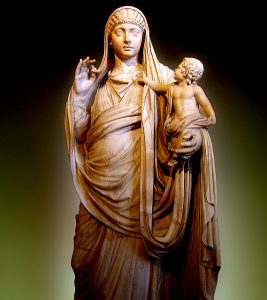
The Real Messalina wearing the clothes of a Roman matron holding her son Britannicus.
Messalina was born around 20 AD. She was a cousin of Nero and Caligula and became Empress when she married Claudius.
Little is known for certain about the life of Messalina, other than her descent through both parents from Octavia, Augustus’ sister and her claim to be the mother of Claudius’ children Britannicus and Claudia Octavia.
Along with Augustus’ daughter Julia (who he had banished for sleeping with so many different men), Messalina is probably one of the most notoriously promiscuous women of Rome. But, does she deserve her reputation?
In 37 AD, Messalina married Claudius, who was at least 30 years older than her. At this time Caligula was still Emperor. Claudius we are told by Roman historian Suetonius doted on Messalina, and after he became Emperor, Messalina used his affection for her to get whatever she wanted from him. Suetonius tells us that Messalina used her sexual allure to get her way with her aging husband too. Tacitus tells us she ordered that Claudius exile or execute anyone who displeased her or who she felt threatened by. Unfortunately, according to her detractors, this was a good number of people.
Suetonius paints a picture of a weak Emperor, Claudius, a man who was easily manipulated by his wife. The account of Messalina competing with a prostitute to see who could have sex with the most people in one night was first recorded by Pliny the Elder. Pliny says that, with 25 partners, Messalina won. The poet Juvenal tells in his sixth satire that the Empress used to work clandestinely all night in a brothel under the name of the She-Wolf
Messalina’s most famous affair is the one she had with the senator Gaius Silius. It is said she told Silius to divorce his wife, which he did and that they planned to kill Claudius and make Silius Emperor. When Claudius found out about his wife’s behaviour and plots Suetonius is of the opinion that he should have ordered her death, but instead the stupid doting old man gave her another chance. Too weak and feeble to kill Messilina himself Suetonius as Claudius’ chief of the Imperial Guard do it instead. Suetonius says that when Claudius heard what had happened he simply asked for another chalice of wine. The Roman Senate then ordered a damnatio memoriae so that Messalina’s name would be removed from all public and private places and all statues of her would be taken down.
The problem for Messalina is that the Roman historians who relayed these stories about her, principally Tacitus and Suetonius, wrote them some 70 years after the events in a hugely hostile political environment where everything related to the imperial line to which Messalina had belonged was being trashed. Suetonius’ history is a great read but it is largely anti-Julio-Claudian scandal-mongering - they all get a bad press from him. Tacitus claims to be transmitting ‘what was heard and written by my elders’ without naming sources other than the memoirs of Agrippina the Younger, who had arranged to displace Messalina’s children in the imperial succession and was therefore particularly interested in blackening her predecessor’s name.
Messalina is portrayed by Tacitus as a scheming, manipulative and greedy liar who has no compunction in bringing down innocent people who she dislikes or who get in her way. Suetonius paints her as a whore and a woman who sleeps with lower class men - either way, she likes her sex rough and dirty which is not the hallmark of a respectable Roman matron let alone an Empress. What passes for history when it comes to Messalina is political and social annihilation. Accusations of sexual excess were and still are a tried and tested smear tactic against women. In this case, they were the result of politically motivated hostility. We know that when her affair with Gaius Silius was uncovered she did the very Roman thing of committing suicide in the company of her estranged mother; she was not killed by Claudius’ guards.
Her notorious story has had several outings on the silver screen - 1951, 1960, 1981
Julia Herdman writes historical fiction that puts women to the fore. Her latest book Sinclair, Tales of Tooley Street Vol. 1. is Available on Amazon – Paperback £10.99 Kindle £0.99 Also available on:
Amazon Australia
Amazon Canada
Amazon New Zealand
Amazon South Africa
Amazon USA
by Julia Herdman | Jun 19, 2017 | Blog, European Royal Families, Marriage, Politics, Society
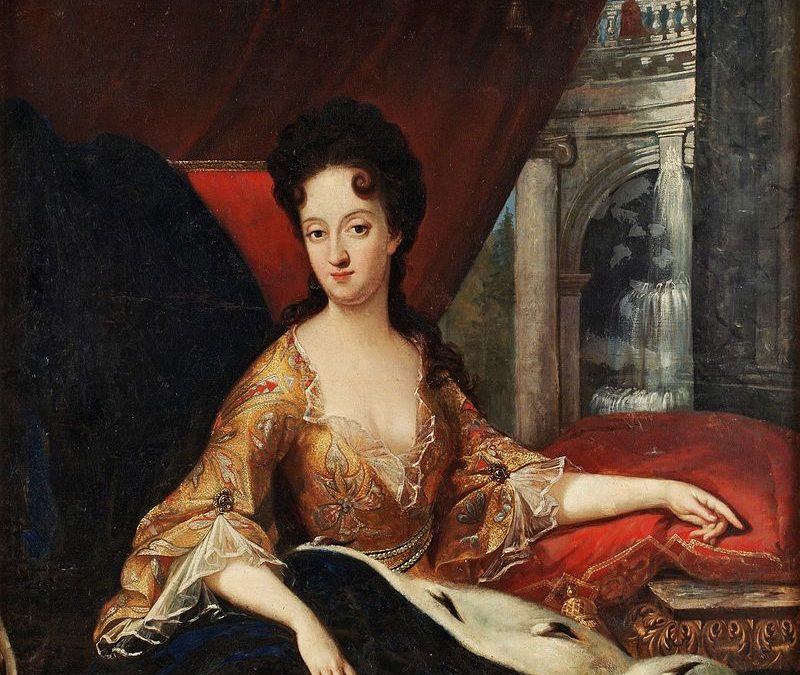
Queen Ulrika Eleonora the Younger (1688 – 1741), was Queen regnant of Sweden from 5 December 1718 to 29 February 1720, and then Queen consort until her death in 1741. She was the youngest child of King Charles XI and Ulrika Eleonora of Denmark. She had an elder brother and sister so never expected to be queen.
Her mother died in 1693 when she was five and little Ulrika and her elder sister, Princess Hedvig Sophia, were set off to be brought up by their grandmother, Hedwig Eleonora at Karlberg Palace. Grandmother was a consummate operator, she was the guiding light in her husband’s administration and she dominated her son so much that he referred to her as the Queen ignoring his wife. Her grandmother described Ulrika as a stubborn little girl who would pretend to be ill when it came to doing things she didn’t like riding and dancing. It seems little Ulrika was not the physical type but she was a talented musician, and when performing with her sister at court concerts, she would play the clavier while her sister sang. Although she was friendly, modest and dignified, with good posture and beautiful hands she was regarded as neither intelligent nor attractive and no match for her older sister.
Her father died in 1697 when Ulrika was 9 years old and the crown passed to her brother Charles XII (1682 –1718). Grandmother was sure he was too young to take on full royal responsibilities, he was only 15, and petitioned to act has his regent; a caretaker government was put in place which lasted for seven months then Charles took full command. Charles was an absolutist monarch; he believed he had been put in charge by God, an idea that was already encountering quite a bit of resistance in Europe at the time. He was, however, a successful war leader and achieve considerable success in defending Sweden in the Great Northern War.
On 12 May 1698, Princess Hedwig Sophia married her cousin, Frederick IV, Duke of Holstein-Gottorp. Her marriage was arranged as a part of the traditional Swedish policy of alliance with Holstein-Gottorp against Denmark. The marriage took place against her consent and she was not happy; Frederick IV had a string of mistresses and whores he preferred over his reluctant wife. Hedwig Sophia was a widow with a young son by 1702 but Ulrika was still unmarried. Hedwig Sophia returned to the Swedish court where she was the centre of attention, partying with her brother the king and lauded for her beauty and fashion sense. She was known as the “The Happy Princess” unlike her stubborn little mouse of a sister. Unfortunately, Hedwig Sophia caught smallpox in 1708 nursing her son who also had the disease. Hedwig Sophia died but her son survived.
With no marriage in prospect for her brother the king in sight Ulrika’s position suddenly changed with her sister’s death. In 1710, she received a marriage proposal from Prince Frederick of Hesse, he was a widower with an eye on her crown. The marriage was supported by her grandmother because it would force Ulrika to leave Sweden and so increased the chance of her favourite granddaughter’s son becoming king when Charles died. Although her prospective husband liked the idea of inheriting her crown his advisers were telling him that Ulrika was no great catch describing her as imperious, haughty, and suffering from bad breath and a weak bladder. Their engagement was announced four years later on 23 January 1714, and the wedding took place on 24 March 1715. During the wedding, her brother Charles XII remarked: “Tonight my sister is dancing away the crown”. But it turned out she wasn’t. When a musket ball went clean through her brother’s head in 1718 the Swedish nobles opposed to the war which had been waging for nearly two decades seized their chance and offered Ulrika the throne on the condition that she accepted a modern constitution for the country. She accepted but years of living as an autocrat made accepting what was required of her very difficult so she abdicated giving her crown to her husband who did the deed for her and Sweden took its first steps into the modern age. All of which goes to show that you don’t have to be clever, or beautiful to make history you just have to seize the opportunities life throws at you and do the right thing.
Julia Herdman writes historical fiction that puts women to the fore. Her latest book Sinclair, Tales of Tooley Street Vol. 1. is Available on Amazon – Paperback and on Kindle. Also available on:
Amazon Australia
Amazon Canada
Amazon New Zealand
Amazon South Africa
Amazon USA
by Julia Herdman | Jun 13, 2017 | Blog, Europe, European Royal Families, Fashion, Literature, Marriage, Politics, Romance, Society
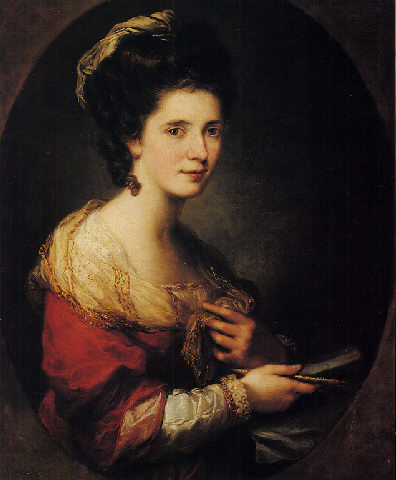
Anne-Louise-Germaine Necker, Baronne de Staël-Holstein, 22 April 1766 – 14 July 1817, was the daughter of the second most important man in France, Louis XVI’s Minister of Finances, Jacques Necker. Madame de Staël was born into a world of political and intellectual prominence. Later, she married Sweden’s ambassador to the French court, and for a span of twenty years, she held the limelight as a political figure and prolific writer. Despite a plain appearance, she was notoriously seductive and enjoyed whirlwind affairs with some of the most influential men of her time. She always attracted controversy and was demonised by Napoleon for her forthrightness, the sheer power of her intellect, and the progressiveness of her salon, which was a hotbed for the expression of liberal ideals. The emperor exiled her, on and off, for the last fifteen years of her life.
Her most famous novel was published in 1802. The story of Delphine tales place in Paris between 1789 and 1792. Delphine d’Albémar, a young widow, arranges a wedding between one of her distant relatives, Matilde de Vernon, and Léonce de Mondoville. But she falls in love with Léonce, and as he is engaged with Matilde, their love is impossible. The story ends tragically with Delphine killing herself.
Germaine grew up in France and was Protestant. Her parents became impatient for her to marry, and they are said to have objected to her marrying a Roman Catholic, which, in France, considerably limited her choice. There is a legend that William Pitt the Younger considered marrying her. The somewhat notorious lover of Julie de Lespinasse, Jacques Antoine Hippolyte, Comte de Guibert, a cold-hearted fop of some talent, certainly paid her attention but she finally settled on Baron Erik Magnus Staël von Holstein, who was first an attaché of the Swedish legation to France and then minister after 1783. For a great heiress possessed of great ambition, the marriage did not seem brilliant, but Germaine had wealth and her future husband had considerable political and social standing. The marriage took place on 14 January 1786 in the chapel of the Swedish embassy in Paris. A singular series of negotiations secured from the king of Sweden a promise of an ambassadorship for 12 years and a pension in case of its withdrawal. At the time of her marriage, Germaine was 20, her husband 37.
On the whole, the marriage seems to have been acceptable to both parties at first, although neither had any affection for the other. The baron obtained great financial benefits, whereas his wife, with the rank of an ambassador’s consort, obtained a much higher position at court and in society than she could have secured by marrying almost any Frenchman, without the inconveniences that might have been expected had she married a Frenchman superior to herself in social rank. In spite of the mutual benefits that each could claim for many years, the marriage did not last. It ended with a formal separation in 1797, although the two remained legally married until the baron’s death in 1802.
Her novels were bestsellers and her literary criticism was highly influential. When she was allowed to live in Paris, she greatly encouraged any political dissident against the regime of Louis XVI. On the day before the September massacres of 1792, she fled writing a florid account of her escape. The fall of Maximilien Robespierre opened the way back to Paris. She reopened her salon and threw herself into opposition to Napoleon Bonaparte. During the years of the Empire she travelled in Germany and Austria and after the death of her husband in 1802 she married a man called Rocca.
In June 1816, she was visited by Lord Byron and she developed a warm friendship with the Duke of Wellington, whom she had first met in 1814. By 1816 she had become confined to her room if not to her bed. She died on 14 July that year. Rocca survived her by little more than six months. Her deathbed conversion to Roman Catholicism surprised many, including Wellington, who remarked that while he knew that she was greatly afraid of death, he had thought her incapable of believing in the afterlife.
Madame de Staël— a force of nature, exuberant idealist, and ultimate enthusiast—waged a lifelong struggle against all that was tyrannical, cynical, or passionless in her time, and left Europe a legacy of enlightened liberalism that radiated throughout the continent during the nineteenth century. There are a couple of notable biographies of this colour woman, Madame de Stael by Maria Fairweather, 2006 and Madame de Stael: The First Modern Woman by Francine du Plessix Gray, 2008.
Julia Herdman writes historical fiction that puts women to the fore. Her latest book Sinclair, Tales of Tooley Street Vol. 1. is Available on Amazon – Paperback and Kindle. Also available on:
Amazon Australia
Amazon Canada
Amazon New Zealand
Amazon South Africa
Amazon USA

by Julia Herdman | Jun 12, 2017 | Blog, British History, Literature, Marriage, Politics, Romance, Society, Writing about history
 Published anonymously, and not attributed to Defoe until 1775, the novel Roxana was a popular hit in the eighteenth century although many readers find it a hard read today.
Roxana was Defoe’s last, darkest, and most commercial novel. It is about a woman who trades her virtue for survival and, once she is secure financially, continues to sacrifice her virtue for greater and greater riches according to John Mullan in the introduction to the Oxford World Classic edition of Roxana.
Money, or lack of it, is the root of Roxana’s problems. The same is true for most female literary characters until the present day. Why is it we girls find it so hard to make ends meet financially?
The book is supposed to be a biography of a woman called Madamoselle Beleau, the lovely daughter of French Protestant refugees, who was brought up in England and married to a good-for-nothing son of an English brewer.
Fictional biographies, an oxymoron if ever there was one, were all the rage in 18th-century literature and Defoe’s story of Roxana was a particularly salacious one filled with moral ambiguity, sex and murder; a sure fired recipe for success even in today’s literature market.
The plot has many twists and turns but begins when after eight years of marriage, our heroine’s spendthrift husband leaves her penniless with five children to look after. Receiving no help from her relatives, she abandons her children to the care of an old woman; abandoning one’s children in any scenario especially a literary one is a sign a woman is about to become morally and socially persona non grata but Roxana justifies abandoning her children on the grounds that they were starving, confessing, ‘the Misery of my own Circumstances hardened my Heart against my own Flesh and Blood.” Of course, her husband has already abandoned them but there is no moral approbation for him.
The penniless Roxana starts up an affair with her landlord whose wife has left him. He offers to share his wealth with her, bequeathing her five hundred pounds in his will and promising seven thousand pounds if he leaves her. Her relationship with the landlord is often condemned by critics as a relationship based on personal gain and not love. A woman should always fulfil the English romantic ideal of giving herself up to love not for financial advantage; an ideal that was more honoured in the breach than in reality especially when it came to families with money in the eighteenth century.
The fictional pair settle down together but Roxana fails to produce a child for her new lover so she sends her maid to do the job for her, which she does. Roxana takes the child as her own to save her maid’s reputation. It seems children were to be traded too in Defoe’s lurid mind. Two years later, Roxana has a daughter of her own but the child dies within six months. A year later, she pleases her lover with a son, the inference being that boys are to be preferred. So far, Roxana’s actions are a curious mixture of adhering to and breaking the social, religious, and cultural norms of the day but with the death of her common-law husband, the landlord, she becomes a devoid of morality and sexual restraint.
 In the next part of the book, Roxana becomes a greedy hedonist and the mistress of a French prince with whom she has a son. She could have stopped her whoring when the landlord died, she had enough money to live as a quiet widow but she did not. The amoral Roxana likes money and sex and seems to have little or no feeling for the children she produces along the way. Finally, she marries a Dutch merchant who has been her longtime lover and friend, has another son and settles down into a respectable life. But, just as she is enjoying life her oldest daughter, Susan, turns up wanting a share of her mother’s new found fortune under threat of blackmail. Luckily Roxana has a maid who will rid her of her troublesome child by murdering her!
When her Dutch husband dies soon after Susan’s murder Roxana enters the final phase of her fall from matronly virtue to a common harlot. She returns to England with her bloom has well and truly gone but she still believes she has sexual power over men but with he looks and body ravaged by age and childbirth her allure fails and she becomes a common prostitute.
The end of the novel was adapted to the moral climate of its publication. In Defoe’s original version Roxana does not die but repents for the life she has lived, and that too—according to Roxana herself—only because she comes to an unhappy end after the death of her husband. However, with the book being published anonymously, as was often the case with fictitious histories in those days, it went through several editions with various endings, in all of which Roxana dies repenting of her sins.
The novel’s importance in feminists’ eyes comes from Roxanna’s celebrated claim that “the Marriage Contract is…nothing but giving up Liberty, Estate, Authority, and everything, to the Man“. It further draws attention to the incompatibility between sexual freedom and the responsibilities of motherhood in a world without contraception. The male characters in the novel seem to receive no moral approbation, unlike Roxana.
Some say the character of Roxana is a proto-feminist like Defoe’s other great female character, Moll Flanders because she works at prostitution for her own ends. Her work earns her independence from men. Indeed Defoe would have been aware of women all over London doing the same but probably with less success than his female characters, neither of which succumb to the pox or the violence that attends such trade.
It is difficult to take any moral or feminist lessons from Roxana because it is a novel of its time and more focused on themes Defoe’s readers would have recognised in the 18th century than any of today’s feminist ideals. I do think Defoe at least recognised an abandoned woman’s plight. As a character, Roxana has her origins in Restoration Comedy. She carries both the hope and optimism of the young that things will turn out well for her financially and in love but she is also burdened by the corruption of those who went before her. Her greed, moral corruption, and self-delusion; were perhaps a reflection of Defoe’s assessment of life.
 The happy ending of Restoration plays is supposed to be a restoration of order from the chaos and confusion fostered by the older generation’s dishonesty and greed. Defoe perhaps cannot blame Roxana for the faults of the older generation and so in his conclusion to the novel he does not seek to punish Roxana with death as so many of its more puritanical publishers did when they re-wrote the ending. I think Defoe knows there is no escape from the corruption of power and money. He had his own scrapes with the law, scrapes in business and got involved in corrupt politics. Perhaps he hopes that in reprieving Roxana his own moral shortcomings will find forgiveness.


Recent Comments