by Julia Herdman | Jul 18, 2017 | Arts and Literature, Blog, Europe, European Royal Families, Marriage, Romance, Visual arts, Women and Children

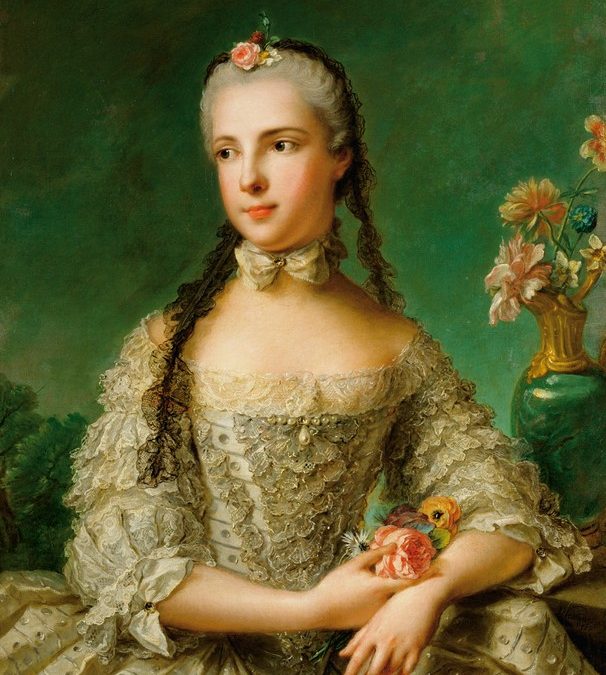
Maria Christina or Mimi
Archduchess Maria Christina was born on her mother’s 25th birthday at the Imperial Palace in Vienna, she was her fifth child and fourth daughter of Maria Theresa of Austria and Francis I, Holy Roman Emperor.
Maria Christina Johanna Josepha Antonia was born on 13 May 1742 at Vienna, Austria. The next day she was baptised in the Hofburg under the watchful gaze of her grandmother Elisabeth Christine, the dowager Holy Roman Empress.
Known simply as Mimi she was a capricious and spirited and her mother’s favourite child. Beautiful, highly intelligent and artistically gifted, Mimi mastered Italian and French and spoke good English. She was also talented with the paintbrush; she painted the Imperial family at work and play and copied the paintings of Dutch and French masters.
Mimi was in love with life and in love with love. At 17-years-old she had a romance with Duke Louis Eugene of Württemberg, but a marriage between them was dismissed. The third son of the Duke of Württemberg wasn’t good enough for an Archduchess. Mimi’s broken heart was soon mended with the arrival of the Princes Albert and Clemens of Saxony in at the Imperial Palace in 1760.
Mimi first met Albert at a concert during the Christmas celebrations and the attraction it seems was instant and mutual. However, at the end of January Albert and his brother returned to Saxony.
In the same year Mimi’s brother Archduke Joseph of Austria, heir to the Habsburg Monarchy was married to Isabella of Parma. The marriage took place by proxy and then Isabella was escorted from Italy to Austria. The formal wedding celebrations began on 6 October 1760 and lasted several days. Isabella was 18 homesick and still mourning the death of her mother. Joseph was thrilled with his new bride but Isabella did not feel the same.
Instead, she formed an almost immediate and strong attachment to Mimi which Mimi reciprocated. The pair became very close, some say they were lovers. The played music together and enjoyed each other’s company. Isabella was beautiful, educated, and very sensitive. She detested court ceremonial and her position as the wife of the Habsburg heir. While her husband loved her very deeply, she was cold towards him and focussed her attention on Mimi. The pair wrote over 200 letters to each other.
In one such letter, Isabella wrote:
“I am writing to you again, cruel sister, though I have only just left you. I cannot bear waiting to know my fate, and to learn whether you consider me a person worthy of your love, or whether you would like to throw me into the river…. I can think of nothing but that I am deeply in love. If I only knew why this is so, for you are so without mercy that one should not love you, but I cannot help myself.“.
In a different letter, she wrote: “I am told that the day begins with God. I, however, begin the day by thinking of the object of my love, for I think of her incessantly.“.
Only the letters of Isabella have been preserved; those of Maria Christina were destroyed after her death.
Isabella despite her coolness towards her husband eventually became pregnant. On March 20, 1762, after nine months of mental and physical strain, Isabella gave birth to a daughter they named Maria Theresia. Isabella remained bedridden for 6 weeks after giving birth. In August 1762 and January 1763 Isabella suffered two separate miscarriages then she fell pregnant again that year with a baby girl. Six months pregnant she contracted smallpox. On 22 November 1763 premature labour began. The child survived less than a day and was named after Mimi. Isabella followed her daughter to the grave five days later. Mimi was devastated.
Less than a month later in December 1763, Prince Albert of Saxony returned to Vienna. He comforted Mimi in her desolation. He too had liked Isabella and shared Mimi’s sadness in her passing. The pair met at court through 1764 and gradually Mimi’s affection for Albert grew. Albert was not sure he would be able to marry her as although he was prince he was only a minor one. Nevertheless the pair took their chances especially when Albert was invited to join the Imperial family whilst stationed in Vienna in the Imperial Cavalry. Her mother liked Albert but her father had greater ambitions for Mimi he wanted her to marry her first-cousin Prince Benedetto of Savoy, Duke of Chablais. The Empress advised her impatient daughter to appear calm and cautious with regard to her liaison with Albert; however Maria Christina found it extremely difficult to conceal her feelings for her Saxon prince.
In July 1765 the Imperial family travelled to Innsbruck for the wedding of Archduke Leopold, Grand Prince of Tuscany to the Infanta Maria Luisa of Spain. Albert was also invited to the wedding and the lovers had to play it cool. Mimi returned home to Vienna without her love wondering what would happen to her next. She could not have imaged that her path to happiness would be paved with her own father’s sudden death on 18 August.
After a suitable period of mourning, Mimi was married to Albert. She was the only child of Francis I to marry for love. To aid the couple’s happiness Albert was appointed Field Marshal and Statthalter of Hungary; these posts forced him and his future wife to live in Pressburg but provide them with a healthy income. The castle was renovated at a cost of 1.3 million guldens, and the Dowager Empress even personally took care of the furniture and tableware. Finally, Maria Christina received from her mother a rich dowry: the Silesian Duchy of Teschen –whereupon Albert became entitled as Duke of Saxe-Teschen–, the towns of Mannersdorf, Ungarisch Altenburg and other lordships, and the amount of 100,000 guldens. The household of the couple included about 120 people making her brothers and sisters pea-green with envy.
Maria Christina gave birth to a daughter named Maria Christina Theresa on 16 May 1767, but the child lived one day. She survived the puerperal fever that followed the birth but it left her barren. Unable to have any more children she persuaded her brother Leopold, Grand Duke of Tuscany to let her and her husband adopt one of his youngest sons, Archduke Charles, as their heir.

Prince Albert of Saxony
Sources: Wikipedia.
Julia Herdman writes historical fiction that puts women to the fore. Her latest book Sinclair, Tales of Tooley Street Vol. 1. is Available on Amazon – Paperback £10.99 Kindle £2.42 Also available on:
Amazon Australia
Amazon Canada
Amazon New Zealand
Amazon South Africa
Amazon USA
Also on Smashwords
by Julia Herdman | Jul 17, 2017 | Blog, Europe, Science, Women in Science, Writing about history
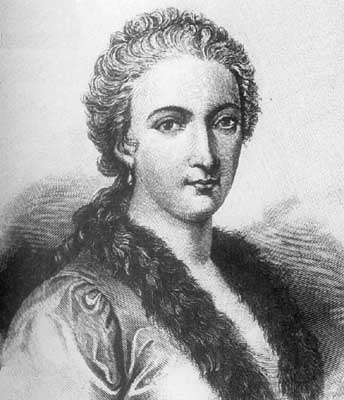
Maria Gaetana Agnesi 16 May 1718 – 9 January 1799 was an Italian mathematician, philosopher, theologian and humanitarian.
Maria Gaetana Agnesi was born in Milan, to a wealthy and literate family the third of 21 children. Her father Pietro Agnesi, a University of Bologna mathematics professor, her mother was the daughter of a prosperous silk manufacturer. Maria’s father supported her learning but gave priority to his sons. She soon outstripped her brothers and she was recognised as a child prodigy before she was 10 years old. She could speak both Italian and French at five years of age and by her eleventh birthday, she had added Greek, Hebrew, Spanish, German, and Latin to her arsenal of knowledge. She was often referred to as the “Seven-Tongued Orator”.
When she was nine years old, she composed and delivered an hour-long speech in Latin to some of the most distinguished intellectuals of the day; and the subject was, of course, a women’s right to be educated.
At the age of 12, she was found to be suffering from some undefined malaise. Her ill health was automatically attributed to her excessive studying and her doctors prescribed vigorous dancing and horseback riding as a remedy. This treatment did not work; she began to experience extreme convulsions, after which she was encouraged to be moderate in all her pursuits.
But there was no stopping Gaetana, by the age of fourteen she was studying ballistics and geometry and a year later her father began to regularly include her in his gatherings which included some of the most learned men in Bologna. Here she would read papers on the most abstruse philosophical questions of the day. Records of these meetings are given in Charles de Brosses’ Lettres sur l’Italie and in the Propositiones Philosophicae, which her father published in 1738.
In 1739 two Burgundian gentlemen were passing through Milan on their ‘Grand Tour’. They were Charles De Brosses, conseiller, at the parliament of Dijon and its future president Germain Ann Loppin de Montmort, conseiller at the parliament of Bourgogne, and a mathematician. While touring the churches and libraries of Milan in July 1739 they met Count Belloni and were invited to attend a salon or conversazione at the Agnesi Palazzo. The evening was that of the 16th of July, tired and thirsty the two men arrived at the main gate of the Palazzo Agnesi. The Palazzo’s exterior was elegant but plain. They were greeted by footmen dress in grey livery and taken to the first-floor apartment via a small drawing room adorned with vivid landscape paintings. They were then led through a larger room decorated with tapestries of gold and silver where a portrait of Holy Roman Emperor Charles VI and his consort for Elizabeth Christine gazed down on them. Finally, they arrived at a room with a harpsichord and decorated in crimson damask, where they were invited to sit in an audience of about 20 notable guests and served with glasses of iced water. Gaetana was there with her sister, the composer, and musician, Maria Theresa, and the conversation began when Count Belloni rose and asked Gaetana a question in Latin concerning the nature of tides. Gaetana began the discourse in the form an academic disputation putting forward ideas then dismissing them. An hour later Brosses was invited to ask a question, he decided to question her on the subject of the nature of the soul and the body and on the nature of light and colours. Then Loppin asked a question about the nature of circles and curves. When the discussion was over they were served fruit flavoured ices and Theresa played the harpsichord to entertain the guests.
In 1740, aged twenty-two, Gaetana began a period of studies with Father Ramiro Rampinelli, professor of physics and mathematics in Milan in the monastery of Olivetani of San Vittore. Rampinelli was an Olivetan monk and chair of mathematics and physics at ‘ University of Pavia. With Rampinelli Maria started to study other notable mathematicians and both differential and integral calculus.
Gaetana’s main contribution to the world of mathematics was the formula for a curve called ‘versiera’ a term derived from Latin vertere, to turn, but is also an abbreviation of Italian avversiera, female devil. Some wit in England once translated it as ‘witch’, and the silly pun is still preserved in most English textbooks. This curve appeared in the writings of Fermat (Oeuvres, I, 279–280; III, 233–234) and in the work of other prominent mathematicians. The name ‘versiera’ is from Guido Grandi (Quadratura circuli et hyperbolae, Pisa, 1703) and is a type 63 in Newton’s classification. Its principal use today is in astronomy and to show the distribution of energy in objects such as ocean waves.
With the help of fellow mathematician and astronomer Jacopo Riccati, she drafted her first book, Institutions Analytical for use by the Italian Youth which was published in Italian in 1748 and dedicated to Empress Maria Teresa. The book was well received and was translated into French in 1755 and English in 1801. In 1750, she replaced her father in teaching mathematics at ‘ University of Bologna and when he died in 1752, Pope Benedict XIV gave her a special dispensation to hold the rank of Professor but she did not take it up. Instead, she dedicated herself to charitable works; she opened a small hospital and worked there herself nursing the poor at the end of their lives.
Her religious inclinations led her to study theology in the second half of her life. She was a devout Catholic and wrote extensively on the marriage between intellectual pursuit and mystical contemplation, most notably in her essay Il Cielo Mistico (The Mystic Heaven). She saw the rational contemplation of God as a complement to prayer and contemplation.
Gaetana was the first woman to write a book on mathematics and the first to teach mathematics at a university. She was the first female professor of mathematics too although she never took up the post. Her lasting legacy is her wave, known as The Witch of Agnesi. Other honours included the dedication of one of the largest craters on the planet Venus; a metal model of a versiera is embedded in the square outside the town hall of the city of Varedo as a tribute to their most famous inhabitant and the house she lived in until she died in 1799 is now a music academy there. As a tribute to her genius several Italian cities have dedicated a street in her honour and in Merate ( LC ) there is a high school specialising in science and languages named after her.
Sources: Wikipedia and The World of Maria Gaetana Agnesi, Mathematician of God By Massimo Mazzotti, JHU Press, 2012
Julia Herdman writes historical fiction that puts women to the fore. Her latest book Sinclair, Tales of Tooley Street Vol. 1. is Available on Amazon
Amazon Australia
Amazon Canada
Amazon New Zealand
Amazon South Africa
Amazon USA

by Julia Herdman | Jul 14, 2017 | Blog, British History, British Royal Family, Marriage, Medicine, Romance, Science, Society, Women and Children
As the daughter of a king Princess Augusta was denied access to men of her own rank except those in her immediate family for most of her life. Like several of George III’s daughters she found herself lonely and drawn into romances with gentleman at court whether they were suitable or not.
It is believed that Princess Augusta first met Sir Brent Spencer, an Irish general in the British Army, around 1800. Augusta later told her brother, the future George IV, the two entered into a relationship in 1803 while Spencer was stationed in Britain. Although the couple conducted their relationship with the utmost privacy, Augusta did petition the Prince Regent in 1812 to be allowed her to marry Spencer, promising further discretion in their behaviour. While no official record of a marriage between the two exists, it was noted at the court of Hesse-Homburg at the time of her sister Elizabeth’s marriage in 1818 that Augusta was “privately married.”
Princess Augusta Sophia was born at Buckingham House, London, the sixth child and second daughter of George III (1738–1820) and his wife Queen Charlotte. The young princess was christened on 6 December 1768, by Frederick Cornwallis, The Archbishop of Canterbury, in the Great Council Chamber at St. James’s Palace. Princess Augusta had an older sister Charlotte (born 1766) and her younger sister Elizabeth (born 1770). In 1771, the two oldest princesses started travelling to Kew to take lessons under the supervision of Lady Charlotte Finch and Miss Planta. The pair, who had formerly been very close to their older brothers now saw little of them, except when their paths crossed on daily walks. In 1774, Martha Goldsworthy, or “Gouly” was put in charge of their education which included the feminine pursuits of deportment, music, dancing, and the arts. Their mother also ensured that they learned English, French, German, and Geography.
In 1782, aged 14, Augusta made her court debut on the occasion of her father’s birthday. Being terrified of crowds; the princess was painfully shy, and stammered when in front of people she didn’t know; her mother gave her only two days notice of the event. That year she lost her two baby brothers, Prince Alfred and Prince Octavius. Alfred had a bad reaction to his inoculation against smallpox and died aged nearly two. Six months after Alfred’s death, her younger brother Octavius and her sister Sophia were taken to Kew Palace in London to be inoculated with the smallpox virus. (This may seem irresponsible today but smallpox was virulent and no respecter of rank so inoculation, even with its risks was still probably a better bet than not being inoculated at all.) Sophia recovered without incident, but like his brother, before him, Octavius became ill and died several days later, he was just four years old. As was traditional at the time, the household did not go into mourning for the deaths of royal children under the age of fourteen but Augusta, who had loved the children dearly, was distraught.
Her formal education now came to an end. Now her duty was to join her elder sister and her parents at court and accompany them to the theatre and the Opera. With six daughters to clothe and educate the royal budget was stretched. The royal princesses often appeared in what was basically the same dress each in a different colour to save money and at home, they wore plain, everyday clothes unlike their royal contemporaries in Europe.
By 1785, Augusta and Charlotte were reaching an age where they could be considered as potential brides for foreign princes. In that year the Crown Prince of Denmark (later King Frederick VI) indicated to her father that he was interested in Augusta but George decided he could not allow his lovely daughter to go to Denmark after his sister’s disastrous marriage to King Christian VII. As their friends at court found husbands the sisters began to wonder when their turn would come. Their father it seems was reluctant to see them leave and the subject was not one for discussion in case it disturbed the often addled mind of their sick father. So, the years slid by with neither of them married. This was when pretty Augusta made her own arrangements with the dashing officer, Brent Spencer.
Spencer was upper middle class not royal; he became a commissioned officer in 1778 and fought with great credit in the West Indies in 1779–1782 during the American Revolutionary War and again in 1790–1794 during the War of the First Coalition. He was a professional soldier who rose through the ranks, first to Brigadier General, serving in the wars against Napoleon in Europe and Egypt. He was eight years older than Augusta and served with Wellington as his second in command during the Peninsular War where he became a full General. After the war, he became the MP for Sligo.
Such a match would be considered wholly acceptable today but not in the 18th century. It is said that he and Augusta maintained their relationship through these years of separation and that he died with a picture of her in his hand at the age of 68. Augusta died on 22 September 1840 at Clarence House, aged 71.
Source: Wikipedia. Illustration: Augusta Sophia of the United Kingdom. Copy of the portrait exhibited at the Royal Academy in 1819 and now in the Museum of Fine Arts, Baltimore.
Julia Herdman writes historical fiction that puts women to the fore. Her latest book Sinclair, Tales of Tooley Street Vol. 1. is Available on Amazon
Amazon Australia
Amazon Canada
Amazon New Zealand
Amazon South Africa
Amazon USA
by Julia Herdman | Jul 13, 2017 | Blog, British History, British Royal Family, Marriage, Politics, Romance, Society, Women and Children
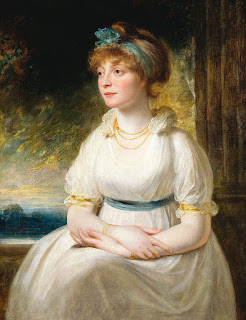
This is the sad story of Princess Sophia daughter of George III
Sophia was an unworldly and shy woman who was seduced by a man 33 years her senior. She gave birth to his illegitimate child who grew up to blackmail her to pay his father’s debts.
Sophia’s childhood
According to her biographer Christopher Hibbert, in her young adulthood Princess Sophia, the 5th daughter of King George III, was a “delightful though moody girl, pretty, delicate and passionate.” She was devoted to her father, though she occasionally found him exasperating. She wrote that “the dear King is all kindness to me, and I cannot say how grateful I feel for it.”
The King had told Sophia he would take her and her sisters to Hanover and find them suitable husbands. Her father intended to be circumspect in his choice of his children’s spouses because he was well aware of his own sisters’ marriage experience.
His eldest sister, Augusta had never fully adapted to life in Brunswick after her marriage to Charles William Ferdinand Prince of Brunswick-Wolfenbüttel despite her marriage settlement of £80,000 from the British government. Her husband took two mistresses; Maria Antonia von Branconi and Luise von Hertefeld. Augusta was never comfortable in Hanover and her German relatives were not keen on her. Her situation was made worse by the fact that her eldest sons were born with disabilities.
Augusta’s fate was unpleasant but not as bad as his other sister Caroline’s fate. Caroline had suffered a far worse. At the age of 15, she was married to her cousin, Christian VII of Denmark in 1766. A year later her husband abandoned her for his mistress Støvlet-Cathrine publicly declaring that he could not love Caroline because it was “unfashionable to love one’s wife”. Caroline was left neglected and unhappy as her young husband sank into a mental stupor of paranoia, self-mutilation, and hallucinations. Caroline took comfort with her husband’s doctor, Johann Friedrich Struensee, an Enlightenment man who ran Denmark with the half-crazed King introducing widespread reforms.
The affair between Caroline and Struensee resulted in Caroline giving birth to his child, her divorce, and Struensee’s execution in 1772. Caroline retained her title but not her children, eventually, she left Denmark and passed her remaining days in exile at Celle Castle in Hanover. She died there of scarlet fever on 10 May 1775, at the age of 23.
The Purple Light of Love
George was unable to keep his promise due to his own ill health. He had however arranged a dowery and allowance of £6,000 a year for her with Parliament. This should have made her an attractive match but Sophia was shy and she ruined what prospects she had when she met and fell in love with one of her father’s equerries, Colonel, Thomas Garth, a man thirty-three years her senior. Garth had a large purple birthmark on his face, causing Sophia’s sister Mary to refer to him as “the purple light of love.” Courtier and diarist Charles Greville, on the other hand, described him as a “hideous old devil.” One of her ladies-in-waiting wrote “The princess was so violently in love with him that everyone saw it. She could not contain herself in his presence.”
The Downfall
Sophia’s downfall came when she found herself pregnant with Garth’s child. Although there has been much debate amongst historians as to whether the child was Garth’s or her uncle’s, the Duke of Cumberland’s, Thomas Garth adopted the child, educated him and brought him into his regiment calling him his nephew.
Dorothy Margaret Stuart, in her book The Daughters of George III, reports the claim of the Corry family that Sophia Princess had secretly married Issac Corry, Groom of the Bedchamber to the Duke of Cumberland. Corry was a barrister and later became Chancellor of the Irish Exchequer. His family claim that he and Sophia had three children together but there is no real evidence to support such an idea. What we can be sure of is that Sophia never married and remained at court until her mother Queen Charlotte died. After the queen’s death, Sophia lived in Kensington Palace next to her niece Princess Victoria of Kent, the future Queen Victoria. Like her sister-in-law the Duchess of Kent, Sophia fell under the spell of Victoria’s comptroller Sir John Conroy and let him manage her money. The lonely and unworldly Sophia fell under Conroy’s spell too and he used her affection to rob her of most of her money.
Her son, Tommy Garth of the 15th Hussars (1800-1873), learned of his true heritage when his father thought he was on his deathbed in 1828. With the family deep in debt, he tried to blackmail the royal family with evidence of his mother’s true identity. As historian Flora Fraser writes, ‘all parties played unfairly’. The royal family offered young Garth £3,000 for his box of evidence. They took the box but did not pay him so he went to the papers. The press dug up the gossip concerning the possibility of the Duke of Cumberland, her uncle, being his true father making the latter part of Sophia’s life very difficult.
Charles Greville summed Sophia up with he wrote in his diary in May 1848, shortly after she died: “Princess Sophia died a few days ago, while the Queen [Victoria] was holding the Drawing-room for her Birthday. She [Sophia] was blind, helpless, and suffered martyrdom; a very clever, well-informed woman, but [one] who never lived in the world.”
Sources:
Fraser, Flora (2004). Princesses: The Six Daughters of George III. London: John Murray. ISBN 0-7195-6109-4.
Hibbert, Christopher (2000). George III: A Personal History. Basic Books. ISBN 0-465-02724-5.
Hibbert, Christopher (2001). Queen Victoria: A Personal History. De Capo Press. ISBN 0-306-81085-9.
Dorothy Margaret Stuart, The Daughters of George III, Fonthill Media Ltd, 2016.
Illustration: Princess Sophia, 1792 by Sir William Beechey, The Royal Collection
Julia Herdman writes historical fiction that puts women to the fore. Her latest book Sinclair, Tales of Tooley Street Vol. 1. is Available on Amazon
Amazon Australia
Amazon Canada
Amazon New Zealand
Amazon South Africa
Amazon USA
by Julia Herdman | Jul 12, 2017 | Blog, British History, Medicine, Science, Writing about history
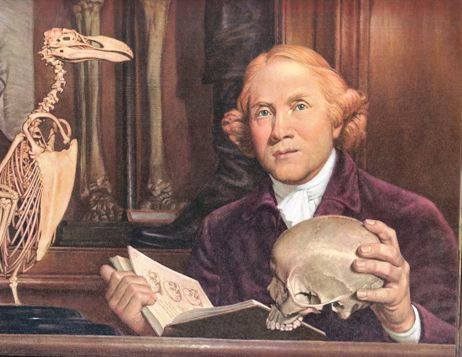
By the 1780s John Hunter was the leading anatomist in Europe and an influential figure in Georgian high society: he had married a beautiful bluestocking poet, Anne Home, and was surgeon extraordinary to King George III.
During the day, the carriages of his wealthy patients blocked Leicester Square, where he lived with his family. In the evening, while Anne entertained London’s literati (“literary debates were decidedly not his idea of fun”), the Resurrectionists, or “Sack ‘Em Up Men”, would deliver corpses from London’s cemeteries to his back door. He was, as historian Wendy Moore says, “the Jekyll and Hyde of the Georgian period”.
At his country house in the “tranquil village” of Earl’s Court, Hunter kept an exotic menagerie: zebras and mountain goats grazed on the front lawn, prompting some to say he was the model for Dr. Dolittle. Hunter would sometimes be seen driving a carriage containing fresh supplies of fruit and vegetables from Earl’s Court to his Leicester Square townhouse, pulled by three Asian buffaloes. On the return journey, it would carry a gory cargo of dissected corpses. It was at Earl’s Court, he conducted experiments on animals of which Dr. Moreau would have been proud. The squealing of pigs and dogs vivisected in the name of science competed with the roar of his lions. In one of his more bizzare experiments he successfully grafted a cockerel’s testicle into the belly of a hen.
The place in British society of a man like John Hunter was rich in contradictions. As a surgeon, he treated some of the prominent men of his age – men like Adam Smith and David Hume (who called him “the greatest anatomist in Europe”), Gainsborough, Hickey, and the baby Byron, possibly James Boswell too. Many of these and other celebrities were personal friends of his and Anne’s – men like Joseph Banks, Joshua Reynolds, and Daniel Solander – highly respected members of civilised society.
Hunter kept a careful record of his surgical operations. This extract from his notebook details an unfortunate patient’s neck tumour:
‘John Burley, a Rigger, thirty-seven years of age, of a middle size, dark complexion, and healthy constitution; about sixteen years ago, fell down, & bruised his cheek on the left side, above the parotid gland. It was attended with a good deal of pain, which in four or five weeks went off, and the part began to swell gradually, and continued increasing for four or five years, attended but with little pain. At this time it was increased to the size of a common head, attended with no other inconvenience than its size and weight. He again fell and received a wound on its side, which gave considerable pain at first, but it got well in eight or nine weeks (This part is marked in the Drawing.) After this, the tumour increased without pain, on the lower part; as also at the basis, extending itself under the chin to the amazing size it now appears. Lately, he had perceived that its increase is much greater than what it was some time ago: he says he can perceive it bigger every month. The tumour is in parts the colour of the Skin, in other parts of a shining purple, where the Skin of the cheek is elongated. The beard grows upon it and is shaved in common. When by accident it is wounded, it heals kindly, because it is only the Skin that is wounded; and has sensation in common with the skin. It is hard to the feel some places, and in others softer, as if containing a fluid. It seems quite loose and unconnected with the skull or lower jaw and may be moved easily without giving Pain.’
Hunter performed the operation to remove this monster of a tumour on Monday, October the 24th, 1785. It lasted twenty-five minutes, and the man did not cry out during the whole of the operation. The Tumour weighed 144 ounces.
John Hunter died on October 16, 1793, after yet another heated argument with the out-dated surgeons at St George’s Hospital. He left huge debts, having spent all his money building up his unique anatomical collection which was opened to the public in 1788 at his Leicester Square home. The 14,000 items collected over 40 years - including Burley’s immense tumour - demonstrated the interrelatedness of all life on Earth. It also proved the originality of Hunter’s thinking. Seventy years before Darwin’s On the Origin of Species, monkey and human skulls were placed together in a series, and he told visitors that “our first parents, Adam and Eve, were indisputably black”.
He had hoped the nation would buy his collection, but William Pitt the Younger exclaimed: “What! Buy preparations! Why I have not got money enough to purchase gunpowder.” Hunter’s wife and children were left with nothing. His brother-in-law seized his unpublished works and plagiarised them ruthlessly to carve out a career for himself as a surgeon. The man whom Hunter had taught the art of anatomy then burnt his priceless research notes.
I gave the eponymous hero of my latest novel, Sinclair, a brush with Hunter at St Georges Hospital. Here are a few of Sinclair’s thoughts on London voluntary hospitals.
“I’ll have to look for a position at one of the voluntary hospitals. I was hoping that I’d never had to go into one of those sanctimonious places again. It’s not the patients that get me down, they can’t help being sick or poor, it’s all the praying and grovelling. Those hospitals are full of the most unpleasant people, Frank. Pompous and incompetent men, self-satisfied arrivistes and simpering clergymen.”
“Oh, life’s full of grovelling and doing what somebody else wants, in my experience. Just try being in the Army.”
“I know it has to be done from time to time, but I’m not good at it. Those poor patients have to pray for their souls and give thanks to their benefactors at least three times a day no matter how sick they are. A lot of them are at death’s door, but they still have to get on their knees and give thanks to God and their wealthy benefactors.”
“But it’s better than being left to die alone and without any care, isn’t it?” said Greenwood.
“Aye, I suppose when you put it like that it’s a small price to pay for a warm bed, medicine and a bowl of broth, but it sticks in my craw. Why should these people be grateful for so little when the undeserving seem to have so much? Besides, this so-called charity work is false. It’s the very thing that enables surgeons like Hunter to build their reputations and make fortunes in the City.”
“So why can’t you be like them, Jamie?”
“Because staff appointments aren’t made on merit, they’re made through connection and patronage, and I won’t prostitute myself for these corrupt men of money. I put my principles aside to join the East India Company. I thought I could make myself happy by getting rich in the colonies, but thankfully I was saved from that folly. I now realise a man must be happy with his conscience if he’s to be happy at all.”
“That’s the trouble with principles; they’re very expensive for a poor man. Most of my father’s friends, who are rich of course, claim to have principles, but somehow they make sure that they never have any that stop them making money or for which they cannot get others to pay.”
“I think you’re an even greater cynic than me, Frank.”
“Oh, that’s quite possible. My whole life has been spent in the company of politicians: I don’t need the newspapers to know how they think.”
——————————————-
Source: The Knife Man: The Extraordinary Life and Times of John Hunter, Father of Modern Surgery by Wendy Moore
Julia Herdman writes historical fiction that puts women to the fore. Her latest book Sinclair, Tales of Tooley Street Vol. 1. is Available on Amazon
Amazon Australia
Amazon Canada
Amazon New Zealand
Amazon South Africa
Amazon USA

Recent Comments