
by Julia Herdman | Jul 5, 2017 | American History, Blog, British History, Craft and manufacture, France
The History of Food in Cans
SPAM is celebrating its 75th birthday today. Love it or hate it we’ve all had it at some time in our lives and it would not have happened without Nicholas Appert an 18th-century confectioner and chef from Paris.
In 1795, Nicholas Appert began experimenting with ways to preserve foodstuffs, succeeding with soups, vegetables, juices, dairy products, jellies, jams, and syrups. He placed the food in glass jars, not cans and sealed them with cork and sealing wax. The food was preserved by boiling the sealed bottles in boiling water.
In 1795 the French military offered a cash prize of 12,000 francs for a new method to preserve food. After some 14 or 15 years of experiment, Appert submitted his invention and won the prize in January 1810 on condition that he made the method public. The same year, Appert published L’Art de conserver les substances animales et végétales (or The Art of Preserving Animal and Vegetable Substances). This was the first cookbook of its kind on modern food preservation methods.
La Maison Appert, in the town of Massy, near Paris, became the first food bottling factory in the world. This was years before Louis Pasteur proved that heat killed bacteria. In honour of Appert, canning is sometimes called “appertisation.” Appert’s method was so simple and workable that it quickly conquered the world. The French public and press were loud in their praises - “Appert has found a way to fix the seasons” said one paper. The French Navy was quick to use his method, but it was in England that Appert’s idea was fully exploited and improved.
English Canned Foods
In 1810, British inventor and merchant Peter Durand patented his own method, but this time in a tin can, so creating the modern-day process of canning foods. Tin was already used as a non-corrosive coating on steel and iron, especially for household utensils, but Durand’s patent is the first documented evidence of food being heated and sterilised within a sealed tin container. His method was to place the food in the container, seal it, place in cold water and gradually bring to the boil, open the lid slightly and then seal it again. In some quarters, he is hailed as the “inventor” of the tin can, but a closer look at the patent, held at the National Archives in London, reveals that it was “an invention communicated to him”. Norman Cowell, a retired lecturer at the department of food science and technology at Reading University, had shown that another Frenchman hitherto uncredited by history, an inventor called Philippe de Girard, came to London and used Durand as an agent to patent his own idea. It seems Girard had been making regular visits to the Royal Society to test his canned foods on its members. Girard was forced to come to London because of French red tape, says Cowell, and he couldn’t have taken out the patent in England at a time when the two countries were at war so he sold his idea to Durand for £1000 and disappeared from history. In England, there was an entrepreneurial spirit and venture capital to kick-start enterprise. People were prepared to take a risk on new ideas whereas in France if someone had a good idea they took it to the Academie Francaise and if the members of the Academie thought it was a good idea they might offer a ‘pourboire’ a small amount of money to develop it.
In 1812 Englishmen Bryan Donkin and John Hall purchased both patents and began producing preserves. Between 1814 and 1821, the Admiralty’s orders for canned foods increased from around 3000 pounds to 9000. Donkin’s role in changing history is rarely acknowledged. Standing on the spot of Donkin’s factory today is a school car park on Southwark Park Road, there is little evidence of the industry which, 200 years ago, was about to spread around the globe.
American Canned Foods
Canning arrived in the US in the 1820 but was not common until the beginning of the 20th century, partly because a hammer and chisel were needed to open the cans until the invention of a can opener by an Englishman named Yates in 1855. Canned food changed the world; it improved the nutrition of the masses, feed armies and explorers, transformed the work of women in the kitchen; Andy Warhol even made cans into art. Today, households in Europe and the US alone get through 40 billion cans of food a year, according to the Can Manufacturers Institute in Washington DC.
Of course, America is the home of SPAM. SPAM) is a brand of canned cooked meat made by Hormel Foods Corporation. It was first introduced in 1937 and gained popularity worldwide after its use during World War II. By 2003, Spam was sold in 41 countries on six continents and trademarked in over 100 countries (not including the Middle East and North Africa).
According to its label, Spam’s basic ingredients are pork, with ham meat added, salt, water, modified potato starch as a binder, sugar, and sodium nitrite as a preservative. Natural gelatin is formed during cooking in its tins on the production line. Many have raised concerns over Spam’s nutritional attributes, in large part due to its high content of fat, sodium, and preservatives.
By the early 1970s the name “Spam” became a genericized trademark, used to describe any canned meat product containing pork, such as pork luncheon meat. With expansion in communications technology, it became the subject of urban legends about mystery meat and other appearances in pop culture. Most notable was a Monty Python sketch which led to its name being borrowed for unsolicited electronic messages, especially spam email
Since 1942, each year the Chicago Section of the Institute of Food Technologists awards the Nicholas Appert Award, recognising lifetime achievement in food technology. In 1991, a monumental statue of Appert, a work in bronze was erected in Châlons-en-Champagne.
Sources: http://www.bbc.co.uk/news/magazine-21689069, Wikipedia
Julia Herdman writes historical fiction that puts women to the fore. Her latest book Sinclair, Tales of Tooley Street Vol. 1. is Available on Amazon – Paperback £10.99 Kindle £2.42 Also available on:
Amazon Australia
Amazon Canada
Amazon New Zealand
Amazon South Africa
Amazon USA

by Julia Herdman | Jun 28, 2017 | Blog, European Royal Families, Performing Arts, Theatre
Gertrude was one of the greatest singers of the Georgian Period. She was born at Kassel, Germany in February 1749. Her mother died soon after the birth. Her father was a poor musician, named Schmeling. Undernourished from birth she always suffered from ill health. Schmeling contrived to increase his income by mending musical instruments. One day little Gertrude got hold of a violin and started to play it. Her father punished her severely for touching other people’s property but the little girl was hooked and played with the violins he was mending whenever her father’s back was turned.
Soon she had mastered a scale and her father was forced to acknowledge her genius and arranged lessons for the child. Although she was five her legs had no strength and her father was forced to carry her everywhere including to small gatherings where she would give performances. After a performance in Frankfort, a public subscription was raised to get gifted little Gertrude some education. By the time she was nine, her health had improved and she was in Vienna giving concerts to the Queen and her friends who petted and admired her and persuaded her to give up the violin because it was an unfeminine instrument and sing instead. Her voice was already resonant and clear, but she had, of course, had no instruction. Schmeling, with the help of benefactors, then placed the young Gertrude under the tuition of the musico Paradisi where she made rapid progress.
Returning to Cassel, Schmeling hoped to get Gertrude a place at Court but the King would only employ Italian singers so they moved to Leipzig and the music school of Joesph Hiller where Gertrude stayed until 1771. She made her début in an opera of Basse’s at Dresden. Her success led her to an audience with the King, Frederick II, who on hearing her was persuaded to engaged her for life to sing at his Court, despite her not being Italian! At last, she and her father had a secure income.
Whilst at the Court she met and married the violoncellist, Mara despite her friends’ advice. She soon discovered her folly; Mara was a wonton womaniser and the King’s demands were excessive too. On one occasion, she was physically brought from her bed, by his orders and forced to sing at the Opera, even though she was ill. When she had had enough of her unhappy life at Court she tried to escape but was detained by the Prussian ambassador at Frederick’s request.
By 1780 Frederick had lost his interest in music and Gertrude and she was free at last to return to Vienna where she procured at a letter of introduction from the Empress to her daughter Marie-Antoinette. She passed through Munich where Mozart heard her but was not favourably impressed. She reached Paris in 1782 where audiences pitted her talent again the celebrated Todi.
Two years later, in the spring of 1784, Mara made her first appearance in London, where her greatest successes awaited her. She was engaged to sing six nights at the Pantheon. Owing to the general election, she sang to small audiences, and her merits were not recognised until she sang at Westminster Abbey, in the Handel Commemoration, when she was heard with delight by nearly 1000 people. She sang in the repeated Commemoration in 1785, and in 1786 made her first appearance on the London stage in a serious pasticcio, ‘Didone Abbandonata,’ the success of which was due entirely to her singing.
I give Mara a cameo appearance in my novel, Sinclair. The Vicar of St James’ Piccadilly has managed to secure the services of Miss Mara and Mr. Stephen Storace her accompanist and impresario for his fundraising concert in the Christmas of 1787. Reverend Walker says ;
“Now for the highlight of our evening, ladies and gentlemen. I am delighted to invite the celebrated German opera singer Miss Gertrude Mara and her accompanist, the composer and impresario Mr. Stephen Storace, to entertain you this evening.”
The audience gasped, then clapped and roared as the pair made their way to the piano. “Well done, Connie, they loved you,” said John.
“My goodness, I’m on the same bill as Gertrude Mara and Stephen Storace,” Connie exclaimed.
An hour later Connie and Mrs. Peacock were being introduced to the great soprano by a contented Mr. Walker, accompanied by his daughters Hannah and Harriet.
“Mr. Walker, why didn’t you tell me about Miss Mara and Mr. Storace?” demanded Connie when they had gone.
“I didn’t know they would come until the last minute, and I didn’t want to put you off.”
In March 1787 she appeared in Handel’s opera of ‘Giulio Cesare’ where she played Cleopatra. It was so successful that it was constantly repeated during the season. Mara again took a leading part in the Festival in Westminster Abbey in 1787, and she remained connected with the opera in London till 1791, after which, though she sang occasionally on the stage, and even in English ballad operas, she was more frequently heard in concerts and oratorios.
In 1788 she was singing in the Carnival at Turin and the following year at Venice. She returned to London in 1790 and went to Venice again in 1791. Coming once more to London in the next season, she remained here for ten years. After this time, she found her voice losing strength, and she quitted England in 1802, after enjoying a splendid benefit of over £1000 at her farewell concert.
Her worthless husband, and her numerous lovers,—among whom the last was a flute-player named Florio,—had helped her to spend the immense sums which she had earned, until she found herself without means, and compelled to support herself by teaching. She worked as a singing teacher in Moscow until 1812 when her small school was burned down and was forced to start again at age 64. She then settled in Italy for a while until in 1819 she returned to London where she appeared at the King’s theatre, but like ?? her voice had gone and she never appeared again. She returned to Italy where she died in poverty aged 84.
Sources: https://en.wikisource.org/wiki/A_Dictionary_of_Music_and_Musicians/Mara,_Gertrude: A life of Mara, by G. C. Grosheim, published at Cassel in 1823.
Julia Herdman writes historical fiction that puts women to the fore. Her latest book Sinclair, Tales of Tooley Street Vol. 1. is Available on Amazon – Paperback £10.99 Kindle £2.42 Also available on:
Amazon Australia
Amazon Canada
Amazon New Zealand
Amazon South Africa
Amazon USA
history, history, history, history, history, history, history, history, history of opera, history of opera, history of opera,

by Julia Herdman | Jun 27, 2017 | Blog, Fashion, France, Politics, Writing about history
The origins of Haute Couture are English! Charles Frederick Worth established the first haute couture house in Paris in 1858, championing exclusive luxury fashion for the upper-class woman and coining the term ‘fashion designer’ and upgrading himself from a basic dressmaker. Ten years later Le Chambre Syndicale de la Haute Couture was first established as the safeguard of high-fashion. Designers were required to earn the right to label themselves a couture house according to certain specifications although at the time the requirements were rather vague but being male was certainly an essential part of the package
The phrase “haute couture” was used for the first time in 1908 and shortly afterward, in 1910, Gabrielle Chanel set up her milliner’s studio at 21 rue Cambon in Paris, and in 1913 she opened a boutique in Deauville devoted to hats and a small range of clothes, made predominantly from jersey. In 1915 she reached new heights when she opened her Maison de Couture in Biarritz, in the Villa Larralde just opposite the Casino.
From the gamine fashions of the 1920s, Coco Chanel progressed to the womanly fashions in the 1930s: evening-dress designs were characterised by an elongated feminine style, and summer dresses featured contrasts such as silver eyelets, and shoulder straps decorated with rhinestones - drawing from Renaissance style. In 1932, Chanel presented an exhibition of jewellery dedicated to the diamond as a fashion accessory; it featured the Comet and Fountain necklaces of diamonds, which were of such original design, that Chanel S.A. re-presented them in 1993. Moreover, by 1937, the House of Chanel had expanded the range of its clothes to more women and presented prêt-à-porter clothes designed and cut for the petite woman. Among fashion designers, only the clothes created by Elsa Schiaparelli could compete with the clothes of Chanel. Schiaparelli’s designs were heavily influenced by Surrealists like her collaborators Salvador Dalí and Jean Cocteau. Her clients included the heiress Daisy Fellowes and actress Mae West. Schiaparelli did not adapt to the changes in fashion following World War II and her couture house closed in 1954. Her brand has recently been revived led by designer Bertrand Guyon.
It is now over a hundred years since Coco Channel challenged convention, the key feature of today’s fashion is gender neutrality but there is nothing neutral about who’s in charge in these bastions of fashion and wealth. “Who’s Who in Fashion,” a directory published by Fairchild Publications, is split 60-40 in favor of men, and “The Encyclopaedia of Clothing and Fashion,” published last year by Charles Scribner’s Sons, included entries on 36 female and 69 male designers. There is still a glass ceiling for women when it comes to the fashion industry.
With two films and several books about her life and legacy, Coco Chanel has become a style icon. In the 1920’s and 30’s, there were many female designers — Alix Grès, Elsa Schiaparelli and Chanel — but after World War II, the big names were male — Bill Blass, Yves Saint Laurent and Pierre Cardin even though the number of women entering the profession is more than ten to one in favour of the girls they are not making the progress they should.
Karl Lagerfeld has been the artistic director of the House of Chanel since 1983. He said of the brand founder,” Coco did a lot, but not as much as people think - or as much she herself taught at the end of her career. She wasn’t only a designer - she was a woman of her time.’ He said didn’t like women and that she made two great mistakes towards the end of her long career; that she believed men did not like to see women in miniskirts and she took against blue jeans.
Coco Chanel was certainly a talented and controversial character, she spent the Second World War in bed with Baron Hans Günther von Dincklagea at the Hotel Ritz. In 1939, she took revenge on her staff who had struck for fairer wages in 1936 by closing her shops making 4000 of her mainly female staff redundant and she was well known for her dislike of Jews believing them to be a threat to Europe because of the Bolshevik government in the Soviet Union. I would say that not taking the blue jeans was the least of her mistakes.
Julia Herdman writes historical fiction that puts women to the fore. Her latest book Sinclair, Tales of Tooley Street Vol. 1. is Available on Amazon – Paperback £10.99 Kindle £2.42 Also available on:
Amazon Australia
Amazon Canada
Amazon New Zealand
Amazon South Africa
Amazon USA

by Julia Herdman | Jun 22, 2017 | American History, Blog, France, Politics, Romance, Society
 Benjamin Franklin was a lover of knowledge; after all, he was the quintessential Renaissance man. He gave us the lightning rod, the Franklin stove, bifocals, and Poor Richard’s Almanack. He was also an indispensable politician and civic activist who not only helped lay the groundwork for the Declaration of Independence and the United States Constitution but was also the country’s first ambassador to France where in 1779 he fell in love with Anne Catherine Helvétius, the widow of the Swiss-French philosopher, Claude-Adrien Helvétius.
Nicknamed “Minette”, she maintained a renowned salon in Paris using her dead husband’s accumulated wealth and among its habitués were France’s leading politicians, philosophers, writers, and artists. In courting her attention, he sent her many letters expressing his love, admiration, and passion. In one, he claimed that he had a dream that their dead spouses had married in heaven and that they should avenge their union by doing the same on earth! In another passionate plea, he wrote: “If that Lady likes to pass her Days with him, he, in turn, would like to pass his Nights with her; and as he has already given her many of his days…she appears ungrateful never to have given him a single one of her nights.”
Franklin’s libido was apparently so strong, he himself was scared of it. In his autobiography, he confessed: “the hard-to-be-governed passion of my youth had hurried me frequently into intrigues with low women that fell in my way.”
One of the more revealing documents on his views on women, which had been known in certain circles but kept under wraps for almost 200 years, was a letter he wrote in 1745, offering advice to a young man who was having trouble with his own insatiable libido. In the letter, which was entitled “Advice to a Young Man on the Choice of a Mistress,” Franklin advised: “In all your Amours, you should prefer old Women to young ones.” He goes on to explain that with older women they tend to have more discretion, will take care of you when you’re sick, are cleaner than prostitutes, and that “there is no hazard of children.” He also offered that you can’t really tell who’s old or young when you’re in the dark. What a romantic!!!
Julia Herdman writes historical fiction that puts women to the fore. Her latest book Sinclair, Tales of Tooley Street Vol. 1. is Available on Amazon – Paperback £10.99 Kindle £4.99 Also available on:
Amazon Australia
Amazon Canada
Amazon New Zealand
Amazon South Africa
Amazon USA
by Julia Herdman | Jun 19, 2017 | Blog, European Royal Families, Marriage, Politics, Society
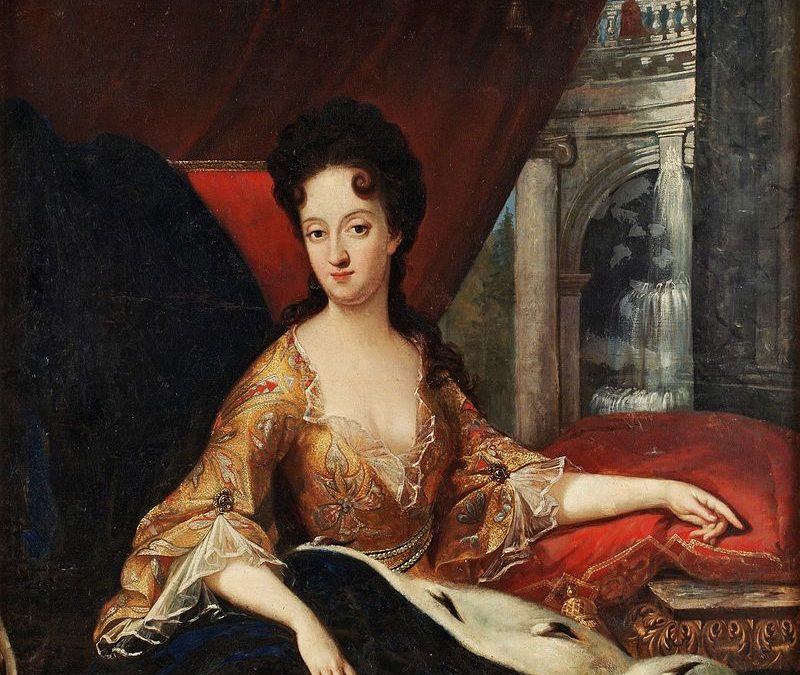
Queen Ulrika Eleonora the Younger (1688 – 1741), was Queen regnant of Sweden from 5 December 1718 to 29 February 1720, and then Queen consort until her death in 1741. She was the youngest child of King Charles XI and Ulrika Eleonora of Denmark. She had an elder brother and sister so never expected to be queen.
Her mother died in 1693 when she was five and little Ulrika and her elder sister, Princess Hedvig Sophia, were set off to be brought up by their grandmother, Hedwig Eleonora at Karlberg Palace. Grandmother was a consummate operator, she was the guiding light in her husband’s administration and she dominated her son so much that he referred to her as the Queen ignoring his wife. Her grandmother described Ulrika as a stubborn little girl who would pretend to be ill when it came to doing things she didn’t like riding and dancing. It seems little Ulrika was not the physical type but she was a talented musician, and when performing with her sister at court concerts, she would play the clavier while her sister sang. Although she was friendly, modest and dignified, with good posture and beautiful hands she was regarded as neither intelligent nor attractive and no match for her older sister.
Her father died in 1697 when Ulrika was 9 years old and the crown passed to her brother Charles XII (1682 –1718). Grandmother was sure he was too young to take on full royal responsibilities, he was only 15, and petitioned to act has his regent; a caretaker government was put in place which lasted for seven months then Charles took full command. Charles was an absolutist monarch; he believed he had been put in charge by God, an idea that was already encountering quite a bit of resistance in Europe at the time. He was, however, a successful war leader and achieve considerable success in defending Sweden in the Great Northern War.
On 12 May 1698, Princess Hedwig Sophia married her cousin, Frederick IV, Duke of Holstein-Gottorp. Her marriage was arranged as a part of the traditional Swedish policy of alliance with Holstein-Gottorp against Denmark. The marriage took place against her consent and she was not happy; Frederick IV had a string of mistresses and whores he preferred over his reluctant wife. Hedwig Sophia was a widow with a young son by 1702 but Ulrika was still unmarried. Hedwig Sophia returned to the Swedish court where she was the centre of attention, partying with her brother the king and lauded for her beauty and fashion sense. She was known as the “The Happy Princess” unlike her stubborn little mouse of a sister. Unfortunately, Hedwig Sophia caught smallpox in 1708 nursing her son who also had the disease. Hedwig Sophia died but her son survived.
With no marriage in prospect for her brother the king in sight Ulrika’s position suddenly changed with her sister’s death. In 1710, she received a marriage proposal from Prince Frederick of Hesse, he was a widower with an eye on her crown. The marriage was supported by her grandmother because it would force Ulrika to leave Sweden and so increased the chance of her favourite granddaughter’s son becoming king when Charles died. Although her prospective husband liked the idea of inheriting her crown his advisers were telling him that Ulrika was no great catch describing her as imperious, haughty, and suffering from bad breath and a weak bladder. Their engagement was announced four years later on 23 January 1714, and the wedding took place on 24 March 1715. During the wedding, her brother Charles XII remarked: “Tonight my sister is dancing away the crown”. But it turned out she wasn’t. When a musket ball went clean through her brother’s head in 1718 the Swedish nobles opposed to the war which had been waging for nearly two decades seized their chance and offered Ulrika the throne on the condition that she accepted a modern constitution for the country. She accepted but years of living as an autocrat made accepting what was required of her very difficult so she abdicated giving her crown to her husband who did the deed for her and Sweden took its first steps into the modern age. All of which goes to show that you don’t have to be clever, or beautiful to make history you just have to seize the opportunities life throws at you and do the right thing.
Julia Herdman writes historical fiction that puts women to the fore. Her latest book Sinclair, Tales of Tooley Street Vol. 1. is Available on Amazon – Paperback and on Kindle. Also available on:
Amazon Australia
Amazon Canada
Amazon New Zealand
Amazon South Africa
Amazon USA
by Julia Herdman | Jun 15, 2017 | Blog, Europe, Politics, Society, Writing about history
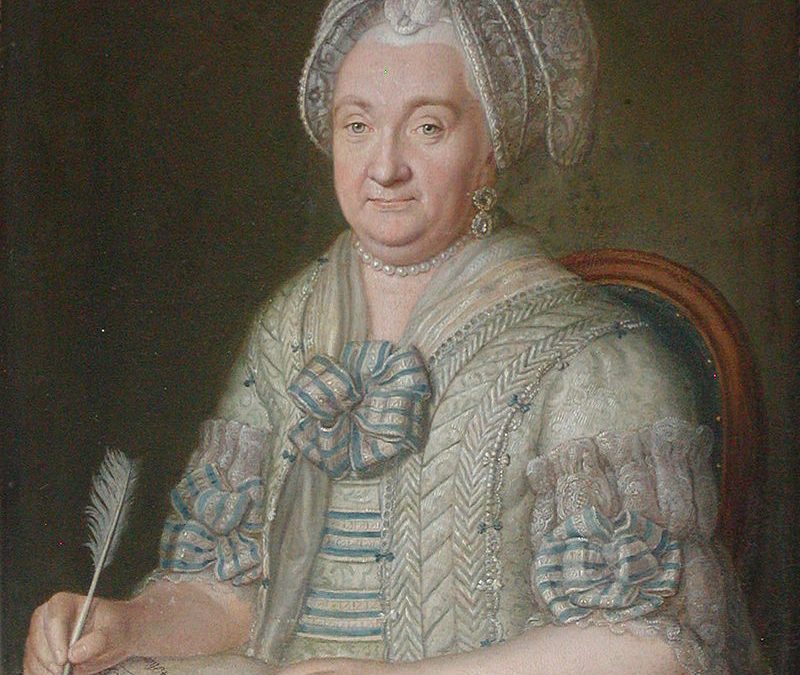
Anna Magdalena Godiche née Høpfner (January 11, 1721 - February 22, 1781) was a Danish book printer and publisher. She managed the biggest printing company in Denmark as the Danish political scene combusted. Born to judge Høpfner in Haderslev Anna married Andreas Hartvig Godiche (1714-1769) of Copenhagen in 1736. Godiche owned one of the biggest printing companies in Denmark and was one of those contributing to the expansion of book printing in the mid 18th century. She took over the company which held the monopoly on printing and publishing the work of Johann Friedrich Struensee and Enevold Brandt, when her husband died in 1769.

Portrait of Johann Friedrich Struensee (1737-1772), Cornelius Høyer (1741-1804) - Frederiksborg Museum
Struensee took over the Danish government in 1770 and held absolute sway for almost thirteen months, between 18 December 1770 and 16 January 1772. With Brandt’s assistance he set about reforming Denmark. Reforms initiated by Struensee included:
- abolition of torture
- abolition of unfree labour (corvée)
- abolition of the censorship of the press
- abolition of the practice of preferring nobles for state offices
- abolition of noble privileges
- abolition of “undeserved” revenues for nobles
- abolition of the etiquette rules at the Royal Court
- abolition of state funding of unproductive manufacturers
- introduction of a tax on gambling and luxury horses to fund nursing of foundlings
- ban of slave trade in the Danish colonies
- rewarding only actual achievements with feudal titles and decorations
- criminalisation and punishment of bribery
- re-organisation of the judicial institutions to minimise corruption
- introduction of state-owned grain storage to balance out the grain price
- assignment of farmland to peasants
- re-organisation and reduction of the army
- university reforms
- reform of the state-owned medical institutions
His reforms were popular at first but Struensee had overstepped the mark with his royal masters, he did not speak Danish, conducting his business in German, his affair with the queen and the birth of their illegitimate child scandalised Danish society and gradually his enemies moved in for the kill.
A palace coup took place in the early morning of 17 January 1772, Struensee, Brandt and Queen Caroline Matilda were arrested in their respective bedrooms, and the perceived liberation of the king, who was driven round Copenhagen by his deliverers in a gold carriage, was received with universal rejoicing. The chief charge against Struensee was that he had usurped the royal authority in contravention of the Royal Law (Kongelov). He defended himself with considerable ability and, at first, confident that the prosecution would not dare to lay hands on the queen, he denied that their liaison had ever been criminal. The queen was taken as prisoner of state to Kronborg Castle.

Enevold Brandt
On 27 April/28 April Struensee and Brandt were condemned first to lose their right hands and then to be beheaded; their bodies were afterwards to be drawn and quartered. The Kongelov had no provisions for a mentally ill ruler who was unfit to govern. However, as a commoner who had imposed himself in the circles of nobility, Struensee was condemned as being guilty of lèse majesté and usurpation of the royal authority, both capital offences according to paragraphs 2 and 26 of the Kongelov.
Struensee awaited his execution at Kastellet, Copenhagen. The sentences were carried out on 28 April 1772 with Brandt being executed first. First, Struensee’s right hand was cut off; next, after two failed attempts his head was severed, stuck on a pole and presented to 30,000 bystanders; then, after disembowelment, his remains were quartered.
The King himself considered Struensee a great man, even after his death. Written in German on a drawing the king made in 1775, three years after Struensee’s execution, was the following: “Ich hätte gern beide gerettet” (“I would have liked to have saved them both”), referring to Struensee and Brandt.
Anna Magdalena Godiche survived the scandal and lived for another 10 years.
Julia Herdman writes historical fiction that puts women to the fore. Her latest book Sinclair, Tales of Tooley Street Vol. 1. is Available on Amazon – Paperback £10.99 Kindle £2.42 Also available on:
Amazon Australia
Amazon Canada
Amazon New Zealand
Amazon South Africa
Amazon USA

Recent Comments