
by Julia Herdman | May 6, 2017 | Blog
Throughout her career as a writer, her wit and talent for satirical caricature were widely acknowledged: literary figures such as Dr Samuel Johnson, Edmund Burke, Hester Thrale and David Garrick were among her admirers. Her early novels were read and enjoyed by Jane Austen, whose own title Pride and Prejudice derives from the final pages of her novel Cecilia. William Makepeace Thackeray is reported to have drawn on the first-person account of the Battle of Waterloo, recorded in her diaries, while writing Vanity Fair.
Fanny’s first novel, Evelina or the History of a Young Lady’s Entrance into the World, was published anonymously in 1778, without her father’s knowledge or permission. It was unthinkable at the time that a young woman would deliberately put herself into the public eye by writing, and Burney had to commandeer the assistance of her eldest brother, who posed as its author to her publisher, Lowndes. Inexperienced in negotiating, Burney only received twenty guineas as payment for the manuscript.
I had great fun reading this book when I first started my researches into the lives of 18th century women.
 The novel was a critical success; admired for its comic view of wealthy English society, and for its realistic portrayal of working-class London dialects. It was even discussed by some characters in another epistolary novel of the period: Elizabeth Blower’s The Parsonage House published in 1780.
Evelina Book Review by Kate Howe The Book Nomad
The novel brought Fanny to the attention of patron of the arts Hester Thrale, who invited the young author to visit her home in Streatham. Though shy by nature, Fanny impressed those she met, including Dr Johnson, who would remain her friend and correspondent throughout the period of her visits, from 1779 to 1783. Mrs Thrale wrote to Dr Burney on 22 July, stating that: “Mr. Johnson returned home full of the Prayes of the Book I had lent him, and protesting that there were passages in it which might do honour to Richardson: we talk of it for ever, and he feels ardent after the dénouement; he could not get rid of the Rogue, he said.” Dr Johnson’s best compliments were eagerly transcribed in Fanny’s diary.
Burney went on to write three more best sellers: Cecilia: Or, Memoirs of an Heiress, 1782; Camilla: Or, A Picture of Youth, 1796; and The Wanderer: Or, Female Difficulties, 1814. Although her novels were hugely popular during her lifetime, Burney’s reputation as a writer of fiction suffered after her death at the hands of biographers and critics who felt that the extensive diaries, published posthumously in 1841, offered a more interesting and accurate portrait of 18th-century life. Today critics are returning to her novels and plays with renewed interest in her outlook on the social lives and struggles of women in a predominantly male-oriented culture. Scholars continue to value Burney’s diaries as well for their candid depictions of English society in her time.
Sources: Wikipedia
by Julia Herdman | May 2, 2017 | Blog
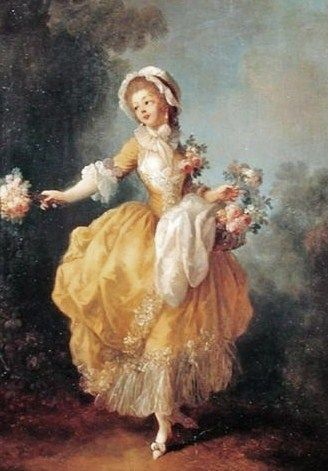
The Royal Swedish Ballet is one of the oldest ballet companies in Europe. Based in Stockholm, Sweden, King Gustav III founded the ballet in 1773 as a part of his project to bring his kingdom to the fore in European culture. Gustav III wanted to create Swedish ballet dancers and to do this he encouraged foreign dancers to live and work in Sweden and Giovanna Bassi (1762–1834), an Italian trained ballet dancer, responded to the king’s request as her brother; the architect Carlo Bassi (1772–1840); was already living there.
Giovanna who had trained in Italy moved to Paris where she was the student of Jean Dauberval the creator of La Fille Mal Gardée, one of the most enduring and popular works of the ballet repertoire today. Giovanna became a star of the Paris Opera then in 1783, at the age 19, she moved to Sweden.
Her technique was entirely Italian; she was described as noble with beautiful black hair. At her debut in Stockholm, the applause was said to loud enough “to outdo the thunder”, and caused what was to be referred to as the “Bassi fever” to begin. She danced many roles and gave dancing classes for girls from the upper classes, and occasionally performed as an actor at the French Theatre. All this work made Giovanna a very wealthy woman.

She began an affair with one of the king’s close friends, Adolf, Count Munck. Munck was a notorious womaniser, the king even asked him to give sex lessons so that he could consummate his marriage to Sophia Magdalena of Denmark. Munck himself writes in his written account, which is preserved at the National Archives of Sweden, that in order to succeed, he was obliged to touch them both physically. This “aid” resulted in the birth of the future King Gustav IV in 1778. The story of baby Gustav’s conception did not however remain private and scandal erupted with rumours circulating that Munck was either the child’s father or the lover of both the king and queen. Accusations from the political opposition were circulating as late as 1786 and in 1789 there were still claims that the King had asked Munck to make the Queen pregnant.
Bassi had a daughter, Johanna Fredrika, by Munck in 1787; she was 25 and he was 38. Bassi’s daughter was said to have a strong resemblance to baby Gustav so Munck might have been his father after all. Munck was forced to leave Sweden 1792 when Gustav III died, he was too tainted with scandal and the rumours about the Regent’s parentage just would not go away. Bassi left the Swedish Ballet and followed him to Rome where she expected him to formally acknowledge their daughter and to marry her. He did neither.
During her stay in Italy, she received large sums of money from the Swedish government to spy on their ambassador Gustaf Mauritz Armfelt in Naples who was courting the support of Catherine the Great for a military intervention to change the Swedish government. With Bassi’s help the plot was discovered. The Swedes sent a man-of-war to Naples to seize him but he escaped with the help of the exiled British Queen Caroline and fled to Russia. At home, he was condemned to death as a traitor and his property confiscated. His mistress, Magdalena Rudenschöld, was judged for complicity and pilloried on the Riddarhus Square before being imprisoned for two years in Stockholm.
Bassi returned to Sweden in 1794 and re-entered the Swedish Ballet, but she was only to remain there for a short while. Munck later made her daughter a beneficiary in his will, but Bassi refused to accept it and denied Munck’s claim on her daughter. She made her break with Munck final in 1794, when she married the German-Swedish merchant Peter Hinrik Schön (1765–1821) following her last performance. In her marriage contract, Bassi stipulated that her spouse should acknowledge her daughter with Munck as his, and that her great fortune should remain her personal and sole property. Schön was bankrupt at the time of the marriage, but was afterwards able to buy Ekholmsnäs Manor at Lidingö; an island in the inner Stockholm archipelago, northeast of Stockholm; where Bassi spent the rest of her life as a business woman, attending to her manor, a brick factory and a snuff factory. She lived with her mother and her friend, the actress Elise Dubelloi from the French Theatre in Sweden and had three sons with Schön. She died a wealthy and successful woman in 1834, aged 72.
Sources: Wikipedia
Illustrations: Ballet Dancer, Jean-Frederic Schall 1752-1825, miniature of Giavanna Bassi
Julia Herdman writes historical fiction that puts women to the fore. Her latest book Sinclair, Tales of Tooley Street Vol. 1. is Available on Amazon – Paperback £10.99 Kindle £2.29 Also available on:
Amazon Australia
Amazon Canada
Amazon New Zealand
Amazon South Africa
Amazon USA

by Julia Herdman | May 2, 2017 | Blog
The Blue Stockings Society was founded in the early 1750s by Elizabeth Montagu (seen above), Elizabeth Vesey and others as a women’s literary discussion group, a revolutionary step away from traditional, non-intellectual, women’s activities. They invited both women and men to attend, including botanist, translator and publisher Benjamin Stillingfleet. One story tells that Stillingfleet was not rich enough to have the proper formal dress, which included black silk stockings, so he attended in everyday blue worsted stockings. The term came to refer to the informal quality of the gatherings and the emphasis on conversation over fashion.
Diarist, James Boswell wrote, “It was much the fashion for several ladies to have evening assemblies, where the fair sex might participate in conversation with literary and ingenious men, animated by a desire to please. These societies were denominated Bluestocking Clubs”.
It was a loose organisation of privileged women with an interest in education to gather together to discuss literature while inviting educated men to participate. The women involved in this group generally had more education and fewer children than most English women of the time. These women preferred to challenge the traditional view of what was ‘becoming’ such as proficiency in needlework and knitting preferring to read Greek or Latin, and many of the most immodest texts so they had their critics. Among them was one of their own members Mrs. Barbauld. Anna Laetitia Barbauld (1743 – 1825) was a prominent “woman of letters” who published in multiple genres; Barbauld had a successful writing career at a time when female professional writers were rare. To find out more about her read my blog No Exaggerated Praise. Barbauld wrote, “The best way for a woman to acquire knowledge is from conversation with a father, or brother, or friend.”
The original bluestocking circle included Hester Thrale, Hannah More, Hester Chapone, Mary Delany, Margaret Bentinck, Duchess of Portland, Elizabeth Carter, Sir Joshua Reynolds and his sister Frances, Fanny Burney, Samuel Johnson, William Pulteney, 1st Earl of Bath, James Boswell, David and Eva Garrick, Edmund Burke, George Lyttelton, Mrs Ord, Mrs Crewe and Benjamin Stillingfleet the man with the blue stockings.
The group has been described by many historians and authors as having preserved and advanced feminism due to the advocacy of women’s education, social complaints of the status and lifestyle expected of the women in their society as expressed by Elizabeth Montague in 1743. “In a woman’s education little but outward accomplishments is regarded … sure the men are very imprudent to endeavour to make fools of those to whom they so much trust their honour and fortune, but it is in the nature of mankind to hazard their peace to secure power, and they know fools make the best slaves.”
By the early 1800s, this sentiment had changed, and it was much more common to question “why a woman of forty should be more ignorant than a boy of twelve?”
The term ‘Blue Stocking’ today refers to an intellectual woman and the name is used frequently by feminist organisations and businesses, for example:
- Bluestockings (bookstore), a feminist bookshop in New York
- Bluestocking (magazine), a Japanese feminist magazine, Bluestocking (Seitō; 青鞜) was a Japanese feminist magazine founded in 1911 by a group of 5 women including Raichō Hiratsuka, Yasumochi Yoshiko, Mozume Kazuko, Kiuchi Teiko and Nakano Hatsuko, all founding members of the Bluestocking Society (Seitō-sha;青鞜社).Many members were referred to and referred to themselves as “New Women” (shin-fujin;新婦人). This term denoted women who wore fashionable Western dress, socialized with men in public, and chose their own romantic partners. Many in the press used this term pejoratively, but the members of the Seitō-sha rejected these negative connotations and embraced an identity as leaders in the reform of gender relations.
Though originally focusing on women’s literature, the magazine soon shifted focus towards women’s liberation, and the pages of Seitō are filled with essays and editorials on the question of gender equality. In many of these, members of the group air their differing opinions on issues of the day, such as the importance of a woman maintaining her virginity before marriage. Legalized prostitution, abortion, and women’s suffrage were also the subject of animated discussion. Such writings caught the attention of the Ministry of Home Affairs because criticism of the system of private capital (capitalism) was banned under the Public Order and Police Law of 1900. Two other issues would be banned by the Ministry’s censorship bureau and removed from store shelves because their frank expressions of female sexuality were deemed threats to public morality.
Even more than the content of the journal, the private behavior of the core members of the Bluestocking society drew public criticism. Several of them engaged in affairs with married men, rumors of which the press exploited with gusto. But this was not separate from the journal, because members of Bluestocking often wrote essays and semi-autobiographical stories that described their struggles to form equal relationships based on mutual romantic attachment (rather than through arranged marriage) both inside and outside of marriage. Their frank discussions about premarital sex and their advocacy for women’s independence in this regard led to further public condemnation.
An exhausted Hiratsuka turned over the reins to Noe Itō in 1915. Ito produced the journal with little assistance for almost another year. Its last issue was published in February 1916.
- M.P., an 1811 comic opera by Thomas Moore and Charles Edward Horn, subtitled The Blue Stocking
- Bluestockings: the Remarkable Story of the First Women to Fight for an Education, a 2009 book by Jane Robinson
- Blue Stockings (play), a 2013 play by Jessica Swale
Julia Herdman writes historical fiction that puts women to the fore. Her latest book Sinclair, Tales of Tooley Street Vol. 1. is Available on Amazon – Paperback £10.99 Kindle £2.42 Also available on:
Amazon Australia
Amazon Canada
Amazon New Zealand
Amazon South Africa
Amazon USA

by Julia Herdman | Apr 29, 2017 | Blog
Caroline’s Early Life
Caroline Lucretia Herschel was born March 16, 1750, in Hanover, Germany. Her father, Isaac Herschel, was a talented army oboist. At the age of ten, she was struck down with typhus, the effect of this often fatal disease was stunted growth; she never grew taller than four feet three inches, and her eyesight was impaired too. Caroline made an inauspicious start to becoming one of the leading women in the history of women in science.
Her father, did his best to give Caroline and his other children the best education he could without having any proper education himself. He taught his children astronomy, music, and philosophy and Caroline soaked them up. Her mother believed that her daughter would ever marry and decided she should become a household servant discouraging the girl’s education whenever she could. However, after her father passed away in 1767 when Caroline was just 17, she decided to take greater control of her life and took up dressmaking courses and started to train to be a governess. The combination of her demanding mother and the demands of her studies led Caroline to leave Hanover and join her brother, William, who was working as an organist in Bath in 1772.
Caroline the musician and astronomer
For 10 years brother and sister worked together, William playing the organ and Caroline singing. When William decided to abandon his musical career, Caroline followed. In addition to assisting her brother in his observations and in the building of telescopes, Caroline became a brilliant astronomer in her own right, discovering new nebulae and star clusters. She was the first woman to find a comet (she discovered eight in total) and the first to have her work published by the Royal Society. She was also the first woman in Britain to get paid for her scientific work, when William, who had been named the king’s personal astronomer following his discovery of Uranus in 1781, persuaded his patron to reward his assistant with an annual salary.
After William’s death in 1822, Caroline retired to Hanover. There she continued her astronomical work, compiling a catalogue of nebulae. The Herschels’ work had increased the number of known star clusters from 100 to 2,500. Caroline died in 1848 at age 97 after receiving many honours. She was the first woman to be awarded a Gold Medal of the Royal Astronomical Society (1828), and to be named an Honorary Member of the Royal Astronomical Society. The King of Prussia presented her with a Gold Medal for Science on the occasion of her 96th birthday in 1846. In her journal, autobiographical writings and letters to relatives Caroline complained a great deal about her lot, she had spent a great deal of her life caring for her brother and her family. She neither meekly accepted nor publicly challenged the demands they made on her, but she was was delighted by the formal recognition she received later in life.
Sources: Wikipedia, https://www.britannica.com/biography/Caroline-Lucretia-Herschel, Rebekah Higgitt, lecturer in history of science and formerly a curator at the Royal Observatory, Greenwich writing in the Guardian 16/3/2016.
Julia Herdman writes historical fiction. Her latest book Sinclair, Tales of Tooley Street Vol. 1. is Available on Amazon – Paperback £10.99 Kindle
Also available on:
Amazon Australia
Amazon Canada
Amazon New Zealand
Amazon South Africa
Amazon USA
Witch or Saint ? Maria Gaetana Agnesi
Nursing by Numbers
Physicist Dies in Childbirth

by Julia Herdman | Apr 26, 2017 | Blog
Mrs Margaret Wintringham who became Member for Lincolnshire South in 1921 and became the Liberal Party’s first female MP. She represented her constituency until 1924. Margaret was a teacher and headmistress from Grimsby.
Born Margaret Longbottom in 1879 in the West Riding she had a successful career outside politics, becoming a school headmistress and local magistrate and was active in politics particularly the National Union of Women’s Suffrage Societies.
When her husband became the Member of Parliament for Lincolnshire South she went to London with him but he died in 1921. Later that year she stood for election and won in her husband’s constituency. When she agreed to stand, she insisted that she be exempted from any requirements to make public speeches during the campaign as she was still in mourning. Instead, she would attend meetings at which others would speak on her behalf, including both her two sisters (though some accounts suggest the idea for this silence came from party managers who were keen to encourage a sympathy vote). Support was also expressed by the Conservative Nancy Astor – who saw getting an extra woman in Parliament as more important than the candidate’s party label.
In Parliament she campaigned for an equal franchise; the Representation of the People Act 1918 had extended the vote to all men over the age of 21, but only to some women over the age of 30. She also campaigned for equal pay for women, for state scholarships for girls as well as boys, and women-only railway carriages.
She lost her seat in 1924 and although she stood for Parliament in two more elections she did not get in. She became president of the Louth Women’s Liberal Association and from 1925 to 1926 she was president of the Women’s National Liberal Federation. In 1927 she was one of two women elected to the national executive of the Liberal Federation.
Margaret Wintringham died in 1955 an obscure figure in the Liberal Party. Being ‘ordinary and radical’ she lacked the glamour and connections within the party to maintain her place in history.
I imagine her as an older version of the main character in Winifred Holtby’s South Riding, Miss Sarah Burton, a teacher who is appointed headmistress at a girls’ school in the fictional Yorkshire seaside town of Kiplington. She immediately ruffles the feathers of the more conservative locals with her forthright views about pacifism and feminism “I want my girls to know they can do anything,” she barks. For this reason, some scholars view the novel as a proto-feminist classic. I’m surprised it’s only some scholars. Holtby is a full on feminist to me.
Sources: Wikipedia, Liberal Democrat Voice http://www.libdemvoice.org/margaret-wintringham-22573.html
Julia Herdman writes historical fiction that puts women to the fore. Her latest book Sinclair, Tales of Tooley Street Vol. 1. is Available on Amazon – Paperback £10.99 and on Kindle
Also available on:
Amazon Australia
Amazon Canada
Amazon New Zealand
Amazon South Africa
Amazon USA
The First Women Elected to the UK Parliament
From Shop Assistant to MP - Margaret Bondfield

Recent Comments