
by Julia Herdman | May 30, 2017 | Blog
Secret and Clandestine Marriage
A clandestine or illicit marriage is a plot device in many 18th and 19th-century stories, think of Jayne Eyre and Mr Rochester, but what seems like the work of fiction was a fact of life for women from all social classes in 18th Century Britain. No one knew who was married to whom until the law of marriage was changed. Even the Prince Regent tried to marry a woman clandestinely and illegally.
On May 11, 1786, the Coachmakers’ Hall, Debating Society debated the following proposition: “Are not the Restraints contained in the Marriage Act, and every other Restriction on the Matrimonial Contract, contrary to the natural Rights of Mankind, and injurious to Conjugal Felicity?” Someone at the Coachmakers’ Hall was clearly stirring the pot of civil discord that evening as the formalities prescribed by the Act were hardly novel, and had been observed even when they were not essential to the validity of a marriage, and the protection afforded by the previous law was not as generous as many who wished to deviate from the new law claimed.
The Marriage Act
The Marriage Act 1753, popularly known as Lord Hardwicke’s Marriage Act, was the first statutory legislation in England and Wales to require a formal ceremony of marriage. The Act came into force on March 25, 1754, making compulsory the reading of the banns, and the registration of a marriage and its witnesses for the first time.
Before the Act, the legal requirements for a valid marriage in England and Wales had been governed by the canon law of the Church of England. This had stipulated that banns should be called or a marriage licence should be obtained before marriage and that the marriage should be celebrated in the parish where at least one of the parties was resident. However, these requirements were not mandatory and the absence of banns or a licence – or even the fact that the marriage was not celebrated in a church – did not render the marriage void. The only essential requirement was that the union be celebrated by an Anglican clergyman. So this left a lot of scope for clandestine marriages and for the wedding of those who were technically under the age of legal consent which was 21 at the time.
The King’s Secret Marriage
Maria Fitzherbert (July 26 1756 - March 27 1837) became the wife of George, Prince of Wales, the future George IV in extraordinary circumstances. Maria came from a respectable Roman Catholic family and was educated in France. She had been married twice before when she met Prince George. Maria married Edward Weld, who was sixteen years her senior, and the wealthy Catholic owner of Lulworth Castle in July 1775. Weld died just three months later after falling from his horse leaving Maria penniless. Her new husband had failed to sign his Will, so his estate went to his younger brother.
Maria, now a widow was left effectively destitute. She received little or no financial support from the Weld family and was obliged to remarry as soon as she could. Three years later, she married again. Her second husband was Thomas Fitzherbert of Swynnerton, Staffordshire who was ten years her senior. They had a son but he died young and then she was widowed again in 1781, but this time she got an annuity of £1000 and a townhouse in Park Street, Mayfair.
In 1783 George, Prince of Wales became infatuated with her after meeting her at the opera. The licentious Prince, he wanted her to become his mistress, but Maria’s devout Catholic beliefs would not allow it. So on December 15, 1785, they were married in a secret ceremony conducted by Robert Burt, an impoverished curate who set aside his scruples for the £500 fee.
The marriage was not legal. It not only contravened the 1753 Marriage Act it was also in breach of the Act of Settlement of 1701, preventing a Roman Catholic from ascending the British throne and the Royal Marriage Act of 1772. How George thought he was going to get away with is a mystery and how Maria could believe she was being married to a Prince of the realm legitimately in such circumstances is beyond belief.
The Illegally Married Couple
George and Maria spent much of their newly married life in Brighton where Mrs Fitzherbert was treated like a queen. Whether she was ignorant or deluded concerning her position is unknown, she never spoke of it. George’s intentions were never earnest, he always had an eye for the ladies.
The couple finally separated when George’s affections turned to Frances, Countess of Jersey in 1794. Their illegal marriage was finally put asunder when George married his cousin Caroline of Brunswick in 1795.
Five years later, in 1800, Maria and George were reunited as George could not stand the sight of his legal wife, Caroline.
By 1807, the Prince’s affections were wandering again, this time towards Lady Hertford. Unable to bear any further humiliation, on December 18 1809, Maria sent George a farewell letter and departed from Brighton where she and the Prince were living.
Following the death of George IV on June 26 1830, it was discovered that he had kept all of Fitzherbert’s letters, and steps were taken to destroy them. Fitzherbert told George IV’s brother, King William IV, about their marriage and showed him the documents in her possession. He asked Fitzherbert to accept a dukedom, but she refused, asking only for permission to wear widow’s weeds and to dress her servants in royal livery. The architect William Porden created Steine House for her, on the west side of Old Steine in Brighton where she lived from 1804 until her death in 1837. The king’s unofficial wife was buried at St John the Baptist’s Church in the Kemp Town area of Brighton.
Julia Herdman writes historical fiction. Her latest book Sinclair, Tales of Tooley Street Vol. 1. is Available on Amazon – Paperback £10.99 and on Kindle.
Also available on:
Amazon Australia
Amazon Canada
Amazon New Zealand
Amazon South Africa
Amazon USA
Princess Sophia Dorothea the Uncrowned Queen of Britain
Dress to Impress Princess
by Julia Herdman | May 12, 2017 | Blog
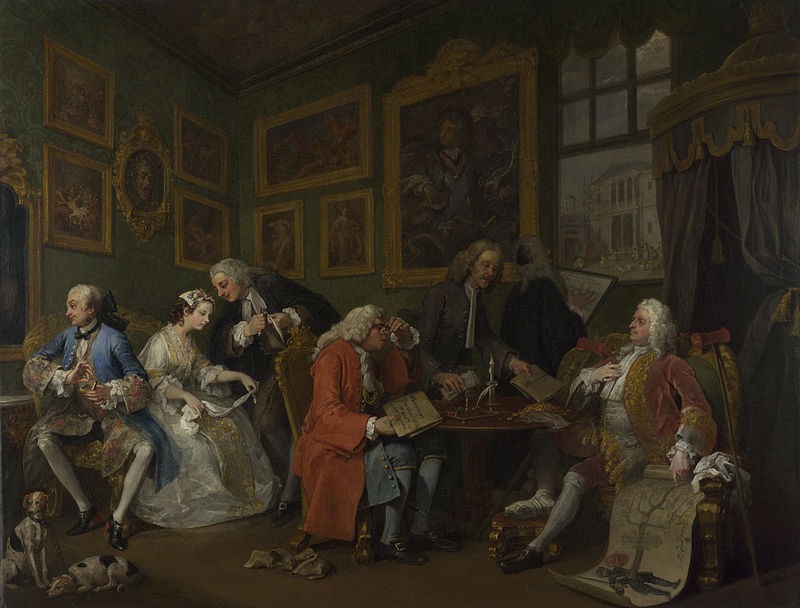
Marital ethics were the topic of much debate in 18th-century Britain. The many marriages of convenience and their attendant unhappiness came in for particular criticism, with a variety of authors taking the view that love was a much sounder basis for marriage than money. Hogarth for one felt the disquiet in British society sufficient to satirise it in a series of paintings called Marriage a la mode.
In the first of the series, The Marriage Settlement Hogarth shows an arranged marriage between the son of bankrupt Earl Squanderfield and the daughter of a wealthy but miserly city merchant. The construction on the Earl’s new mansion, visible through the window, has stopped as a usurer negotiates payment for further work at the centre table. The gouty Earl proudly points to a picture of his family tree. The son views himself in the mirror, showing where his interests in the matter lie. The distraught merchant’s daughter is consoled by the lawyer Silvertongue while polishing her wedding ring. Even the faces on the walls appear to have misgivings. Two dogs chained to each other in the corner mirror the situation of the young couple.
The pressure put on many young people to marry the ‘right’ person led to many secret marriages with the right people for them. This was possible because until the middle of the 18th century marriages could take place anywhere provided they were conducted before an ordained clergyman of the Church of England. Of course, this also left a lot of scope for bigamy and marriages to girls who were under age.
The trade in these irregular marriages had grown enormously in London by the 1740s and led to the introduction of the Marriage Act 1753, popularly known as Lord Hardwicke’s Marriage Act. This Act was the first statutory legislation in England and Wales to require a formal ceremony of marriage. The Act came into force on 25 March 1754 making the reading of banns, registration of a marriage and need for the marriage to be witnessed compulsory for the first time.
No marriage of a person under the age of 21 was valid without the consent of parents or guardians. Clergymen who disobeyed the law were liable for 14 years transportation. Jews and Quakers were exempted from the 1753 Act, but it required other religious non-conformists and Catholics to be married in Anglican churches.
The idea of secret marriage was taken up in the 1766 play, The Clandestine Marriage by George Colman the Elder and David Garrick. The play is a comedy and was first performed in 1766 at Drury Lane. The plot concerns a merchant, Mr Sterling, who wants to marry off his elder daughter to Sir John Melvil, who is in love with his younger daughter, Fanny. Fanny, however, is in love with a humble clerk, Lovewell, whom she has secretly married. Her attempts to extricate herself from the arrangement with Melvil lead to her being offered as a bride to Melvil’s elderly uncle, Lord Ogleby. But the truth comes out and she is saved from the awful fate of having to marry a man many years her senior whom she does not love and she and Lovewell are forgiven. In 1999, the play was made into a film directed by Christopher Miles and starring Nigel Hawthorne, Joan Collins, Timothy Spall, Emma Chambers and Tom Hollander.
Paul Nicholls and Natasha Little as the lovers in The Clandestine Marriage, 2000.
The Act did not change the position of a wife in law. On marriage, a woman became the property of her husband as soon as she said. “I do.” Clandestine and illegal marriages were not the exclusive domain of the wealthy. Many poor women where duped by unscrupulous, indecisive and inconstant men. Perhaps the most famous woman to be duped in this was Maria Fitzherbert (26 July 1756 - 27 March 1837) the secret wife of George, Prince of Wales, the future George IV.
In 1783 George, Prince of Wales became infatuated with her, wanting her to become his mistress but Maria’s devout Catholic beliefs would not allow it. So on 15 December 1785 they were married in a secret ceremony conducted by Robert Burt, an impoverished curate who set aside his scruples for the £500 fee. The marriage of course was not legal. It not only contravened the 1753 Marriage Act it was also in breach of the Act of Settlement of 1701, preventing a Roman Catholic from ascending the British throne and the Royal Marriage Act of 1772.
George and Maria spent much of their time in Brighton where Mrs Fitzherbert was treated as queen although George must have known that she never would be. Whether she was ignorant or deluded concerning her position is unknown. The couple separated when George’s affections turned to Frances, Countess of Jersey in 1794 and Maria’s position was finally put asunder when George married his cousin Caroline of Brunswick in 1795 with the benefit of law.
Illustration: Hogarth, Marriage a la mode - The marriage settlement.
Julia Herdman writes historical fiction that puts women to the fore. Her latest book Sinclair, Tales of Tooley Street Vol. 1. is Available on Amazon – Paperback £10.99 Kindle £2.29 Also available on:
Amazon Australia
Amazon Canada
Amazon New Zealand
Amazon South Africa
Amazon USA

by Julia Herdman | Apr 8, 2017 | Blog
Tooley Street in Southwark is the location of my new novel Sinclair. Today is it’s one of London’s best known streets, home to London Bridge Station and the London Dungeon, and is close to the London Shard and City Hall.
Running parallel to the Thames on the south side Tooley Street is one of the oldest streets in London. Its name is said to be a strange corruption of its former name, St. Olave’s Street, which is hard to believe but I suppose we’ll just have to accept what the local experts tell us on that one.
It’s a thriving place today with state of the art offices, clean and tidy streets and modern communications and although it was no less thriving in the past it was a very different place then. Here are some of the residents and trades listed as living and operating in the area in the 18th and 19th century:
Wharfingers (warehouse owners), merchants, instrument makers, factors, and agents; outfitters, biscuit-bakers, store-shippers, ship-chandlers, slop-sellers, block-makers, rope-makers, engineers, and then there were the surgeons who worked at the great charitable hospitals: Guy’s, St Thomas’ and the London.
My novel is set in eighteenth century Tooley Street in a house inhabited by my family’s ancestors for three generations. They owned an apothecary shop at No. 65 and worked as surgeons at Guy’s Hospital just a stone’s throw away. Members of the Leadam family pop in and out of the historical record; appearing in trade directories, hospital correspondence, or as witnesses in Old Bailey cases or giving evidence to Government enquiries on issues such as public health.Some members of the family are mentioned in magazine and newspaper articles of the day and some have published obituaries and their own publications.
In my story which is a fiction not a family history, a Scottish doctor down on his luck comes to live at No 65 Tooley Street after the unexpected death of Christopher Leadam who is based on the real Christopher Leadam who was born in Yorkshire and worked at Guy’s hospital as a surgeon and was secretary to one of its weekly committees. He died young leaving a widow, whom I have called Charlotte Leadam in the book and a teenage son. My story focuses on his widow’s struggle to keep the apothecary shop open and get her son, John, trained as a surgeon.
Illustration: Guy’s Hospital, London, opened 1725.
You can read my fictionalised account of life at No. 65 Tooley Street in Sinclair.
Available on Amazon – Paperback £10.99 Kindle £2.29
Amazon Australia
Amazon Canada
Amazon New Zealand
Amazon South Africa
Amazon USA

by Julia Herdman | Apr 5, 2017 | Blog
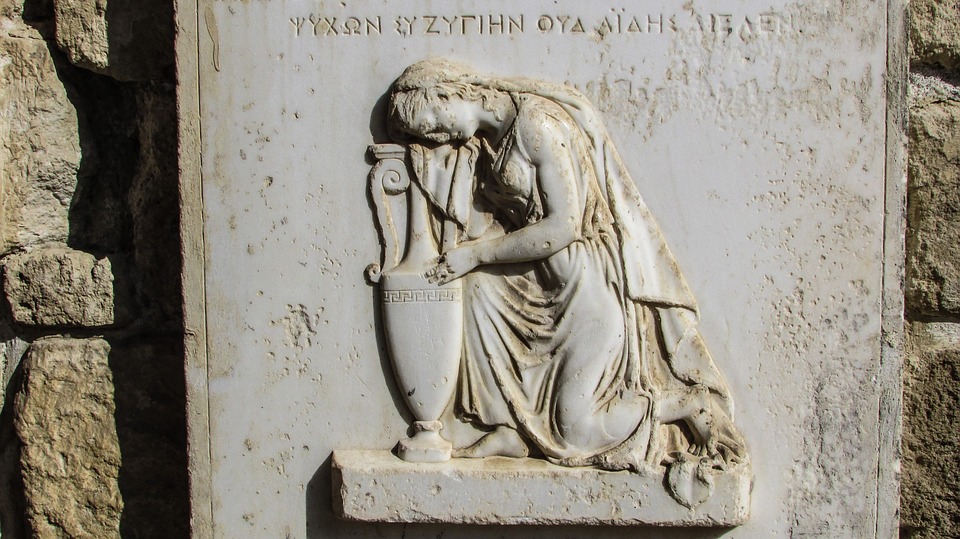
By the late 19th century, mourning behaviour in England had developed into a complex set of rules, particularly among the upper classes. For women, the customs involved wearing heavy, concealing, black clothing, and the use of heavy veils of black crêpe. The entire ensemble was colloquially known as “widow’s weeds” (from the Old English waed, meaning “garment”). The growing wealth of the eighteenth century aristocracy set the trend for the flamboyant expression of loss and grief with masses of black bombazine silk, ostrich feathers and bows but older and poorer women choose a much simpler, more practical styles and with the growth of the urban middle class, particularly in Britain the demand for dull, black, mourning wools, and black and white silk crepe increased as incomes and social expectations rose.
The wearing of mourning clothes was more of a social necessity for women than men. Whilst men might wear a special suit of sombre clothing for the actual funeral they were rarely expected to wear special clothes or colours unlike women who were expected to show the world their change in status for at least a year and a day. Of course many women wanted show respect to their dead husbands and continued to wear sombre colours for the rest of their lives. Indeed Charlotte Leadam the feisty heroine of my new novel Sinclair is a young widow who faces this very problem. As she waits for her husband’s creditors to present their accounts, we find her, “wearing her new mourning clothes; a respectable but uncomplicated widow’s cap and a full length black cloak both in black bombazine silk.
In a world where a woman became her husband’s property on marriage and where a middle class widow could not enter the professions to support herself signalling this change in marital status could have its advantages showing men that they were available for marriage again.
Julia Herdman is a novelist writing about 18th and early 19th century London. Her debut novel Sinclair is about a family of apothecary surgeons working at Guy’s and St Thomas’s Hospitals at the dawn of modern medicine.
Available on Amazon - Paperback £10.99 Kindle £2.29
Amazon Australia
Amazon Canada
Amazon New Zealand
Amazon South Africa
Amazon USA
by Julia Herdman | Apr 4, 2017 | Blog
John Keats - The Apothecary Poet
The poet John Keats trained as an apothecary and a surgeon before deciding to dedicate himself to poetry.
Keats had first-hand experience of serious illness and death. His father died after falling from a horse, and his mother and uncle died of what was called ‘an unspecified decline.’ Keat’s only brother Tom was to die of tuberculosis in December 1818. Keats nursed his brother through his final months catching the deadly virus in the process. Keats’ disease became apparent early in 1820. Known as consumption in those days the disease was common, distressing and lethal.
Keats Early Life
Aged just 14 years old Keats was apprenticed to the family’s doctor, Thomas Hammond. In the summer of 1810, Keats moved in above Hammond’s surgery in Edmonton, North London. While an apprentice, Keats would have performed such tasks as making up medicines, cleaning the surgery, preparing leeches (blood-sucking worms that were used to bleed patients), and bookkeeping. As he progressed he may have moved on to dressing wounds, drawing teeth and visiting the sick.
Keats’s poetry received some harsh criticism form literary snobs because he was an apothecary. Having such a profession was seen by some to be beneath the dignity of a poet. The Tory critic John Gibson Lockhart, writing anonymously in Blackwood’s Edinburgh Magazine, Lockhart advised Keats that ‘It is a better and a wiser thing to be a starved apothecary than a starved poet.’
He seems to have left before his apprenticeship was completed, but he had done enough to satisfy the requirements of the 1815 Apothecaries Act, which came in while Keats was in the next stage of his training at Guy’s Hospital. Keats entered Guy’s Hospital as a student on 1 October 1815 and, with incredible speed, was promoted to the role of ‘dresser’ on 29 October 1815, less than a month after he had arrived at the hospital and just before he turned 20.
The Apothecaries Act had come into force on 12 July 1815 and was an attempt to regulate and professionalize apothecaries. To be allowed to practice, there was now a required minimum degree of training and an exam. Keats had done enough of his apprenticeship, the requisite six months of hospital training, and then passed the difficult exam (which his two housemates failed). He qualified for his apothecary license on 25 July 1816.
His knowledge of the human body and its suffering can be found in his narrative poem Lamia which was published in 1820. The poem was written in 1819, during the famously productive period that produced his 1819 odes. It was composed soon after his “La belle dame sans merci” and his odes on Melancholy, on Indolence, to a Grecian Urn, and to a Nightingale and just before “Ode to Autumn”. It tells how the god Hermes hears of a nymph who is more beautiful than all the rest and he goes searching for it but he finds Lamia, trapped in the form of a serpent. She reveals the previously invisible nymph to him and in return, he restores her human form. Her transformation into a woman contains all the pain and horror he had witnessed in his hospital work. It shows the knowledge of chemistry he gained at Guy’s Hospital. Lamia foamed at the mouth her eyes wild ‘Flash’d phosphor and sharp sparks’ (Part 1, ll. 148-52). The beautiful colours that had characterized her mythological, serpent body are replaced with the ‘pain and ugliness’ of human mortality and the change was horrible, physically painful ‘She writh’d about, convuls’d with scarlet pain’ (Part 1, l. 164; l. 154). Scarlet is, of course, the colour of blood and in his phrase ‘scarlet pain’, Keats describes the agony of Lamia’s transition into a fully mortal woman.
Keats Death
During 1820 Keats’ health declined. He suffered two lung haemorrhages in the first few days of February and lost a lot of blood. At the suggestion of his doctors, he agreed to move to Italy with his friend Joseph Severn. He took a house on the Spanish Steps in Rome, today the Keats–Shelley Memorial House museum. Despite the care of Severn and Dr. James Clark, his health rapidly deteriorated. Keats was placed on a starvation diet of one anchovy and a piece of bread a day intended to reduce the blood flow to his stomach. He was bled, a standard treatment of the day to reduce the agitation of his blood. Weak and knowing the fate he had in store Keats tried to poison himself with opium without success. His friends hoping to save him from himself took the opium away and Keats died in agony with nothing to ease the pain.
John Keats died in Rome on 23 February 1821 and was buried in the Protestant Cemetery. His last request was to be placed under a tombstone bearing no name or date, only the words, “Here lies One whose Name was writ in Water.” Severn and his doctor Brown erected the stone. On it they had a relief of a lyre with broken strings cut into it with the epitaph:
This Grave contains all that was Mortal of a Young English Poet Who on his Death Bed, in the Bitterness of his Heart at the Malicious Power of his Enemies Desired these Words to be engraved on his Tomb Stone: Here lies One Whose Name was writ in Water. 24 February 1821. The text echoes a sentiment from Catullus LXX. Sed mulier cupido quod dicit amanti, in vento et rapida scribere oportet aqua which means ‘ What a woman says to a passionate lover should be written in the wind and the running water.
About the author
Julia Herdman is a novelist writing about 18th and early 19th century London. Her debut novel Sinclair is about a family of apothecary surgeons working at Guy’s and St Thomas’s Hospitals at the dawn of modern medicine. Available on Amazon - Paperback £10.99 on Kindle
Julia Herdman is a novelist writing about 18th and early 19th century London. Her debut novel Sinclair is about a family of apothecary surgeons working at Guy’s and St Thomas’s Hospitals.
What people are saying about Sinclair.
5 stars – Fantastic Tale of the 18th century
This book is superbly written and pulls the reader right into 18th-century life! Truth be told, I am not usually a fan of historical fiction, but Sinclair has changed that for sure! I was fully immersed in this tale, and have recommended it to all of my friends & colleagues! C.Miller, USA
Available on Amazon - Paperback £10.99 and Kindle
Amazon Australia
Amazon Canada
New Zealand
South Africa
Amazon USA

Recent Comments