
by Julia Herdman | Jun 7, 2017 | Blog
Did Queen Marie Antoinette ever say ‘Let them eat cake’?
‘Let them eat cake.’ is one of the most famous quotes in history, but did the queen ever say it and what was going on in France for such a quote to become so popular?
Love her or hate her Marie Antoinette is one of the most famous women in French history but was she blamed for things she never said or had any control over?
The Weather in 1788

Historians and archaeologists are becoming increasingly aware of the influence of weather on the world’s significant events and as someone who has been researching life in the 18th century Britain and France I was amazed to find that the weather could be said to one of the causes of the French Revolution.
In the spring and summer of the year before the Revolution France suffered a drought. Although there was no drought in England the summer of 1788 was an unusually warm one in London. As temperatures soared in the capital, the incidence of Scarlet fever and Typhus spread through the city. In August over 1000 deaths were attributed to fever alone.
As Londoners sweltered the French baked. The French were not particularly competent farmers at the time, the aristocracy and major landowners were not interested in developing and improving their land for agriculture and food production, unlike their British counterparts. Consequently, food production was already pretty miserable when the drought struck.
The drought of 1788 ended when the skies opened and hail the size of fists fell from the sky bashing the fruit from the trees and the smashing the crops in the fields to smithereens so when the French entered the winter of 1788-9 food stocks were at an all-time low. The storms of July caused damage in parts of the country. To make matters worse, the disastrous harvest was followed by months of freezing weather. The temperature barely rose above freezing for three months through November, December and January. In London, the river Thames froze.
The bad weather was most likely caused by the eruption of the Laki volcanic fissure in southern Iceland which spewed out ash for eight months from 8 June 1783 to February 1784 killing much of the livestock and perhaps a quarter of the Icelandic population at the time. The British naturalist Gilbert White described that summer in his classic Natural History of Selborne as “an amazing and portentous one … the peculiar haze, or smokey fog that prevailed for many weeks in this island, and in every part of Europe, and even beyond its limits was a most extraordinary appearance, unlike anything known within the memory of man.”
The State of French Agriculture

Tobias Smollett wrote about Boulogne near Calais in 1763. As much as he hates France he can see that the peasants and landowners around the town have adopted some English farming improvements unlike in the rest of France. ” I am certain that a man may keep house in Boulogne for about one half of what it will cost him in London; and this is said to be one of the dearest places in France. The adjacent country is very agreeable, diversified with hill and dale, corn-fields, woods, and meadows. There is a forest of a considerable extent, that begins about a short league from the Upper Town: it belongs to the king, and the wood is farmed to different individuals. In point of agriculture, the people in this neighbourhood seem to have profited by the example of the English. Since I was last in France, fifteen years ago, a good number of inclosures and plantations have been made in the English fashion. There is a good many tolerable country-houses, within a few miles of Boulogne; but mostly empty. I was offered a compleat house, with a garden of four acres well laid out, and two fields for grass or hay, about a mile from the town, for four hundred livres, about seventeen pounds a year: it is partly furnished, stands in an agreeable situation, with a fine prospect of the sea, and was lately occupied by a Scotch nobleman, who is in the service of France.” ( Project Gutenberg’s Travels Through France and Italy, by Tobias Smollett.)
High Prices and High Taxes
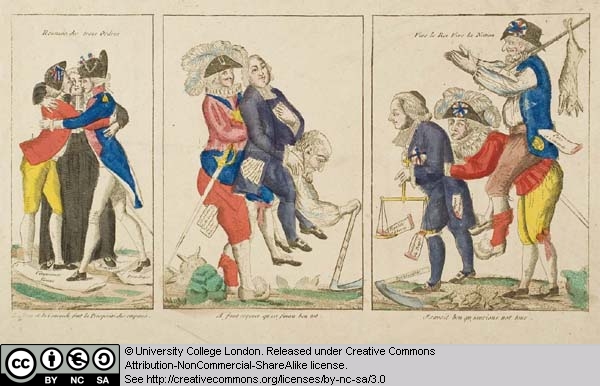
The poorer classes, 95% of whose diet consisted of bread and cereals and which before the drought had to spend about 55% of their earnings on bread, were forced by the famine conditions of the first half of 1789 to spend now 85% and over of their income on this staple food. In France rural taxes called “privilege seigneriaux” or seigniorial privileges, severely burdened farmers.The clergy and nobility exercised a preeminent right over all land property but evaded most of the taxes and financial burdens of managing it. By 1789, some 90% of the population were hungry by the beginning of 1789. The famine added to the woes of the French people who was also suffering from a 10 year economic slump with its attendant unemployment.
The Riots and the Queen’s Response
When the riots did come, they were triggered by a chance remark by a wallpaper manufacturer named Reveillon, who said in a public meeting that the government should lower grain prices so that wages could be limited to 15 sous. Rumours of impending wage reductions swept the restless capital and set off the train of events we call The French Revolution.
Queen Marie-Antoinette never said, “Let them eat cake,” on hearing there was no bread to be had in Paris but it was just the sort of thing the crowd thought her capable of saying. As was expected of a woman of her class and position she was remote but she was also totally unaware and untroubled by the plight of her people. She was, as all 18th century monarchs in Europe were, living a life of secluded luxury in their palaces. Marie Antoinette was of course living at one of Europe’s most opulent homes, the Palace at Versailles.
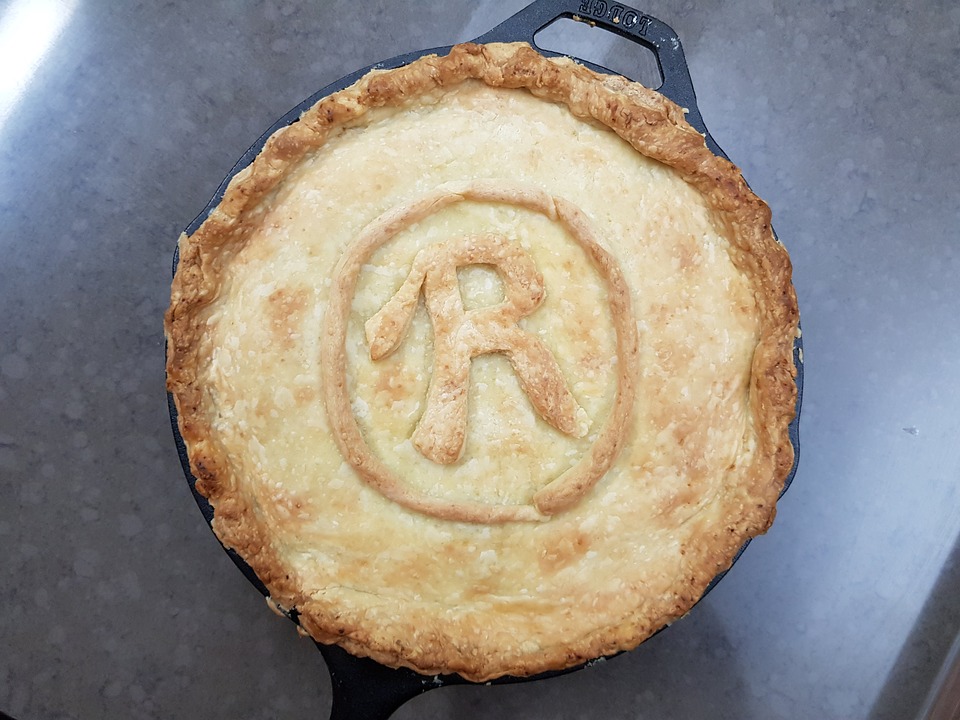
The phrase,’Let them eat cake’ first appeared in a slightly different form about Marie-Thérèse, the Spanish princess who married King Louis XIV in 1660. Marie-Thérèse allegedly suggested that the French people eat “la croûte de pâté” (or the crust of the pastry or the top of the pie - this was usually discarded as pastry was designed to protect the meat while it cooked). Over the next century, several other royals had the phrase attributed to them including two aunts of Louis XVI as it was a phrase that spoke of the royal family’s callousness to their people.
Land Reform
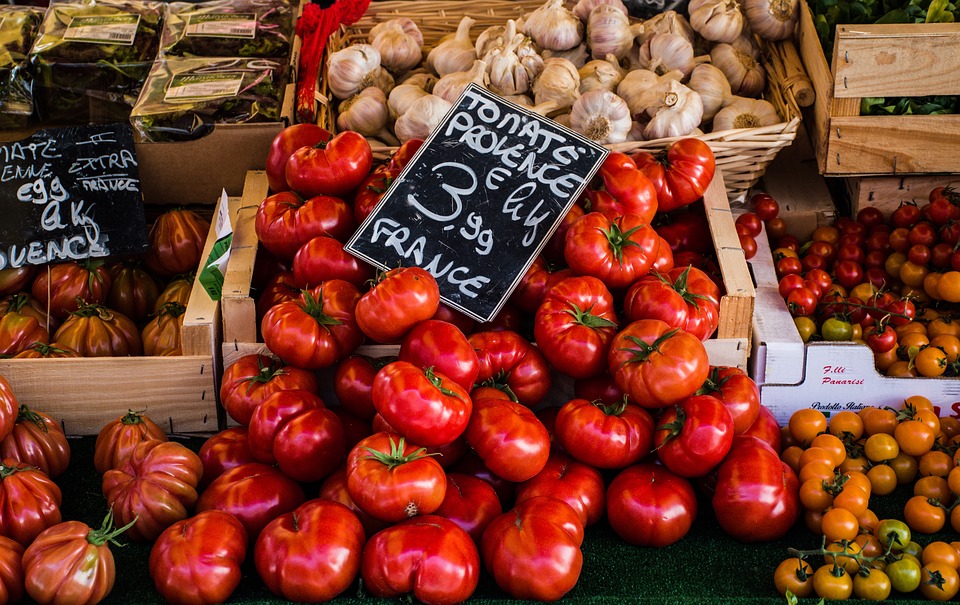
The Revolution brought the repealed feudal tenures, freed all those bound into serfdom, abolished feudal courts, and cancelled all payments not based on real property, including tithes. Once the reforms were in place; however, the peasants seized the land and refused to pay rent to the government, and in 1792, all payments were finally cancelled. Property of the clergy and political emigrants was confiscated and sold at auction, together with common land. The terms of sale, however, often favoured the wealthy, which may explain the rise of a new class of large landowners among the supporters of Napoleon I. The redistribution of land became the basis of French democracy and the small family farm has been the main feature of French agriculture ever since. Having secured their piece of land, there was little incentive or money to improve it for the peasant owners and so the economic benefits of the reforms were limited, France still struggled to feed itself and agricultural improvements that were being introduced in England were slow to be adopted.
France was a rural nation as late as 1940. After the creation of the land owning peasant class after the Revolution a next major change came in with the railways in the 1850s according to Peasants Into Frenchmen (1976), by historian Eugen Weber. Weber traced the modernisation of French villages and argued that rural France went from backward and isolated to modern and possessing a sense of French nationhood during the late 19th and early 20th centuries. He emphasised the roles of railways, republican schools, and universal military conscription. He based his findings on school records, migration patterns, military service documents and economic trends. Weber argued that until 1900 or so a sense of French nationhood was weak in the provinces, a view that has been called into question by several writers. Nevertheless, he gives a good account of the development of rural France in the 19th century. Reforms brought in after World War II and France’s engagement in the European Union has transformed agricultural production again.
Sources:
https://www.britannica.com/topic/land-reform/History-of-land-reform
https://en.wikipedia.org/wiki/French_peasants
Great Historical Events That Were Significantly Affected by the Weather: The Year Leading to the Revolution of 1789 in France, J. Neumann, Department of Atmospheric Sciences, The Hebrew University, Jerusalem, Israel
Drought and the French Revolution:The effects of adverse weather conditions on peasant revolts in 1789, Maria Waldinger (London School of Economics)
Julia Herdman writes historical fiction. Her latest book Sinclair, Tales of Tooley Street Vol. 1. is Available on Amazon – Paperback £10.99 Kindle
Sinclair is available of Amazon. Click here to get your copy.
Sinclair is set in the London Borough of Southward, the Yorkshire town of Beverley and in Paris and Edinburgh in the late 1780s. Strong female leads include the widow Charlotte Leadam and the farmer’s daughter Lucy Leadam. Sinclair is a story of love, loss and redemption. Prodigal son James Sinclair is transformed by his experience of being shipwrecked on the way to India to make his fortune. Obstacles to love and happiness include ambition, conflict with a God, temptation and betrayal. Remorse brings restitution and recovery. Sinclair is an extraordinary book. It will immerse you in the world of 18th century London where the rich and the poor are treated with kindness and compassion by this passionate Scottish doctor and his widowed landlady, the owner of the apothecary shop in Tooley Street. Sinclair is filled with twists and tragedies, but it will leave you feeling good.
Also available on:
Amazon Australia
Amazon Canada
Amazon New Zealand
Amazon South Africa
Amazon USA
18th Century Smuggling Fact and Fiction
by Julia Herdman | Jun 5, 2017 | Blog
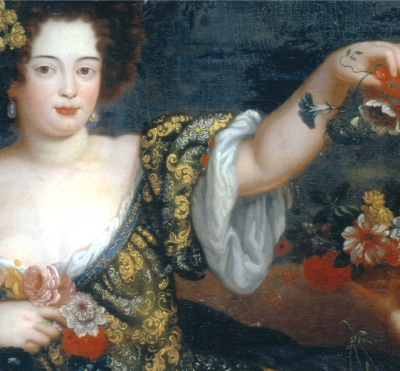
This is the shocking case of the Princess who was married against her will, spurned, divorced, and imprisoned for 33 years.
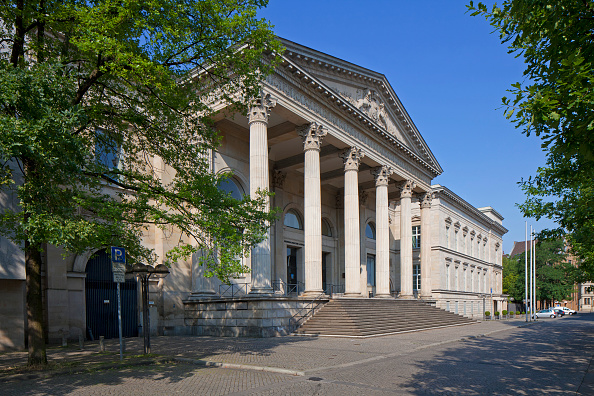
In August 2016, a human skeleton was found under the Leineschloss (Leine Palace, Hanover) during a renovation project; the remains are believed to be those of Swedish count, Philip Christoph von Königsmarck, (1665-1694) a soldier in the Hanoverian army and the lover of Princess Sophia Dorothea, the wife of the first Hanoverian king of Britain.
Early Life
Sophia Dorothea was just sixteen years old when she was married to her cousin, George Louis of Hanover, the future king of Great Britain and Ireland in 1705.
Poor Princess Sophia Dorothea did not get a good start in life; she was born illegitimately; the daughter of her father’s long-term mistress, Eleonore d’Esmier d’Olbreuse, Countess of Williamsburg (1639–1722) on 15 September 1666, and was considered an inconvenient royal bastard. Without a wife and an heir her father, Prince George William, Duke of Brunswick Lüneburg, eventually did the right thing and married his mistress which had the effect of legitimising his only child.
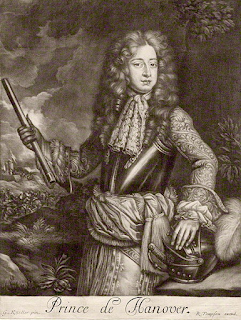 |
| George I of Britain |
Her Father’s Legitimate Heir
Sophia Dorothea was ten years old when she became heir to her father’s kingdom, the Principality of Lüneburg. This made her a good catch despite her problematic origins because Lüneburg was a wealthy principality and Sophia Dorothea, like her mother, was attractive and lively.
Along with her legitimacy came talk about her marriage. In the six years between her acceptance into the royal family and her eventual marriage, three prospective husbands were considered for her.
Marriage Proposals
First, there was talk of marriage to the Danish heir presumptive. Some years later her engagement to the Duke of Brunswick-Wolfenbüttel was broken off by her father after her aunt, Duchess Sophia of Hanover, convinced him she should marry her cousin, George Louis of Hanover to join their two duchies together. Duchess Sophia hated her niece, whom she considered brazen, coquettish, and uneducated. When told of the change of plan, sixteen-year-old, Sophia Dorothea shouted, “I will not marry the pig snout!”
Twenty-two-year-old George Louis was not keen on the match either; he already had a mistress and was happy with his life as a soldier. Although he was a prince, he was ugly and boring, even his mother didn’t like him. Nevertheless, Duchess Sophia was determined to keep the family fortune together, and despite both Sophia Dorothea’s and her son’s objections, the pair were married on 22 November 1682, in Celle. For his pains, George Louis received a handsome dowry and was granted his father-in-law’s kingdom upon his death, and Sophia was left penniless.
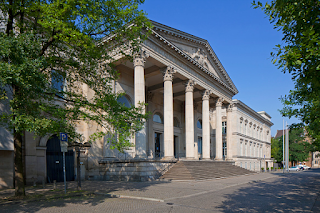 |
| The state parliament in the former Leineschloss /
Leine Castle in Hannover Lower Saxony Germany |
An Unhappy Marriage
The unhappy couple set up home in Leine Palace in Hanover where Sophia Dorothea was under the supervision of her odious aunt, Duchess Sophia, and spied on by her husband’s spies when he was away on campaign. Despite their unhappiness, the pair produced two children; George Augustus, born 1683, who later became King George II of Great Britain and a daughter born 1686 when Sophia Dorothea was twenty.
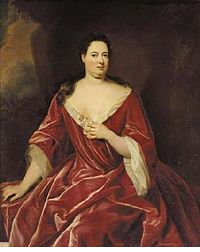 |
| Sophia Charlotte
von Keilmannsegg |
Having produced two children, George became increasingly distant from his wife spending more time with his dogs and horses and his nights with his mistress, the married daughter of his father’s mistress, a woman called Sophia Charlotte von Keilmannsegg, who was rumoured to be George Louis’ half-sister.
Aggrieved, lonely, and unhappy Sophia Dorothea found a friend in the Swedish count Philip Christoph von Königsmarck, (1665-1694) who was a soldier in the Hanoverian army. Philip was a year older than Sophia Dorothea and the antithesis of her ugly, boorish husband.
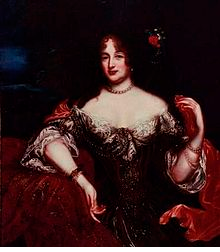 |
| Countess of Platen |
The Fatal Affair
Sophia Dorothea was no saint. She was quick-tempered and rarely discrete, and her choice of Von Königsmarck as a lover was not the best. Königsmarck was a dashing, handsome gigolo and the former lover of her father-in-law’s mistress, the Countess of Platen and the Countess had a jealous nature.
Königsmarck and Sophia Dorothea began a love affair of clandestine trysts, real love, and their coded correspondence facilitated by a trusted go-between. Their love affair was uncovered in 1692 when the Duchess of Platen presented a collection of their letters to her lover, Sophia Dorothea’s father-in-law the Elector of Hanover. Von Königsmarck was banished from the Hanoverian court but soon found a position in the neighbouring court of Saxony where one night when he was buried in his cups he let slip the state of affairs in the bedchambers of the royal house of Hanover. George Louis got wind of what had been said and on the morning of 2 July 1694, after a meeting with Sophia at Leine Palace, Königsmark was seized. No one except his murderers knew what happened to him next.
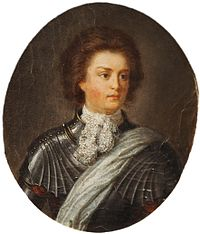 |
| Philip Christoph von Königsmarck,
(1665-1694) |
A Sad and Lonely Death
Dorothea never saw her lover again. George Louis divorced her in December, and early the following year she was confined her to Schloss Ahlden a stately home on the Lüneburg Heath in Lower Saxony. She stayed there for the rest of her life. Her children were taken away from her, and she was forced to live alone.
When Sophia Dorothea died in 1726, she had spent 33 years in her prison. Before she died, she wrote a letter to her husband, cursing him for his treatment of her. A furious George forbade any mourning of her in Hanover and London.
George, I died shortly after the Countess of Platen exonerated him of any involvement in Von Königsmark’s death. Two of her henchmen made deathbed confessions to the crime. Although George I was cleared of Von Königsmark’s death, his son George II never forgave his father for the treatment he had meted out to his mother.
Sources:
https://en.wikipedia.org/wiki/Sophia_Dorothea_of_Celle
Notorious Royal Marriages: A Juicy Journey Through Nine Centuries of Dynasty By Leslie Carroll
The Georgian Princesses By John Van der Kiste
Julia Herdman writes historical fiction. Her latest book Sinclair, Tales of Tooley Street Vol. 1. is Available on Amazon – Paperback £10.99 Kindle.
Sinclair is available of Amazon. Click here to get your copy.
Sinclair is set in the London Borough of Southward, the Yorkshire town of Beverley and in Paris and Edinburgh in the late 1780s. Strong female leads include the widow Charlotte Leadam and the farmer’s daughter Lucy Leadam. Sinclair is a story of love, loss and redemption. Prodigal son James Sinclair is transformed by his experience of being shipwrecked on the way to India to make his fortune. Obstacles to love and happiness include ambition, conflict with a God, temptation and betrayal. Remorse brings restitution and recovery. Sinclair is an extraordinary book. It will immerse you in the world of 18th century London where the rich and the poor are treated with kindness and compassion by this passionate Scottish doctor and his widowed landlady, the owner of the apothecary shop in Tooley Street. Sinclair is filled with twists and tragedies, but it will leave you feeling good.
Amazon Australia
Amazon Canada
Amazon New Zealand
Amazon South Africa
Amazon USA
Princess Anne - The Princess Who Married a Hunchback

by Julia Herdman | May 30, 2017 | Blog
Secret and Clandestine Marriage
A clandestine or illicit marriage is a plot device in many 18th and 19th-century stories, think of Jayne Eyre and Mr Rochester, but what seems like the work of fiction was a fact of life for women from all social classes in 18th Century Britain. No one knew who was married to whom until the law of marriage was changed. Even the Prince Regent tried to marry a woman clandestinely and illegally.
On May 11, 1786, the Coachmakers’ Hall, Debating Society debated the following proposition: “Are not the Restraints contained in the Marriage Act, and every other Restriction on the Matrimonial Contract, contrary to the natural Rights of Mankind, and injurious to Conjugal Felicity?” Someone at the Coachmakers’ Hall was clearly stirring the pot of civil discord that evening as the formalities prescribed by the Act were hardly novel, and had been observed even when they were not essential to the validity of a marriage, and the protection afforded by the previous law was not as generous as many who wished to deviate from the new law claimed.
The Marriage Act
The Marriage Act 1753, popularly known as Lord Hardwicke’s Marriage Act, was the first statutory legislation in England and Wales to require a formal ceremony of marriage. The Act came into force on March 25, 1754, making compulsory the reading of the banns, and the registration of a marriage and its witnesses for the first time.
Before the Act, the legal requirements for a valid marriage in England and Wales had been governed by the canon law of the Church of England. This had stipulated that banns should be called or a marriage licence should be obtained before marriage and that the marriage should be celebrated in the parish where at least one of the parties was resident. However, these requirements were not mandatory and the absence of banns or a licence – or even the fact that the marriage was not celebrated in a church – did not render the marriage void. The only essential requirement was that the union be celebrated by an Anglican clergyman. So this left a lot of scope for clandestine marriages and for the wedding of those who were technically under the age of legal consent which was 21 at the time.
The King’s Secret Marriage
Maria Fitzherbert (July 26 1756 - March 27 1837) became the wife of George, Prince of Wales, the future George IV in extraordinary circumstances. Maria came from a respectable Roman Catholic family and was educated in France. She had been married twice before when she met Prince George. Maria married Edward Weld, who was sixteen years her senior, and the wealthy Catholic owner of Lulworth Castle in July 1775. Weld died just three months later after falling from his horse leaving Maria penniless. Her new husband had failed to sign his Will, so his estate went to his younger brother.
Maria, now a widow was left effectively destitute. She received little or no financial support from the Weld family and was obliged to remarry as soon as she could. Three years later, she married again. Her second husband was Thomas Fitzherbert of Swynnerton, Staffordshire who was ten years her senior. They had a son but he died young and then she was widowed again in 1781, but this time she got an annuity of £1000 and a townhouse in Park Street, Mayfair.
In 1783 George, Prince of Wales became infatuated with her after meeting her at the opera. The licentious Prince, he wanted her to become his mistress, but Maria’s devout Catholic beliefs would not allow it. So on December 15, 1785, they were married in a secret ceremony conducted by Robert Burt, an impoverished curate who set aside his scruples for the £500 fee.
The marriage was not legal. It not only contravened the 1753 Marriage Act it was also in breach of the Act of Settlement of 1701, preventing a Roman Catholic from ascending the British throne and the Royal Marriage Act of 1772. How George thought he was going to get away with is a mystery and how Maria could believe she was being married to a Prince of the realm legitimately in such circumstances is beyond belief.
The Illegally Married Couple
George and Maria spent much of their newly married life in Brighton where Mrs Fitzherbert was treated like a queen. Whether she was ignorant or deluded concerning her position is unknown, she never spoke of it. George’s intentions were never earnest, he always had an eye for the ladies.
The couple finally separated when George’s affections turned to Frances, Countess of Jersey in 1794. Their illegal marriage was finally put asunder when George married his cousin Caroline of Brunswick in 1795.
Five years later, in 1800, Maria and George were reunited as George could not stand the sight of his legal wife, Caroline.
By 1807, the Prince’s affections were wandering again, this time towards Lady Hertford. Unable to bear any further humiliation, on December 18 1809, Maria sent George a farewell letter and departed from Brighton where she and the Prince were living.
Following the death of George IV on June 26 1830, it was discovered that he had kept all of Fitzherbert’s letters, and steps were taken to destroy them. Fitzherbert told George IV’s brother, King William IV, about their marriage and showed him the documents in her possession. He asked Fitzherbert to accept a dukedom, but she refused, asking only for permission to wear widow’s weeds and to dress her servants in royal livery. The architect William Porden created Steine House for her, on the west side of Old Steine in Brighton where she lived from 1804 until her death in 1837. The king’s unofficial wife was buried at St John the Baptist’s Church in the Kemp Town area of Brighton.
Julia Herdman writes historical fiction. Her latest book Sinclair, Tales of Tooley Street Vol. 1. is Available on Amazon – Paperback £10.99 and on Kindle.
Also available on:
Amazon Australia
Amazon Canada
Amazon New Zealand
Amazon South Africa
Amazon USA
Princess Sophia Dorothea the Uncrowned Queen of Britain
Dress to Impress Princess

by Julia Herdman | May 10, 2017 | Blog
Women in Art
Mary Moser (1744-1819) was “one of the most celebrated women in art in 18th-century Britain,” yet today she’s mostly overlooked.
Along with Angelica Kauffmann, Mary Moser was one of only two female founding members of 36 member Royal Academy.
It would be more than 115 years until the next woman, Dame Laura Knight, would be invited to become the next female member.

Mary Moser by George Romney
Moser specialised in flower-painting, which was at the bottom of the hierarchy of academic art, but she was ambitious for professional standing. In this portrait, which shows her at work on an oil painting, she is showing that she wanted to be taken seriously. Moser is placing herself on a par with men who had themselves painted at their easels, dressed in their painter’s robes. She shows that she understands it refers to a tradition of portraits of male artists dating back to the Renaissance.
At the time most male artists asserted their academic status by stressing the intellectual rather than the technical aspects of their work, the oil palette that Moser holds also distinguishes her from the many women amateurs who practised flower-painting using the less taxing medium of watercolour.
The close focus, dramatic colours and sidelong glance also emphasised that her professional status did not need to compromise her femininity.

Moser, Mary; Vase of Flowers; The Fitzwilliam Museum.
Moser’s flower paintings are less a celebration of the wonders of God’s creation as a careful observation of nature. Flowers were a favourite subject as far as consumers were concerned. London printsellers sold countless decorative flower prints, depicting them in baskets, vases, or tied in bouquets. Flower art was also used in pattern books providing templates for ladies to copy for embroidery or for glass painting. Drawings of flowers were also used for Japan work and were copied onto undecorated white china. By the latter part of the eighteenth century, drawing masters specialising in teaching this type of art were much in demand, and many women who had given up flower painting on their marriage found it a useful means of financial support, but it was always uncredited.
Due in part to her father’s connections and patronage by members of the royal family, Moser received several commissions from King George and Queen Charlotte. The most prestigious and famous of those commissions was a floral decorative scheme for the Frogmore House in the 1790s. The “prestigious and lucrative commission” Moser was paid £900, which made Moser “the envy of her male colleagues.” It was also one of her last professional works, as she retired upon her marriage in 1793.
She married remarkably late in life when she was 49 years old. The man she chose was Hugh Lloyd. However, she did not pack up her paint box and retire to the country. But the marriage did not live up to her expectations, and within six months she was on a sketching tour of Europe with miniaturist Richard Cosway.
Cosway left his Anglo-Italian artist wife Maria ho was 20 years Moser’s junior and chose to keep company with Moser. Cosway was a “well known as a libertine and commonly described as resembling a monkey.” The film Jefferson in Paris, which dramatises Maria Cosway’s own romance with the future American President Thomas Jefferson Richard Cosway was portrayed as effeminate, but it seems he was anything but in bed. His diary entries for the time he spent with Mary Moser describe a hot and steamy affair.

Richard Cosway - Self Portrait
Mary Moser’s death in 1819 marked the start of a long stretch of time when, despite no explicit ban, women remained excluded from the Academy.
Lady Elizabeth Butler, renowned at the time for her paintings that reported the realities of the Crimean War, came close to becoming a member in 1871 but according to committee reports, she missed out by a mere one vote.
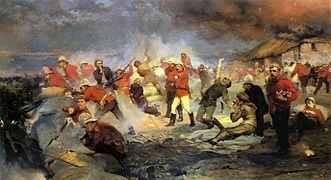
Lady Elizabeth ButlerIt wasn’t until 1936 that Dame Laura Knight became the next woman to be fully elected as an Academician, and although having previously had her work rejected by the Academy on grounds of embarrassing the art establishment with what a critic described as “vulgar” and “obviously an exercise” for a self-portrait, she helped pave the way for greater recognition of women in the arts and the continuation of female membership at the Academy.
Julia Herdman writes historical fiction. Her latest book Sinclair, Tales of Tooley Street Vol. 1. is Available on Amazon – Paperback £10.99 Kindle
Amazon. Click here to get your copy.
Sinclair is set in the London Borough of Southward, the Yorkshire town of Beverley and in Paris and Edinburgh in the late 1780s. Strong female leads include the widow Charlotte Leadam and the farmer’s daughter Lucy Leadam. Sinclair is a story of love, loss and redemption. Prodigal son James Sinclair is transformed by his experience of being shipwrecked on the way to India to make his fortune. Obstacles to love and happiness include ambition, conflict with a God, temptation and betrayal. Remorse brings restitution and recovery. Sinclair is an extraordinary book. It will immerse you in the world of 18th century London where the rich and the poor are treated with kindness and compassion by this passionate Scottish doctor and his widowed landlady, the owner of the apothecary shop in Tooley Street. Sinclair is filled with twists and tragedies, but it will leave you feeling good.
Also available on:
Amazon Australia
Amazon Canada
Amazon New Zealand
Amazon South Africa
Amazon USA
Against the Grain - 18th Century British Art
Maria Cosway the Artist who Captured the Heart of Thomas Jefferson

by Julia Herdman | May 5, 2017 | Blog
The Hipster, the Macaroni and the Fop
The emergence of the modern-day hipster is the antithesis of the 18th-century Macaroni, but they have some things in common.
Macaronis were fashionable fellows who dressed and even spoke in an outlandishly affected manner. The macaroni only wanted was new and expensive. They thrived on spending money on the most outlandish costumes and hair.
The term macaroni is a pejorative one and referred to a man who “exceeded the ordinary bounds of fashion” in terms of clothes, fastidious eating and gambling. It was used to describe young men who had been to Italy on the Grand Tour and developed a taste for maccaroni, a type of pasta little known in England then, and so they were said to belong to the Macaroni Club.
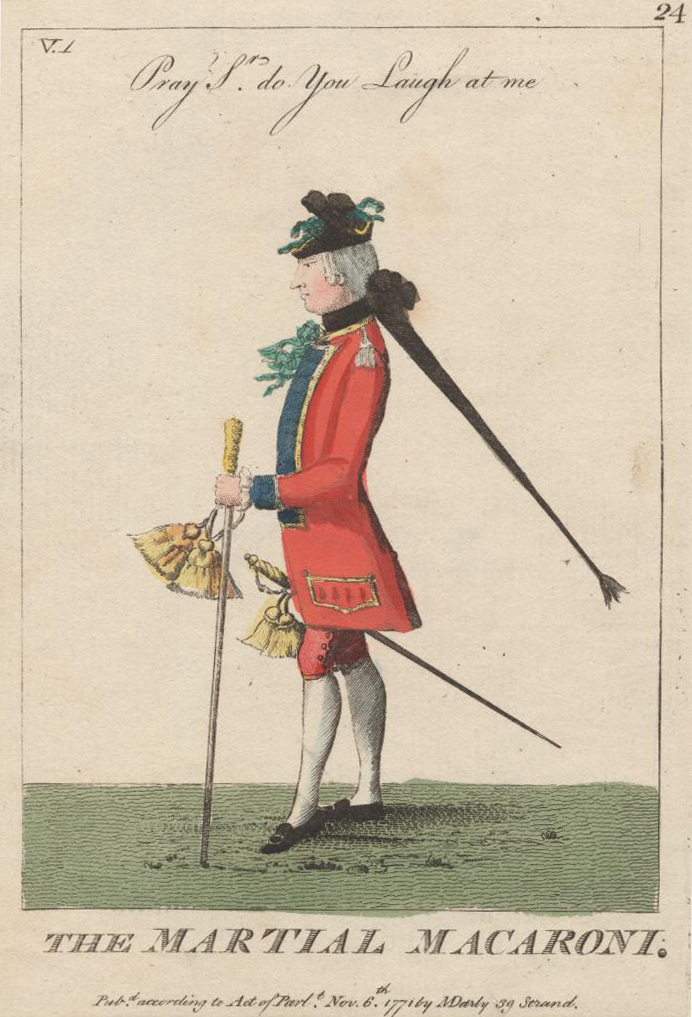
Macaronis were the object of some savage British satire. In the Middlesex Journal for November 7th, 1772 Juventis commented on the use of the term macaroni: “If I consult the prints, ’tis a figure with something uncommon in its dress or appearance; if the ladies, an effeminate fop; but if the’ prentice-boys, a queer fellow with a great large tail.” Basically, this meant that the author thought if a woman looked at an illustration of a Macaroni, she would think she was looking at an effeminate dandy, while a working-class boy would say the man was a homosexual.
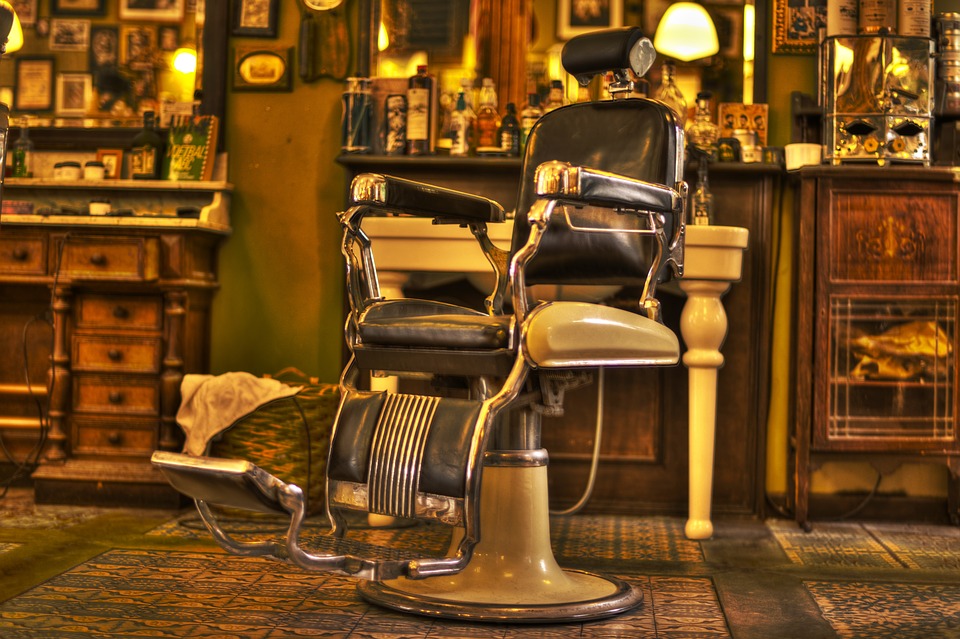
Hipster men, gay and straight, have made Retro their cool. The environment they say is precious to them, so they have turned their backs on the ‘the new’. The purloin their style from the racks of the Vintage shops choosing tweeds, corduroy and shirts made of cotton. Hipsters want to wear Sylvia Plath’s cardigans and Buddy Holly’s glasses because to be cool isn’t to look like a television star. They have beards and wear their hair in ponytails and buns revelling in the irony of making what was once nerdy cool. The only new thing Hipsters want is technology and coffee. These latter-day dandies wish to live hi-tech and sustainably; eat organic, gluten-free grains and preen their whiskers in the Edwardian style barbers shops.
Dandies appeared in the late 18th-century. Of course, both the dandy and the macaroni appear in the popular American Revolution song ‘Yanki-doodle-dandy’ the song that describes how an American colonist stuck a feather in his cap and called it Macaroni.
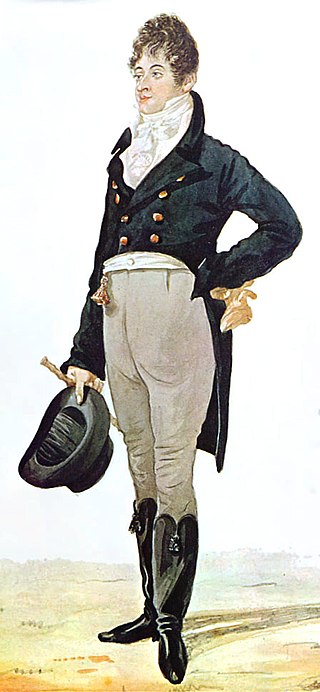
Napoleon and soldiering made ‘dandy’ a vogue word in the late 18th-century. Military men did not see themselves as men about town. Distinguishing a “dandy” from a “fop” was not difficult. The dandy was a rich, fashionable man about town, a man who could afford to copy the style of George Bryan “Beau” Brummell (1778–1840), in his early days, an undergraduate student at Oriel College, Oxford and later, an associate of the Prince Regent. The dandy’s dress was more refined and sober than the fop’s. The fop was a man of more modest means who made foolish and unfashionable choices about his wardrobe. The fop was a object of fun and was variously known as a coxcomb, a fribble, a popinjay (meaning ‘parrot’), a fashion-monger, or a ninny. He was the 18th-century equivalent of medallion man.
A 21st-century fop would be the hair-obsessed character Ulysses Everett McGill (played by George Clooney) in the Coen brothers film O Brother Where Art Thou (2001) and the character of Jack Sparrow (played by Johnny Depp) in the Pirates of the Caribbean film series. Depp’s style has been termed “grunge fop” because he has dreadlocks. The actor’s mannerisms caused concerns among executives at the Walt Disney Company Depp’s characterisation of Sparrow prevailed, thereby creating a new generation of fans of the fop.
Hipsters, dandies and fops are extremes in men’s fashion. It is often said that women do not dress for men but for other women. When we look at the history of men’s fashion, the hipster, the dandy and the fop seem to have no interest in the opposite sex, they like women are dressing to impress each other.
Julia Herdman writes historical fiction. Her latest book Sinclair, Tales of Tooley Street Vol. 1. is Available on Amazon – Paperback £10.99 and on Kindle.
Sinclair is available of Amazon. Click here to get your copy.
Sinclair is set in the London Borough of Southward, the Yorkshire town of Beverley and in Paris and Edinburgh in the late 1780s. Strong female leads include the widow Charlotte Leadam and the farmer’s daughter Lucy Leadam. Sinclair is a story of love, loss and redemption. Prodigal son James Sinclair is transformed by his experience of being shipwrecked on the way to India to make his fortune. Obstacles to love and happiness include ambition, conflict with a God, temptation and betrayal. Remorse brings restitution and recovery. Sinclair is an extraordinary book. It will immerse you in the world of 18th century London where the rich and the poor are treated with kindness and compassion by this passionate Scottish doctor and his widowed landlady, the owner of the apothecary shop in Tooley Street. Sinclair is filled with twists and tragedies, but it will leave you feeling good.
Also available on:
Amazon Australia
Amazon Canada
Amazon New Zealand
Amazon South Africa
Amazon USA
Coco, Blue Jeans and Fashion’s Glass Ceiling

Recent Comments