by Julia Herdman | May 25, 2017 | Blog
Like my hero Sinclair, the Romantic poet John Keats (1795-1821) studied to become doctor but unlike Sinclair’s his heart was not really in it. Keats’s letters to Fanny Brawne are among the most famous love letters ever written. As next-door neighbours, they exchanged numerous short notes, and occasionally more passionate letters.

Fanny Brawne
Keats trained as an apothecary at Guy’s Hospital from 1815 to 1816 and attended lectures on the principles and practice of surgery by the famous surgeon Sir Astley Cooper who also makes a brief appearance in my novel. In 1816, Keats received his apothecary’s licence, which made him eligible to practise as an apothecary, physician, and surgeon.
Keats’s desire to become a poet led him to abandon medicine soon after he completed his training. In his ‘Ode to a Nightingale’ recalls his experience of caring for the dying:
The weariness, the fever and the fret
Here, where men sit and hear each other groan;
Where palsy shakes a few, sad, last grey hairs,
Where youth grows spectre-thin, and dies.
Ironically, it was his medical training that made him such a good carer for his brother Tom when he died from tuberculosis. In giving that care Keats became infected with the disease himself; there was no inoculation at the time, the now well-know BCG vaccine was first used in humans in 1921. Infection for Keats meant certain death but not before, he fell in love and wrote some of the world’s greatest poetry and love letters. Here is one of them.
“25 College Street, London
My dearest Girl,
This moment I have set myself to copy some verses out fair. I cannot proceed with any degree of content. I must write you a line or two and see if that will assist in dismissing you from my Mind for ever so short a time. Upon my Soul I can think of nothing else – The time is passed when I had power to advise and warn you again[s]t the unpromising morning of my Life – My love has made me selfish. I cannot exist without you – I am forgetful of every thing but seeing you again – my Life seems to stop there – I see no further. You have absorb’d me. I have a sensation at the present moment as though I was dissolving – I should be exquisitely miserable without the hope of soon seeing you. I should be afraid to separate myself far from you. My sweet Fanny, will your heart never change? My love, will it? I have no limit now to my love – You note came in just here – I cannot be happier away from you – ‘T is richer than an Argosy of Pearles. Do not threat me even in jest. I have been astonished that Men could die Martyrs for religion – I have shudder’d at it – I shudder no more – I could be martyr’d for my Religion – Love is my religion – I could die for that – I could die for you. My Creed is Love and you are its only tenet – You have ravish’d me away by a Power I cannot resist: and yet I could resist till I saw you; and even since I have seen you I have endeavoured often “to reason against the reasons of my Love.” I can do that no more – the pain would be too great – My Love is selfish – I cannot breathe without you. Yours for ever, John Keats
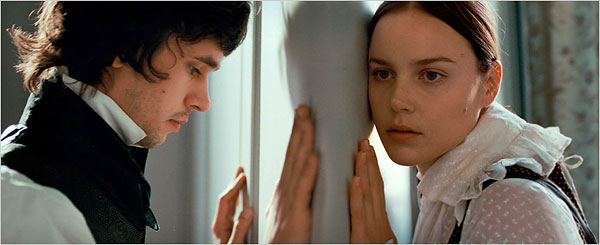
Their love story was made into a film - Bright Star in 2009. It stars Ben Whishaw as Keats and Abbie Cornish as Fanny. It was directed by Jane Campion, who wrote the screenplay inspired by Andrew Motion’s biography of Keats; Motion served as a script consultant on the film. The film was in the main competition at the 62nd Cannes Film Festival, and was first shown to the public on 15 May 2009.The film’s title is a reference to a sonnet by Keats titled “Bright star, would I were steadfast as thou art”, which he wrote while he was with Brawne.
For more see: http://englishhistory.net/keats/letters/love-letter-to-fanny-brawne-13-october-1819/
Julia Herdman writes #historical #fiction that puts women to the fore. Her latest book Sinclair, Tales of Tooley Street Vol. 1. is Available on Amazon – Paperback £10.99 Kindle £2.29 Also available on:
Amazon Australia
Amazon Canada
Amazon New Zealand
Amazon South Africa
Amazon USA

by Julia Herdman | May 5, 2017 | Blog
The Hipster, the Macaroni and the Fop
The emergence of the modern-day hipster is the antithesis of the 18th-century Macaroni, but they have some things in common.
Macaronis were fashionable fellows who dressed and even spoke in an outlandishly affected manner. The macaroni only wanted was new and expensive. They thrived on spending money on the most outlandish costumes and hair.
The term macaroni is a pejorative one and referred to a man who “exceeded the ordinary bounds of fashion” in terms of clothes, fastidious eating and gambling. It was used to describe young men who had been to Italy on the Grand Tour and developed a taste for maccaroni, a type of pasta little known in England then, and so they were said to belong to the Macaroni Club.
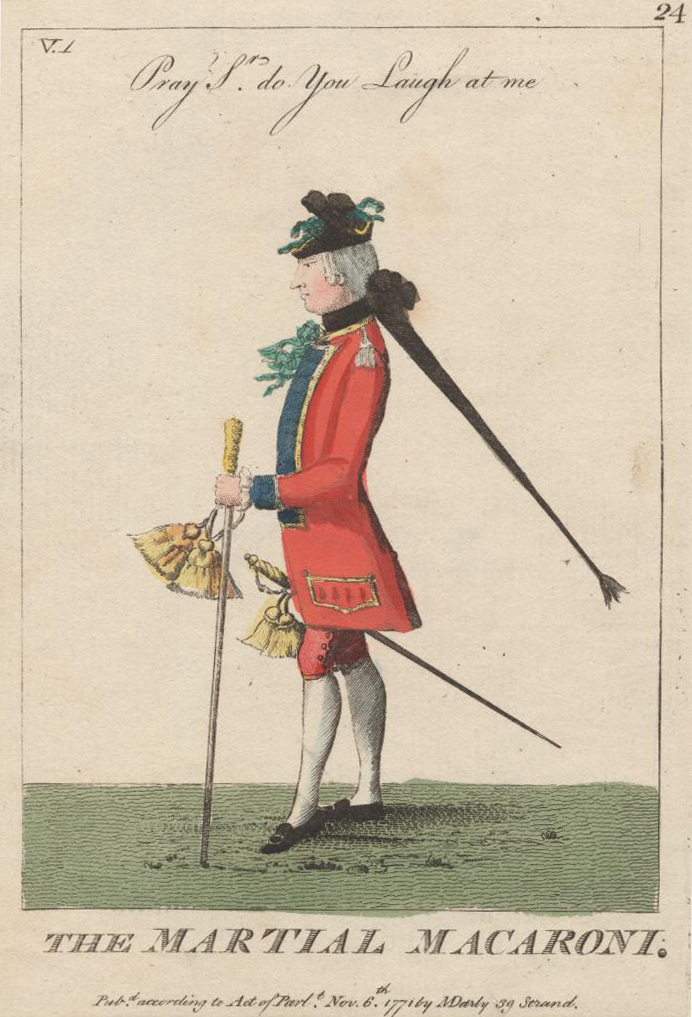
Macaronis were the object of some savage British satire. In the Middlesex Journal for November 7th, 1772 Juventis commented on the use of the term macaroni: “If I consult the prints, ’tis a figure with something uncommon in its dress or appearance; if the ladies, an effeminate fop; but if the’ prentice-boys, a queer fellow with a great large tail.” Basically, this meant that the author thought if a woman looked at an illustration of a Macaroni, she would think she was looking at an effeminate dandy, while a working-class boy would say the man was a homosexual.
Hipster men, gay and straight, have made Retro their cool. The environment they say is precious to them, so they have turned their backs on the ‘the new’. The purloin their style from the racks of the Vintage shops choosing tweeds, corduroy and shirts made of cotton. Hipsters want to wear Sylvia Plath’s cardigans and Buddy Holly’s glasses because to be cool isn’t to look like a television star. They have beards and wear their hair in ponytails and buns revelling in the irony of making what was once nerdy cool. The only new thing Hipsters want is technology and coffee. These latter-day dandies wish to live hi-tech and sustainably; eat organic, gluten-free grains and preen their whiskers in the Edwardian style barbers shops.
Dandies appeared in the late 18th-century. Of course, both the dandy and the macaroni appear in the popular American Revolution song ‘Yanki-doodle-dandy’ the song that describes how an American colonist stuck a feather in his cap and called it Macaroni.
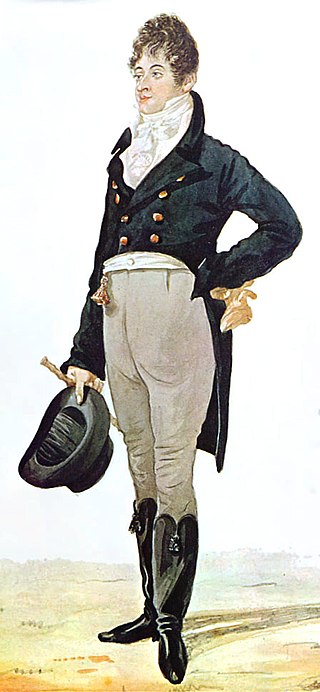
Napoleon and soldiering made ‘dandy’ a vogue word in the late 18th-century. Military men did not see themselves as men about town. Distinguishing a “dandy” from a “fop” was not difficult. The dandy was a rich, fashionable man about town, a man who could afford to copy the style of George Bryan “Beau” Brummell (1778–1840), in his early days, an undergraduate student at Oriel College, Oxford and later, an associate of the Prince Regent. The dandy’s dress was more refined and sober than the fop’s. The fop was a man of more modest means who made foolish and unfashionable choices about his wardrobe. The fop was a object of fun and was variously known as a coxcomb, a fribble, a popinjay (meaning ‘parrot’), a fashion-monger, or a ninny. He was the 18th-century equivalent of medallion man.
A 21st-century fop would be the hair-obsessed character Ulysses Everett McGill (played by George Clooney) in the Coen brothers film O Brother Where Art Thou (2001) and the character of Jack Sparrow (played by Johnny Depp) in the Pirates of the Caribbean film series. Depp’s style has been termed “grunge fop” because he has dreadlocks. The actor’s mannerisms caused concerns among executives at the Walt Disney Company Depp’s characterisation of Sparrow prevailed, thereby creating a new generation of fans of the fop.
Hipsters, dandies and fops are extremes in men’s fashion. It is often said that women do not dress for men but for other women. When we look at the history of men’s fashion, the hipster, the dandy and the fop seem to have no interest in the opposite sex, they like women are dressing to impress each other.
Julia Herdman writes historical fiction. Her latest book Sinclair, Tales of Tooley Street Vol. 1. is Available on Amazon – Paperback £10.99 and on Kindle.
Sinclair is available of Amazon. Click here to get your copy.
Sinclair is set in the London Borough of Southward, the Yorkshire town of Beverley and in Paris and Edinburgh in the late 1780s. Strong female leads include the widow Charlotte Leadam and the farmer’s daughter Lucy Leadam. Sinclair is a story of love, loss and redemption. Prodigal son James Sinclair is transformed by his experience of being shipwrecked on the way to India to make his fortune. Obstacles to love and happiness include ambition, conflict with a God, temptation and betrayal. Remorse brings restitution and recovery. Sinclair is an extraordinary book. It will immerse you in the world of 18th century London where the rich and the poor are treated with kindness and compassion by this passionate Scottish doctor and his widowed landlady, the owner of the apothecary shop in Tooley Street. Sinclair is filled with twists and tragedies, but it will leave you feeling good.
Also available on:
Amazon Australia
Amazon Canada
Amazon New Zealand
Amazon South Africa
Amazon USA
Coco, Blue Jeans and Fashion’s Glass Ceiling

by Julia Herdman | Apr 25, 2017 | Blog
Astronomy, mathematics and physics were popular fields of study for many of the brightest 18th-century women with access to money and books. Gabrielle-Emilie Le Tonnelier de Breteuil was one such woman. She was the daughter of the French court’s chief of protocol and her father rather unusually for the time encouraged her education. By the time she was twelve she was fluent in Latin, Italian, Greek and German.
Gabrielle-Emilie was a precocious teenager as well as a child genius; she liked to dance, was a passable performer on the harpsichord, sang opera, and was an amateur actress. Being short of money for books, she used her mathematical skills to devise highly successful strategies for gambling. Her mother Gabrielle-Anne was horrified tried to have her clever daughter sent to a convent.
In 1725 Gabrielle-Emilie married the Marquis du Chatelet at the age of 19 and lived the life of a courtier at the French court. She bore her husband three children, but at age 27 she began studying mathematics seriously and then branched into physics. This interest intensified when she started an affair with the philosopher Voltaire. Their friendship, if not their relationship, was lifelong and one of mutual respect and admiration.
Her philosophical magnum opus, Institutions de Physique or Foundations of Physics, was published in 1740 when she was 34. It was an immediate success, circulated widely, and republished and translated into several other languages within two years of its publication. With a growing reputation in the world of men, she participated in the famous vis viva debate concerning the calculation of the motion of orbiting bodies - the planets. However, Du Chatelet’s most lasting contribution to science was her French translation of Isaac Newton’s Principia, which is still in use today.
At age 43, she fell in love with a young military officer and became pregnant; she died following complications during the birth of their child. Posthumously, her ideas were included in the Encyclopédie of Denis Diderot and Jean le Rond D’Alembert.
Sources: Smithsonian Magazine, Wikipedia, Illustration: The Granger Collection, New York.
Iona McNeal, is a character in my new novel, Sinclair. Iona is a bright young woman, the daughter of the head of Edinburgh’s medical school. She studies mathematics, physics and astronomy at home. You can find out what happens to her in my latest book Sinclair, Tales of Tooley Street Vol. 1. Available on Amazon – Paperback £10.99 and on Kindle
Also available on:
Amazon Australia
Amazon Canada
Amazon New Zealand
Amazon South Africa
Amazon USA
From Housemaid to Commit Catcher - Caroline Herschel
Witch or Saint ? Maria Gaetana Agnesi
Nursing by Numbers
Byron’s Daughters - A Tale of Three Sisters
by Julia Herdman | Apr 20, 2017 | Blog
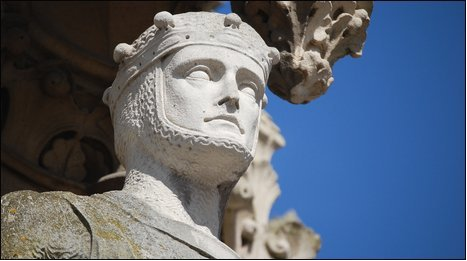
The first English Parliament was summoned by Simon de Montfort in 1265. Also known as Simon de Munford he was a French-English nobleman who inherited the title and estates of the earldom of Leicester in England. He led the rebellion against King Henry III of England during the Second Barons’ War of 1263–64, and subsequently became de facto ruler of England.
During his rule, Montfort called two famous parliaments. The first stripped the King of unlimited authority, while the second included ordinary citizens from the towns. For this reason, Montfort is regarded today as one of the progenitors of modern parliamentary democracy. After a rule of just over a year, Montfort was killed by forces loyal to the King in the Battle of Evesham on 4th August 1265.
However, the idea of a parliament of the people did not die with him. By 1295 Parliament had developed to consist of two burgesses from each town and two knights from each shire and, with some modifications in the Tudor period, this remained the basic structure of representation until the parliamentary reform campaigns of the 19th century.
There were no set rules for how towns and shires should choose their representatives, and there was great variation among them. Some held a relatively open election, while others restricted the choice to wealthy property owners. Others, meanwhile, simply left it to the city council to choose. As a result, by the 18th and 19th centuries the electoral system was not only looking hopelessly old fashioned, but it had thrown up a number of striking anomalies, some of which will be in tomorrow’s post.
Today the city of Leicester boasts a university and a concert hall bearing De Montfort’s name.
Illustration: Simon de Montfort on Leicester’s Clock Tower.
Source: Wikipedia and History Extra Online Magazine
Julia Herdman lives and works in Leicester.. Her latest book Sinclair, Tales of Tooley Street Vol. 1 is Available on Amazon – Paperback £10.99 Kindle £2.29
Also available on:
Amazon Australia
Amazon Canada
Amazon New Zealand
Amazon South Africa
Amazon USA
by Julia Herdman | Apr 18, 2017 | Blog
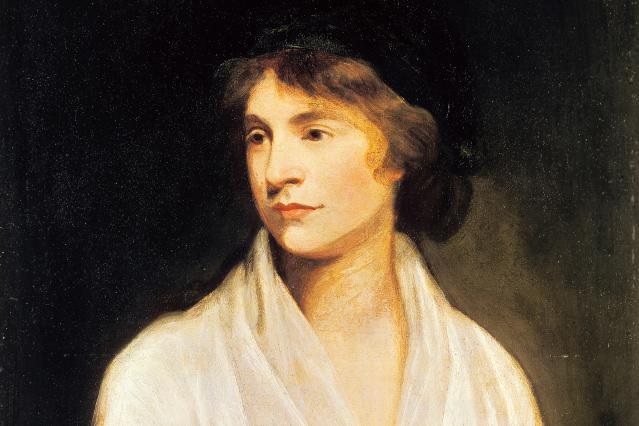
Mary Wollstonecraft was born on 27 April 1759 she is one of the world’s first feminist writers.
Wollstonecraft decided to become a writer in 1787, 230 years ago, when she moved to 45 George Street, in Southwark, now called Dolben Street. It was from Dolben Street[1] that she launched her career, with the publication of her novel, Mary: A Fiction or Maria: or, The Wrongs of Woman is a philosophical and gothic novel that revolves around the story of a woman imprisoned in an insane asylum by her husband. The story focuses on the societal rather than the individual “wrongs of woman” and criticises what Wollstonecraft viewed as the patriarchal institution of marriage in eighteenth-century Britain and the legal system that protected it. However, the heroine’s inability to relinquish her romantic fantasies also reveals women’s collusion in their oppression through false and damaging sentimentalism. The novel pioneered the celebration of female sexuality and cross-class identification between women. Such themes, coupled with the publication of Godwin’s scandalous Memoirs of Wollstonecraft’s life, made the novel unpopular at the time it was published.
Two friendships shaped Wollstonecraft’s early life. The first was with Jane Arden. At the age of nine Wollstonecraft was taken to a farm near Beverley in Yorkshire with her brothers and sisters. They lived a wild life, roaming around the flat land of the Humber estuary until her father took a house in the town opposite the Minster. It was in Beverley she met Jane Arden. Life in Beverley was remarkably civilised, there was a theatre, dances at the Assembly Rooms and a race course with a spring meeting that co-inside with the Spring Fair. Part of my own novel Sinclair is set in Beverley.
.jpg)
Beverley, Yorkshire
The girls frequently read books together and attended lectures presented by Arden’s father, a self-styled philosopher and scientist. John Arden was the descendant of the playwright Arden of Faversham but was disinherited by his family, and forced to set himself up as a roving teacher of practical mathematics and experimental philosophy. After a spell in Germany, he settled in Bath for a while where he became a founder member of the Bath Philosophical Society. Then moved onto Derby where he made friends with the artist Joseph Wright. Wright painted him as the Philosopher in his work entitled: A Philosopher Lecturing on the Orrery, or the full title, A Philosopher giving a Lecture on the Orrery in which a lamp is put in the place of the sun, in 1766.
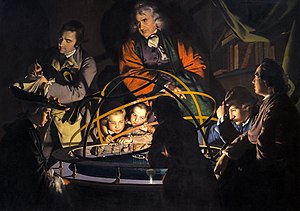
The Orrery, Joseph Wright of Derby - Derby Museum and Art Gallery
The Orrery, which now hangs in the Derby Museum, caused a sensation at the time because it replaced a classical motif with a scientific one. In this picture, Wright replaces the awe inspired by God with the wonder of science. [John Arden – The Philosopher Lecturing on the Orrery, iOpening Books 2016.]
At fourteen Wollstonecraft revelled in the intellectual atmosphere of the Arden household and valued her friendship with Jane Arden greatly, sometimes to the point of being emotionally possessive. Wollstonecraft wrote to her: “I have formed romantic notions of friendship … I am a little singular in my thoughts of love and friendship; I must have the first place or none.” In some of Wollstonecraft’s letters to Arden, she reveals the volatile and depressive emotions that would haunt her throughout her life. Mary’s crush for Jane ended badly, in quarrel spiked with jealousy and rage.
Her second and more important friendship was with Fanny (Frances) Blood, who was introduced to Wollstonecraft by the Clares, an elderly couple from Hoxton who became parental figures to her. Mr Clare was a retired clergyman with a taste for poetry, and Mrs Clare encouraged Mary’s reading, providing her with copies of Milton, Shakespeare, Pope and Johnson. Like Fanny, Mary learned the accomplishments expected of a middle-class woman from Mrs Clare - sewing, drawing and letter writing. Above all, she learned to be feminine and neat.
Unhappy with her home life, Wollstonecraft struck out on her own in 1778 and accepted a job as a lady’s companion to Sarah Dawson, a widow living in Bath. However, Wollstonecraft had trouble getting along with the irascible woman (an experience she drew on when describing the drawbacks of such a position in Thoughts on the Education of Daughters, 1787).
In 1780 she returned home because she was called back to care for her dying mother. Rather than return to Mrs Dawson’s employ after the death of her mother, Wollstonecraft moved in with the Bloods.
Fanny Blood was paid by the botanist William Curtis to paint wildflowers for his book Flora Londinensis. When Mary was living with the Bloods Fanny became engaged to Hugh Skeys, but the pair could not marry immediately and Skeys was forced to go the sea to finance the marriage. Fanny’s brother Lieutenant George Blood (1762–1844), became good friends with Mary so much so that William Godwin, Mary’s husband wrote that Mary had “contracted a friendship so fervent, as for years to have constituted the ruling passion of her mind”.
Blood, together with Mary Wollstonecraft and Wollstonecraft’s sisters, Eliza and Everina, opened a school first in Islington, which soon failed, and then in Newington Green. The school was combined with a boarding house for women and their children.
On February 24, 1785, Fanny Blood married Hugh Skeys who had made himself into a successful wine merchant based in Dublin. When Blood married and left the school, Wollstonecraft left too, and so their other school failed.
Fanny died in childbirth in Lisbon, Portugal, on November 29, 1785. Wollstonecraft was deeply affected by Blood’s death and in part inspired her first novel, Mary: A Fiction in 1788. She also named her own daughter, Fanny Imlay (1794–1816), after her friend.Frances “Fanny” Imlay was Mary’s daughter by the American commercial speculator and diplomat Gilbert Imlay. The pair never married and when Mary died Fanny remained part of the family of the man her mother had married, William Godwin. She was born in Le Havre in 1794 as the French Revolution took hold. Her half-sister Claire Clairmont would become Byron’s lover and her sister by Godwin would elope with the poet Shelley and write the gothic novel Frankenstein.
In later years, Mary realised during the two years she spent with the Blood family she had idealised Fanny as a woman like herself, fiercely independent and intellectual but Fanny was not like Mary, she wanted to be a wife and a mother more than a revolutionary. Nevertheless, Mary loved the Bloods and remained dedicated to them throughout her life. Wollstonecraft had envisioned living in a female utopia with Blood; they made plans to rent rooms together and to support each other emotionally and financially, but this dream come to nothing. The weight of economic reality and social conformity as well as being women in what was to all intents and purposes a world designed and run by men for men made their dream impossible to fulfil.
Mary followed the publication of Mary: A Fiction, with works on the education of children. Her own experience of motherhood forcing her to reconsider her views on women and children.
Through her association with her friend and publisher Joseph Johnson, she met Thomas Paine, the writer of The Rights of Man. Paine who would become one of the great influencers of the both the French Revolution and the development of the American state opposed the idea of hereditary government and the belief that dictatorial government is necessary, because of man’s corrupt nature. She also met her future husband and one of the forefathers of the anarchist movement William Godwin through Johnson. The first time Godwin and Wollstonecraft met, they were both disappointed in each other. Godwin had come to hear Paine, but Wollstonecraft assailed him all night long, disagreeing with him on nearly every subject.
It was after she left Dolben Street in 1791 that she published A Vindication of the Rights of Woman (1792). There is no doubt that her time at Dolben Street, Southwark was the furnace of her intellectual development, and was the site of her most intensely creative years.
For more information on Wollstonecraft see: https://podcasts.ox.ac.uk/keywords/mary-wollstonecraft
Notes:
[1] George Street was formed circa 1776 and the houses on either side were completed and tenanted by 1780 when the street name first occurs in the sewer rate books. It was built across the open fields shown as “tenter grounds” on Rocque’s maps, on part of what became known as Brown’s Estate. The formation of George Street was part of the rapid development of the area which followed the erection of Blackfriars Bridge. The street was renamed Dolben Street in 1911 in honour of John Dolben (1625–86), Archbishop of York, who in 1671, when Bishop of Rochester, officiated at the consecration of Christ Church. Throughout the period that these houses are shown in the rate books and directories they have been occupied by small tradesmen, chandlers, bakers, etc., and by artisans. https://www.british-history.ac.uk/survey-london/vol22/pp127-128
Southwark was the location of several London prisons, including those of the Crown or Prerogative Courts, the Marshalsea and King’s Bench prisons, those of the local manors’ courts, e.g., Borough Compter, The Clink and the Surrey county gaol originally housed at the White Lion Inn (also informally called the Borough Gaol) and eventually at Horsemonger Lane Gaol.
One local family of note, was the Harvards. John Harvard went to the local parish free school of St Saviour’s and on to Cambridge University. He migrated to the Massachusetts Colony and left his library and the residue of his will to the new college there, named after him as its first benefactor. Harvard University maintains a link, having paid for a memorial chapel within Southwark Cathedral (his family’s parish church).
Sources:The Life and Death of Mary Wollstonecraft By Claire Tomalin, Mary Wollstonecraft and the Feminist Imagination by Barbara Taylor, & Wikipedia
My own novel, Sinclair takes place in Southwark and Beverley.
Julia Herdman is a novelist. Her latest book Sinclair, Tales of Tooley Street Vol. 1 is Available on Amazon – Paperback £10.99 on Kindle
Also available on:
Amazon Australia
Amazon Canada
Amazon New Zealand
Amazon South Africa
Amazon USA
Byron’s Daughters - A Tale of Three Sisters
Madame Staël - A woman who abored all that was tyrannical, cynical, or passionless

Recent Comments