The actress Frances Barton or Frances “Fanny” Barton was the daughter of a private soldier who started her working life as a flower girl and a street singer. As an actress, she performed in taverns and resorted to selling herself as many hard-up women did in those days before she made it onto the stage.
Her first step to success came when she got a job as a servant to a French milliner. Fanny learned about costume and acquired some French which afterward stood her in good stead as she mingled in London’s high society as a famous actress.
Actress Fanny first appeared on the stage was at Haymarket in 1755 as Miranda in Mrs. Centlivre’s play, Busybody. Following that she became a member of the Drury Lane Company, where she was overshadowed by its more established actresses Hannah Pritchard and Kitty Clive. However, Fanny was an she was an ambitious actress and travelled to Ireland where she had her first major success Lady Townley in The Provok’d Husband by Vanbrugh and Cibber. Fanny worked at her trade, she became a consumate actress and five years after she began her career she received an invitation from David Garrick to return to Drury Lane.
Fanny married her music teacher, James Abington, a royal trumpeter, in 1759. It was not happy and the pair separated but she retained his name calling herself Mrs. Abington. She remained at Drury Lane for eighteen yearsFanny played Mrs. Teasel in Sheridan’s School for Scandal making the role her own. She also played Shakespearean heroines – Beatrice, Portia, Desdemona and Ophelia and the comic characters Miss Hoyden, Biddy Tipkin, Lucy Lockit, and Miss Prue. Mrs. Abington’s Kitty in “High Life Below Stairs” put her in the foremost rank of comic actresses, making the mop cap she wore in the role the reigning fashion“.
This cap was soon referred to as the “Abington Cap” and frequently seen on stage as well as in hat shops across Ireland and England. Adoring fans donned copies of this cap and it became an essential part of the well-appointed woman’s wardrobe. The actress soon became known for her avant-garde fashion and she even came up with a way of making the female figure appear taller. She began to wear a tall-hat called a ziggurat adorned with long flowing feathers and began to follow the French custom of putting red powder on her hair.
An example of Fanny’s influence on fashion - the high ziggurat style hat.
Sir Joshua Reynolds painted her as Miss Prue a character from Congreve’s Love for Love. The portrait is the best-known of his half-dozen or more portraits of her. In 1782 she left Drury Lane for Covent Garden. After an absence from the stage from 1790 until 1797, she reappeared, quitting it finally in 1799. Her ambition, personal wit, and cleverness won her a distinguished position in society, in spite of her humble origin.
Source; Wikipedia
Illustrations: Fanny Abington, Joshua Reynolds, Portrait of Marie-Dauncey,1789, James-Northcote, Fanny as Miss Prue, Joshua Reynolds.
Julia Herdman writes historical fiction that puts women to the fore. Her latest book Sinclair, Tales of Tooley Street Vol. 1. is Available on Amazon
In the now famous words of Cheap Trick, “I Want You to Want Me,” is a common refrain in many a love letter. The song only reached number 29 in the UK Charts in 1979 but was used in the 1999 hit romcom, 10 Things I Hate About You. In the story, new student Cameron (Gordon-Levitt) is smitten with Bianca (Larisa Oleynik) and, in order to get around her father’s strict rules on dating, attempts to get “bad boy” Patrick (Heath Ledger) to date Bianca’s ill-tempered sister, Kat (Julia Stiles).
Written by Karen McCullah Lutz and Kirsten Smith, it is a modern version of William Shakespeare’s comedy The Taming of the Shrew. The song plays to a montage of Ledger pursuing Stiles as he tries to persuade Kat (Stiles) to go to the prom with him and of course they fall in love with each other in the end.
It seems that Kings too were not above a bit of begging when cupid’s arrow hits its mark. Henry VIII’s State Papers contain a letter he wrote to his then mistress Anne Boleyn who was residing in Hever Castle in 1527.
The love struck Henry VIII wrote:
“I beg to know expressly your intention touching the love between us.Necessity compels me to obtain this answer, having been more than a year wounded by the dart of love, and not yet sure whether I shall fail or find a place in your affection, ….
But if you please to do the office of a true loyal mistress and friend, and to give up yourself body and heart to me, who will be, and have been, your most loyal servant, (if your rigour does not forbid me). I promise you that not only the name shall be given you, but also that I will take you for my only mistress, casting off all others besides you out of my thoughts and affections, and serve you only.
I beseech you to give an entire answer to this my rude letter, that I may know on what and how far I may depend…..
Written by the hand of him who would willingly remain yours, H. R.”
Anne was playing a longer game than Henry imagined at the time, determined to be his wife, not just his mistress. She keeps him on tenterhooks, torturing his heart for as long as she can being tardy with her replies. Of course, she gets her way, but things did not turn out exactly as she had planned!
The Taming of the Shrew has been the subject of critical controversy. Dana Aspinall writes “Since its first appearance, sometime between 1588 and 1594, Shrew has elicited a panoply of heartily supportive, ethically uneasy, or altogether disgusted responses to its rough-and-tumble treatment of the ‘taming’ of the ‘curst shrew’ Katherina, and obviously, of all potentially unruly wives.”
Some scholars argue that even in Shakespeare’s day, the play must have been controversial, due to the changing nature of gender politics. Marjorie Garber, for example, suggests Shakespeare created the Induction so the audience wouldn’t react badly to the misogyny in the Petruchio/Katherina story; he was, in effect, defending himself against charges of sexism. G.R. Hibbard argues that during the period in which the play was written, arranged marriages were beginning to give way to newer, more romantically informed unions, and thus people’s views on women’s position in society, and their relationships with men, were in a state of flux. As such, audiences may not have been as predisposed to tolerate the harsh treatment of Katherina as is often thought. Evidence of at least some initial societal discomfort with The Shrew is, perhaps, to be found in the fact that John Fletcher, Shakespeare’s successor as house playwright for the King’s Men, wrote The Woman’s Prize, or The Tamer Tamed as a sequel to Shakespeare’s play. Sadly for Anne Boleyn, she suffered the full weight of the King’s misogyny when he had her killed to bed his new fancy, the luckless Jane Seymour.
Julia Herdman writes historical fiction. Her latest book Sinclair, Tales of Tooley Street Vol. 1. is Available on Amazon – Paperback £10.99 Kindle
Sinclair is set in the London Borough of Southward, the Yorkshire town of Beverley and in Paris and Edinburgh in the late 1780s. Strong female leads include the widow Charlotte Leadam and the farmer’s daughter Lucy Leadam. Sinclair is a story of love, loss and redemption. Prodigal son James Sinclair is transformed by his experience of being shipwrecked on the way to India to make his fortune. Obstacles to love and happiness include ambition, conflict with a God, temptation and betrayal. Remorse brings restitution and recovery. Sinclair is an extraordinary book. It will immerse you in the world of 18th century London where the rich and the poor are treated with kindness and compassion by this passionate Scottish doctor and his widowed landlady, the owner of the apothecary shop in Tooley Street. Sinclair is filled with twists and tragedies, but it will leave you feeling good.
Voltaire, the great rationalist, was always falling in love and had numerous love affairs. His love life began with great passion when he was just seventeen years old.
‘Voltaire in Love‘ is perhaps the best known work about his love life. It is a popular history of the sixteen-year relationship between Voltaire and the Émilie, the Marquise du Châtelet. I wrote about Emilie last month, she was a great physicist who died tragically young giving birth to her lover’s child (not Voltaire’s their affair was long since over). The book was written by Nancy Mitford and first published in 1957. As well as telling the story of Voltaire’s love for Emilie it explores the French Enlightenment.
A musical featuring the music of Leonard Bernstein with contributions from the greatest lyricists of the 20th century, Stephen Sondheim to Dorothy Parker, is an outrageous musical satire that tells the story of Voltaire’s character, the naïve Candide, who is banished for romancing the Baron’s daughter only to be plagued by a series of absurd hardships that challenge his optimistic outlook of life and love. Candide will leave you enchanted. As you will see from the letter below the story is somewhat based on his own experience.
In my novel Sinclair, Voltaire (1694-1778), the French philosopher is one of my eponymous hero’s favourite authors. He takes a copy of Candide to India with him and loses it when the ship goes down but once he’s established himself in Tooley Street he’s quick to buy himself another copy.
“Knowing there was no going back, he made himself comfortable. He lit his lamp, took out a battered copy of ‘Candide’, his favourite book, and checked the hour with his treasured pocket watch. Like the book, it was French, and the most beautiful thing he had ever owned. He cradled it in his palm. The warmth of its golden body reminded him of the smoothness of a woman’s skin; its pearly white face was elegantly marked with Roman numerals; and the back, the part that he loved most of all, was made of cobalt blue enamel and shimmered like the silk of Iona McNeal’s ballgown the night they had danced at the Edinburgh Assembly Rooms. He turned it in his hand and kissed it then he put it back in his waistcoat pocket and started to read.
He chose the scene where Candide, the hero of the story, and his professor friend, Dr Pangloss, are nearly drowned in Lisbon harbour along with a sailor called Jacques. Candide and Pangloss survive, but Jacques dies attempting to save a fellow sailor. To explain how this is all part of God’s harmonious plan, Pangloss says that Lisbon harbour was created specifically so that Jacques could drown there and fulfil God’s divine plan for him. This was an idea so preposterous, like so many in the book, that it made Sinclair laugh out loud.”
Voltaire was incarcerated in the local prison for his own good to keep him away from the girl he had fallen in love with,Olympe Dunove. Olympe’s mother and the French ambassador disapproved of their relationship. Such was the power of French aristocrats before the Revolution. Shortly after he wrote the letter below, he managed to escape by climbing out of the window.
Voltaire to Olympe Dunover, written in 1713 while in prison in the Hague.
“I am a prisoner here in the name of the King; they can take my life, but not the love that I feel for you. Yes, my adorable mistress, to-night I shall see you, and if I had to put my head on the block to do it.
For heaven’s sake, do not speak to me in such disastrous terms as you write; you must live and be cautious; beware of madame your mother as of your worst enemy. What do I say? Beware of everybody; trust no one; keep yourself in readiness, as soon as the moon is visible; I shall leave the hotel incognito, take a carriage or a chaise, we shall drive like the wind to Sheveningen; I shall take paper and ink with me; we shall write our letters.
If you love me, reassure yourself; and call all your strength and presence of mind to your aid; do not let your mother notice anything, try to have your pictures, and be assured that the menace of the greatest tortures will not prevent me to serve you. No, nothing has the power to part me from you; our love is based upon virtue, and will last as long as our lives. Adieu, there is nothing that I will not brave for your sake; you deserve much more than that. Adieu, my dear heart!”
Arout, (Voltaire)
According to Victor Hugo: “To name Voltaire is to characterize the entire eighteenth century.” Goethe regarded Voltaire to be the greatest literary figure in modern times, and possibly of all times. According to Diderot, Voltaire’s influence on posterity would extend far into the future.
Napoleon commented that till he was sixteen he “would have fought for Rousseau against the friends of Voltaire, today it is the opposite…The more I read Voltaire the more I love him. He is a man always reasonable, never a charlatan, never a fanatic.”
Frederick the Great commented on his good fortune for having lived in the age of Voltaire.
Catherine the Great had been reading Voltaire for sixteen years prior to becoming Empress of Russia in 1762. In October 1763, she began a correspondence with the philosopher that continued till his death. The content of these letters has been described as being akin to a student writing to a teacher.Upon Voltaire’s death, the Empress purchased his library, which was then transported and placed in The Hermitage.
In England, Voltaire’s views influenced Godwin, Paine, Mary Wollstonecraft, Bentham, Byron, and Shelley.[195] Macaulay made note of the fear that Voltaire’s very name incited in tyrants and fanatics. Voltaire was a man of reason and passion just like my character Sinclair. You can read about his escapades in my novel - see below.
Julia Herdman writes historical fiction that puts women to the fore. Her latest book Sinclair, Tales of Tooley Street Vol. 1. is Available on Amazon – Paperback £10.99 Kindle £2.42 Also available on:
Like my hero Sinclair, the Romantic poet John Keats (1795-1821) studied to become doctor but unlike Sinclair’s his heart was not really in it. Keats’s letters to Fanny Brawne are among the most famous love letters ever written. As next-door neighbours, they exchanged numerous short notes, and occasionally more passionate letters.
Fanny Brawne
Keats trained as an apothecary at Guy’s Hospital from 1815 to 1816 and attended lectures on the principles and practice of surgery by the famous surgeon Sir Astley Cooper who also makes a brief appearance in my novel. In 1816, Keats received his apothecary’s licence, which made him eligible to practise as an apothecary, physician, and surgeon.
Keats’s desire to become a poet led him to abandon medicine soon after he completed his training. In his ‘Ode to a Nightingale’ recalls his experience of caring for the dying:
The weariness, the fever and the fret Here, where men sit and hear each other groan; Where palsy shakes a few, sad, last grey hairs, Where youth grows spectre-thin, and dies.
Ironically, it was his medical training that made him such a good carer for his brother Tom when he died from tuberculosis. In giving that care Keats became infected with the disease himself; there was no inoculation at the time, the now well-know BCG vaccine was first used in humans in 1921. Infection for Keats meant certain death but not before, he fell in love and wrote some of the world’s greatest poetry and love letters. Here is one of them.
“25 College Street, London
My dearest Girl, This moment I have set myself to copy some verses out fair. I cannot proceed with any degree of content. I must write you a line or two and see if that will assist in dismissing you from my Mind for ever so short a time. Upon my Soul I can think of nothing else – The time is passed when I had power to advise and warn you again[s]t the unpromising morning of my Life – My love has made me selfish. I cannot exist without you – I am forgetful of every thing but seeing you again – my Life seems to stop there – I see no further. You have absorb’d me. I have a sensation at the present moment as though I was dissolving – I should be exquisitely miserable without the hope of soon seeing you. I should be afraid to separate myself far from you. My sweet Fanny, will your heart never change? My love, will it? I have no limit now to my love – You note came in just here – I cannot be happier away from you – ‘T is richer than an Argosy of Pearles. Do not threat me even in jest. I have been astonished that Men could die Martyrs for religion – I have shudder’d at it – I shudder no more – I could be martyr’d for my Religion – Love is my religion – I could die for that – I could die for you. My Creed is Love and you are its only tenet – You have ravish’d me away by a Power I cannot resist: and yet I could resist till I saw you; and even since I have seen you I have endeavoured often “to reason against the reasons of my Love.” I can do that no more – the pain would be too great – My Love is selfish – I cannot breathe without you. Yours for ever, John Keats
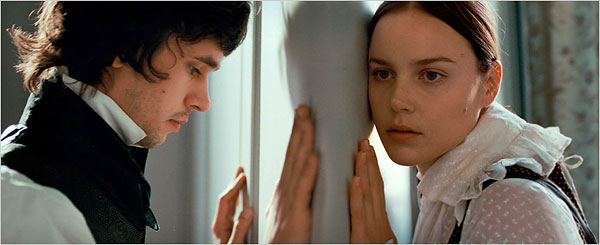
Their love story was made into a film - Bright Star in 2009. It stars Ben Whishaw as Keats and Abbie Cornish as Fanny. It was directed by Jane Campion, who wrote the screenplay inspired by Andrew Motion’s biography of Keats; Motion served as a script consultant on the film. The film was in the main competition at the 62nd Cannes Film Festival, and was first shown to the public on 15 May 2009.The film’s title is a reference to a sonnet by Keats titled “Bright star, would I were steadfast as thou art”, which he wrote while he was with Brawne.
Julia Herdman writes #historical #fiction that puts women to the fore. Her latest book Sinclair, Tales of Tooley Street Vol. 1. is Available on Amazon – Paperback £10.99 Kindle £2.29 Also available on:
The landscaped park was a British style which would influence gardens throughout Europe from the 18th century onwards.
The style at a glance:
Informal layout designed as a classical Arcadia
Lakes created to reflect the landscape as well as for recreation
Cascades add drama and animation to the scene
Temples, grottoes and follies doubled up as tea rooms, and viewing towers
Clumps and shelter belts to provide shelter and privacy to the park
Shrubberies planted with the newly introduced exotics from abroad
The Ha-ha, an invisible boundary to keep livestock away from the house
Circuit walks taking you on a tour around the park
It drew inspiration from paintings of landscapes by Claude Lorrain and Nicolas Poussin. The new style that became known as the English garden was invented by landscape designers William Kent and Charles Bridgeman, working for wealthy patrons, including Richard Temple, 1st Viscount Cobham, Richard Boyle, 3rd Earl of Burlington, and banker Henry Hoare; men who had large country estates, were members of the anti-royalist Whig Party, had classical educations, were patrons of the arts, and had taken the Grand Tour to Italy, where they had seen the Roman ruins and Italian landscapes they reproduced in their gardens.
William Kent (1685–1748) was an architect, painter and furniture designer who introduced Palladian style architecture to England. Kent’s inspiration came from Palladio’s buildings in the Veneto and the landscapes and ruins around Rome—he lived in Italy from 1709 to 1719, and brought back many drawings of antique architecture and landscapes. His gardens were designed to complement the Palladian architecture of the houses he built. Charles Bridgeman (1690–1738) was the son of a gardener and an experienced horticulturist, who became the Royal Gardener for Queen Anne and Prince George of Denmark, responsible for tending and redesigning the royal gardens at Windsor, Kensington Palace, Hampton Court, St. James’s Park and Hyde Park. He collaborated with Kent on several major gardens, providing the botanical expertise which allowed Kent to realise his architectural visions.
Kent created one of the first true English landscape gardens at Chiswick House for Richard Boyle, 3rd Earl of Burlington. The first gardens that he laid out between 1724 and 1733 had many formal elements of a Garden à la française, including alleys forming a trident and canals, but they also featured something novel: a picturesque recreation of an Ionic temple set in a theatre of trees. Between 1733 and 1736, he redesigned the garden, adding lawns sloping down to the edge of the river and a small cascade. For the first time the form of a garden was inspired not by architecture, but by an idealised version of nature.
Stowe, in Buckinghamshire, (1730–1738), was an even more radical departure from the formal French garden. In the early 18th century, Richard Temple, 1st Viscount Cobham, had commissioned Charles Bridgeman to design a formal garden, with architectural decorations by John Vanbrugh. Bridgeman’s design included an octagonal lake and a Rotunda (1720–21) designed by Vanbrugh Stowe is frequently used as a setting for TV dramas and films. Here are just a few scenes filmed at Stowe Park:
Illustrations: Ryan O’Neal in Barry Lyndon (1975), Keira Knightly in Pride and Prejudice (2005),
Film director, Amma-Asante and Star Gugu Mbatha-Raw filming Belle (2013).
Julia Herdman writes historical fiction that puts women to the fore. Her latest book Sinclair, Tales of Tooley Street Vol. 1. is Available on Amazon – Paperback £10.99 Kindle £2.29 Also available on:




Recent Comments