by Julia Herdman | Oct 7, 2017 | Blog
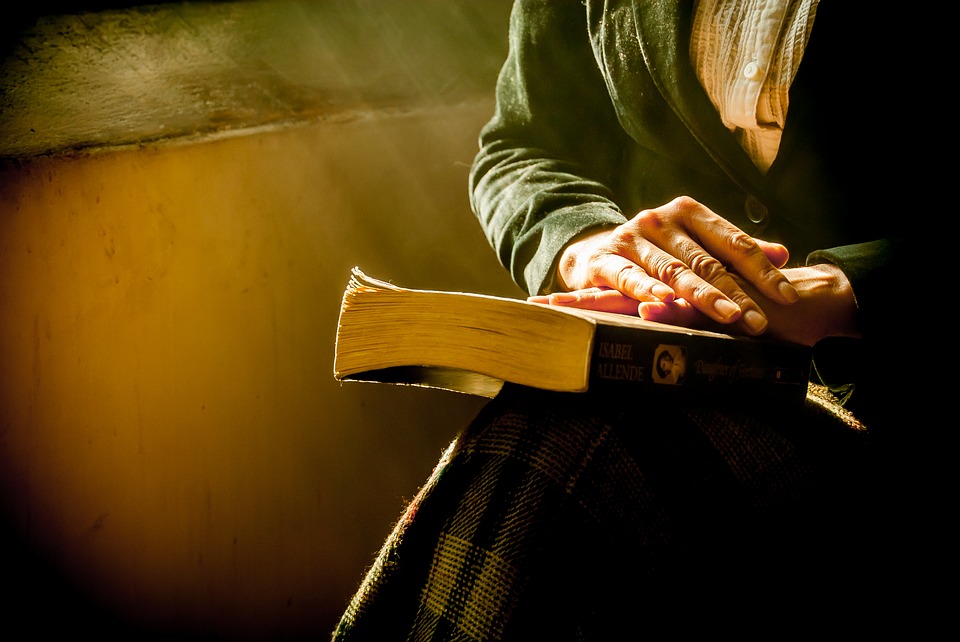
The history of letter writing is part of women’s history. Writing letters to family and friends was one of the new pastimes enjoyed by 18th-century middle-class women. Although the Post Office had been open since 1660 it was not until the 18th century that the use of letters for private correspondence took off. It was only then that middle-class women began to enjoy what had been until then an aristocratic luxury.
Should letters be personal and private, public or works of art? These were the questions being debated in the parlours of the 18th-century chattering classes.
For the 18th century household, the distinction between what was public and what was private was seldom straightforward. Controlling relatives or husbands were frequently concerned by the potential secrecy between correspondents, especially female ones. This gave rise to a general unease about the propriety of women’s letter writing.
Samuel Richardson’s fictional heroines, Pamela and Clarissa are repeatedly praised for their talents in letter-writing by their hosts. but it was an insult to a host if a lady refused to read aloud the contents of her correspondence. The contents of women’s letters were viewed by many in society as public property.
Letter writing was a place where a woman might show off her literary prowess in the same way she might demonstrate her ability on the pianoforte. But, as Richardson wrote to one of his female correspondents, Sophia Westcomb, in 1746, letter-writing was not only a social talent.
‘The Pen is almost the only Means a very modest and diffident Lady (who in Company will not attempt to glare) has to shew herself, and that she has a Mind. … her Closet her Paradise … there she can distinguish Her Self: By this means she can assert and vindicate her Claim to Sense and Meaning.’ (Selected Letters of Samuel Richardson)
Richardson’s sentiment was echoed and expanded by Virginia Woolf two centuries later when she wrote; ” A woman must have money and a room of her own if she is to write fiction.” This is the central theme of her book ‘A Room of One’s Own.’ In it, Woolf asserts that unlike their male counterparts, women are routinely denied the time and the space to produce creative works. Instead, they are saddled with household duties and are financially and legally bound to their husbands. By being deprived of rooms of their own, there is little possibility for women to rectify the situation. Woolf’s assertion, even in the mid 20th century was deemed revolutionary.
An example of a woman who used her letter-writing to assert their intelligence and enter the public sphere is Lady Mary Wortley Montagu. Montagu’s Letters from Turkey, written between 1716 and 1718 and published in 1762, were influential both as models of epistolary style and as anthropological works.
Other women followed where Montagu had led. Mary Masters’ ‘Familiar Letters’ (1755) discussed women’s education and domestic abuse. Hester Chapone published her ‘Letters on the Improvement of the Mind’ in 1773. These letters and Elizabeth Carter’s to Catherine Talbot were published in 1809, were referred to by Elizabeth Gaskell in ‘Cranford.’
After being estranged from her husband, Lady Sarah Pennington wrote ‘An Unfortunate Mothers Advice to Her Absent Daughters’. This was a book in a series of letters instructing women on religion, prayer, dress, needlework, the theatre, marriage, dancing, and other “feminine” pursuits. it was published in 1761.
Pennington wrote that a good marriage is rare. “So great is the hazard, so disproportioned the chances, that I could almost wish the dangerous die was never to be thrown for any of you.”
Lady Sarah also discusses the need for a certain “cheerful compliance” when it comes to men and their disagreeable habits. The book enjoyed much popularity and ran to three print runs, the last was in 1803. ((See Vivien Jones, “Mary Wollstonecraft and the literature of advice and instruction,” in Claudia Johnson, ed., Cambridge Companion to Mary Wollstonecraft (2002), 119-40, at 124).
In one of life’s ironies, it was men not women who would excel when it came to transposing the letter into literature and commercialising it. Perhaps this was because writing for a living was considered morally suspect for women. In an ideal world, women had no reason to seek financial independence through their writing. Nevertheless several of the major female novelists of the period began with the epistolary form.
Towards the end of the eighteenth century, Fanny Burney abandoned the epistolary form after her first novel Evelina and, most famously, Jane Austen dabbled with the form in her short story ‘Lady Susan’ subsequently finding a more satisfying form in the omniscient authorial narrative.
In its private capacity, the letter allowed a woman confined to the home to communicate outside the home with both men and women. While in the form of published letters it was a valuable platform from which publicly to assert women’s intellectual capabilities. Of course, the eighteenth century did not wholeheartedly embrace the potential of such a development. Both kinds of letters aroused contemporary criticism, but it was the suspicion aroused by private, domestic letters that inspired many of the novels of the period, exploiting as they do the potential scandals and secrets and it was female novelists such as Jane Austen who created the modern novel.
This article is based on an original article by Mona: https://blue-stocking.org.uk/2011/03/01/public-and-private-real-and-fictional-the-rise-of-womens-letter-writing-in-the-eighteenth-century/
@juliaherdmanbooks

by Julia Herdman | Aug 7, 2017 | Blog
Turquerie was the fashion for all things Turkish. It started in the late sixteenth century and lasted well into the nineteenth. unconcerned with the realities of life in the east it was rather a product of European fantasies about the luxuries of the Orient. Turkey was a supplier of exotic goods such as coffee, perfumes, spices, and tea.
First diplomatic relations with the far east started near the end of the sixteenth century with Sir Robert Shirley going to Persia in 1599 to train the Persian army in the ways of English military warfare.
The West had a growing interest in Turkish-made products and art, including music, visual arts, architecture, and sculptures.
This fashionable phenomenon became more popular through trading routes and increased diplomatic relationships between the Ottomans and the European nations, exemplified by the Franco-Ottoman alliance in 1715 when Louis XIV received the first Persian ambassadors to France.
European portraits of the 18th century were used to portray social position and wealth. Dress, posture, and props were carefully selected in order to communicate the appropriate status. Choosing the exotic turquerie style to express one’s elite position in society involved wearing loose, flowing gowns belted with ornate bands of embroidered cloth. Some sitters donned ermine-trimmed robes while others chose tasselled turbans. Scandalously, most have abandoned their corsets and attached strings of pearls to their hair. (There has always been one law for the rich and one for the lower classes when it comes to letting one’s social hair down.) Many portraits have Turkish carpets displayed on the floor, woven with bright colours and exotic designs. The loose clothing and the unorthodox styles added to the lewd perceptions of the Ottomans.
At the same time portraits of real Turkish people by European artists were a la mode. They were often depicted as exotic, and it was rare that portraits were painted without wearing their traditional cultural clothing.
Perhaps the most influential transformation into the turquerie vogue in Europe was done by Lady Mary Wortley Montagu. Montagu went to Turkey in 1717 when her husband was posted as ambassador there. Her collected letters while there, describing Turkish fashion were distributed widely in manuscript form. They were then printed after her death in 1762. These letters helped shape how Europeans interpreted the Turkish fashion and how to dress. This phenomenon eventually found its way across the Atlantic and in colonial America, where Montagu’s letters were also published.
Julia Herdman writes historical fiction that puts women to the fore. Her latest book Sinclair, Tales of Tooley Street Vol. 1. is Available on Amazon – Paperback £10.99 Kindle £2.42 Also available on:
Amazon Australia
Amazon Canada
Amazon New Zealand
Amazon South Africa
Amazon USA
by Julia Herdman | Jul 7, 2017 | Blog
At the age of 12, Mary Anning was to become one of the most famous palaeontologists in the country. Her discovery of a complete Icthyosaur was probably her brother Joseph’s. He spotted what he presumed to be a head of a crocodilian in the layers of limestone rocks around their hometown of Lyme Regis in Dorset. It was only later with Mary’s help the discovered what it actually was. Their amazing discovery was not the first; partial remains had been found and described in 1699, however, it was a very important find and was soon recorded in the Transactions of the Royal Society.
Anning was born in Lyme Regis in Dorset, England. Her father, Richard Anning, was a cabinetmaker who supplemented his income by mining the coastal cliff-side fossil beds near the town and selling his finds to tourists. He married Mary Moore, known as Molly, on 8 August 1793 in Blandford Forum. The couple moved to Lyme and lived in a house built on the town’s bridge. They attended the Dissenter chapel on Coombe Street, whose worshippers initially called themselves independents and later became known as Congregationalists. Shelley Emling writes that the family lived so close to the sea that the same storms that swept along the cliffs to reveal the fossils sometimes flooded the Annings’ home, on one occasion forcing them to crawl out of an upstairs bedroom window to avoid being drowned.
Richard and Molly had ten children. The first child, Mary was born in 1794. She was followed by another girl, who died almost at once; Joseph was born in 1796; and another son in 1798, who died in infancy. In December that year, the oldest child, then four years old, died after her clothes caught fire, possibly while adding wood shavings to the fire. The incident was reported in the Bath Chronicle on 27 December 1798. When another daughter was born just five months later, she was named Mary after her dead sister, she was to become the Mary Anning we know today. More children were born after her, but none of them survived more than a couple of years leaving only Mary and Joseph to survive to adulthood. The high childhood mortality rate for the Anning family was not very unusual for the time, but the relentless pregnancies and deaths must have been a terrible burden for Mary’s parents. Almost half the children born in Britain throughout the 19th century died before the age of 5, and in the crowded living conditions of early 19th century Lyme Regis, infant deaths from diseases like smallpox and measles were particularly common.
On 19 August 1800, when Anning was 15 months old, an event occurred that became part of local folklore. Mary was being held by a neighbour, Elizabeth Haskings, who was standing with two other women under an elm tree watching an equestrian show being put on by a travelling company of horsemen, when lightning struck it killing all three women. Onlookers rushed the infant Mary home where she was revived in a bath of hot water. A local doctor declared her survival miraculous. Her family said she had been a sickly baby before the event but afterward she seemed to blossom. For years afterward the townsfolk would put Mary’s curiosity, intelligence, and lively personality down to this electrifying ordeal!.
Mary’s education was extremely limited. She was able to attend a Congregationalist Sunday school where she learned to read and write. Congregationalist doctrine, unlike that of the Church of England at the time, emphasised the importance of education for the poor. Her prized possession was a bound volume of the Dissenters’ Theological Magazine and Review, in which the family’s pastor, the Reverend James Wheaton, had published two essays, one insisting that God had created the world in six days, the other urging dissenters to study the new science of geology. Mary, of course, grew up to confound this idea. She spent her days searching for fossils in the area’s Blue Lias cliffs, particularly during the winter months when landslides exposed new fossils that had to be collected quickly before they were lost to the sea. She nearly died in 1833 during a landslide that killed her dog, Tray. She and her brother built up a business selling their finds to antiquarians and scientists, many of whom where clergymen then.
Mary went on to find two more species of Ichtyosaur in her life. Even with these important finds, the family was always in poverty, depending on charity, and the meager money they made from selling fossils. It was difficult for Anning to be recognised in the scientific community, being a young woman and with no education to speak of however she was befriended Thomas Birch, a fellow fossil collector, who sold many of his finds, to aid of the Anning family. This gave the family some small financial support, letting Mary carry on with her work of fossil hunting.
Mary’s big discovery came in early 1821 when she found the first Plesiosaurus, a genus of extinct, large marine sauropterygian reptile that lived during the early part of the Jurassic Period, Mary’s discovery is the only known near complete example. The drawing Anning made was sent to the renowned George Curvier, who at first snubbed it as a fake, but eventually conceded Mary was right and gave Anning the respect she deserved from the scientific community.
Her discoveries did not stop with these important specimens, in 1828 Mary found the first near-complete Pterosaur naming it Pterodactylus macronyx, this did not stick for long, however, it was later renamed by Richard Owen, Dimorphodon macronyx.
These discoveries made Anning a leading light in palaeontology. She was awarded an annuity by the British Association for the Advancement of Science in 1883 and was the made an honorary member of the Geological Society of London, due to her being female, she was not allowed to become a regular member. Anning died a few months after this in 1847 of breast cancer, with her obituary being published in the Quarterly Journal of the Geological Society, a society that still banned women members until 1904. She had become so well renowned that Charles Dickens journal ‘All the year round’ reported her as “the carpenter’s daughter has won a name for herself, and deserved to win it.”
Sources: Wikipedia,
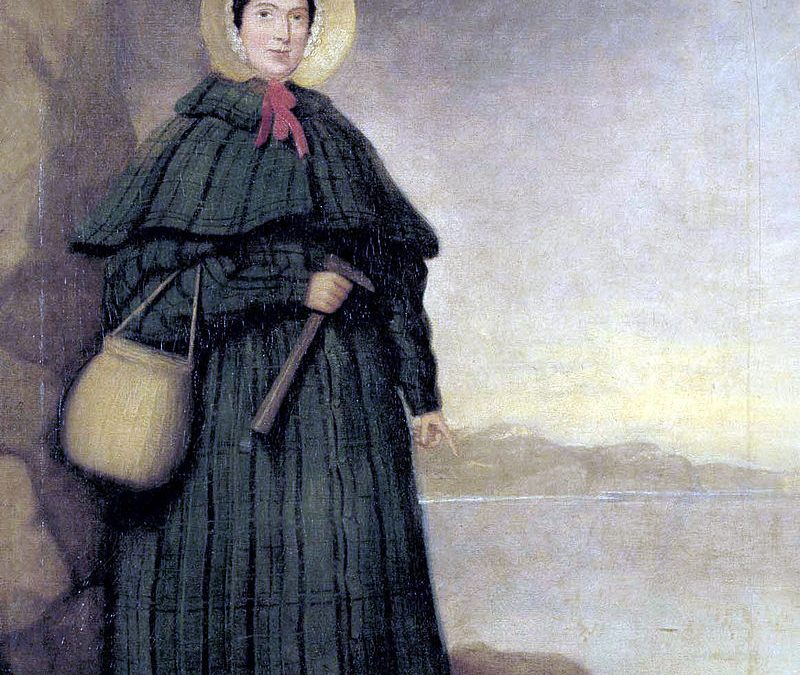
Illustration: Portrait of a woman in a bonnet and long dress holding rock hammer, pointing at fossil next to spaniel dog lying on the ground. Credited to ‘Mr. Grey’ in Crispin Tickell’s book ‘Mary Anning of Lyme Regis’ (1996).
Julia Herdman writes historical fiction that puts women to the fore. Her latest book Sinclair, Tales of Tooley Street Vol. 1. is Available on Amazon
Amazon Australia
Amazon Canada
Amazon New Zealand
Amazon South Africa
Amazon USA

by Julia Herdman | Apr 27, 2017 | Blog
Between 1780 and 1810, many French women painters reached impressive heights of artistic achievement and professional success. They achieved this despite a cap on the number of women admitted to France’s prestigious Académie Royale de Peinture et de Sculpture, and restrictions that barred women from the life drawing classes. At the end of the eighteenth century, women ranked among the most sought-after artists in Europe.
One such was Élisabeth Louise Vigée Le Brun. Le Brun was born in Paris on 16 April 1755, the daughter of a portraitist and fan painter and a hairdresser. Her early childhood was spent in the country where she attended a residential convent school until she was eleven. When she returned home, her father recognised his daughter’s natural skills and ability to paint and gave her access to his studio to develop her skills. Unfortunately, her father died a couple of years later, but luckily her mother married Jacques Le Sèvre, a highly successful jeweller a year later and the family moved to the Rue Saint-Honoré, close to the Palais Royal where Elisabeth continued to paint. By the time she was in her early teens, Elisabeth was painting portraits professionally although ran into trouble with the Paris artists’ guild for practising without a license.

Elisabeth married Jean-Baptiste-Pierre Le Brun, a painter and art dealer in 1776 and the pair began what was to become a very successful business and family life. Four years later Elisabeth gave birth to her first and only child, a daughter, Julie and a year after that she set off to tour Flanders and the Netherlands with her husband to paint members of the Dutch aristocracy. While Elisabeth was there, she was inspired by the paintings he saw in the homes and galleries she visited and decided to adopt some of their techniques. In 1787, she caused a minor public scandal with a self-portrait, that showed her smiling which was at the time considered outrageous as no Greek statue ever showed their teeth!
Her growing fame won her an invitation to the Palace of Versailles and the patronage of Marie Antoinette. Le Brun painted the queen and her children more than thirty times for six years. Le Brun supported the queen’s campaign to present herself as a doting mother, and in return, the queen supported Le Bruns’ application to France’s most prestigious academy, the Académie Royale de Peinture et de Sculpture. She was admitted in 1783 on the same day has another female artist, Adélaïde Labille-Guiard giving the press an opportunity to cast the two women as rivals, pitting Le Brun’s “feminine” style of loose brushstrokes, high-toned colour, and flattering renderings of her sitters against the more “masculine” characteristics of crisp, muted tones, and truth to nature of Labille-Guard’s work. Although many critics applauded the women’s prominence, others lambasted them for immodesty and pamphleteers frequently depicted them naked.
Royal patronage was fine until the outbreak of the revolution in 1789 when association with the royal family was tantamount to a death warrant so Le Brun, who was now separated from her husband, took her daughter and fled to Italy where she lived and worked from 1789 to 1792. From Italy, she moved to Austria where she worked for three years then to Russia where she painted the portraits of aristocrats until 1801.
After a sustained campaign by her ex-husband and other family members to have her name removed from the list of counter-revolutionary émigrés, Le Brun was finally able to return to France during the reign of Emperor Napoleon I in 1804. In spite of being no longer labelled as émigrée, her relationship with the new regime was never totally harmonious, as might be expected given that she was a staunch royalist and the former portraitist of Marie Antoinette.
Much in demand by the élite of Europe, she visited England at the beginning of the 19th century and painted the portrait of several British notables, including Lord Byron. In 1807 she travelled to Switzerland and was made an honorary member of the Société pour l’Avancement des Beaux-Arts of Geneva.
She published her memoirs in 1835 and 1837, which provide an interesting view of the training of artists at the end of the period dominated by royal academies. Still very active with her painting in her fifties, she purchased a house in Louveciennes, Île-de-France, and lived there until the house was seized by the Prussian Army during the war in 1814. She stayed in Paris until her death on 30 March 1842 when her body was taken back to Louveciennes and buried in the Cimetière de Louveciennes near her old home. Her tombstone epitaph states “Ici, enfin, je repose…” (Here, at last, I rest…).
Sources: Wikipedia,
Katharine Baetjer, Department of European Paintings, The Metropolitan Museum of Art.
Illustrations: Self portrait with Julie. Marie-Antoinette with her children.
Julia Herdman writes historical fiction that puts women to the fore. Her latest book Sinclair, Tales of Tooley Street Vol. 1. is Available on Amazon – Paperback £10.99 Kindle £2.29 Also available on:
Amazon Australia
Amazon Canada
Amazon New Zealand
Amazon South Africa
Amazon USA
Maria Cosway the Artist who Captured the Heart of Thomas Jefferson
Against the Grain - 18th Century British Art
Mary Moser - Founding Member of London’s Royal Academy

Recent Comments