
by Julia Herdman | May 30, 2017 | Blog
Secret and Clandestine Marriage
A clandestine or illicit marriage is a plot device in many 18th and 19th-century stories, think of Jayne Eyre and Mr Rochester, but what seems like the work of fiction was a fact of life for women from all social classes in 18th Century Britain. No one knew who was married to whom until the law of marriage was changed. Even the Prince Regent tried to marry a woman clandestinely and illegally.
On May 11, 1786, the Coachmakers’ Hall, Debating Society debated the following proposition: “Are not the Restraints contained in the Marriage Act, and every other Restriction on the Matrimonial Contract, contrary to the natural Rights of Mankind, and injurious to Conjugal Felicity?” Someone at the Coachmakers’ Hall was clearly stirring the pot of civil discord that evening as the formalities prescribed by the Act were hardly novel, and had been observed even when they were not essential to the validity of a marriage, and the protection afforded by the previous law was not as generous as many who wished to deviate from the new law claimed.
The Marriage Act
The Marriage Act 1753, popularly known as Lord Hardwicke’s Marriage Act, was the first statutory legislation in England and Wales to require a formal ceremony of marriage. The Act came into force on March 25, 1754, making compulsory the reading of the banns, and the registration of a marriage and its witnesses for the first time.
Before the Act, the legal requirements for a valid marriage in England and Wales had been governed by the canon law of the Church of England. This had stipulated that banns should be called or a marriage licence should be obtained before marriage and that the marriage should be celebrated in the parish where at least one of the parties was resident. However, these requirements were not mandatory and the absence of banns or a licence – or even the fact that the marriage was not celebrated in a church – did not render the marriage void. The only essential requirement was that the union be celebrated by an Anglican clergyman. So this left a lot of scope for clandestine marriages and for the wedding of those who were technically under the age of legal consent which was 21 at the time.
The King’s Secret Marriage
Maria Fitzherbert (July 26 1756 - March 27 1837) became the wife of George, Prince of Wales, the future George IV in extraordinary circumstances. Maria came from a respectable Roman Catholic family and was educated in France. She had been married twice before when she met Prince George. Maria married Edward Weld, who was sixteen years her senior, and the wealthy Catholic owner of Lulworth Castle in July 1775. Weld died just three months later after falling from his horse leaving Maria penniless. Her new husband had failed to sign his Will, so his estate went to his younger brother.
Maria, now a widow was left effectively destitute. She received little or no financial support from the Weld family and was obliged to remarry as soon as she could. Three years later, she married again. Her second husband was Thomas Fitzherbert of Swynnerton, Staffordshire who was ten years her senior. They had a son but he died young and then she was widowed again in 1781, but this time she got an annuity of £1000 and a townhouse in Park Street, Mayfair.
In 1783 George, Prince of Wales became infatuated with her after meeting her at the opera. The licentious Prince, he wanted her to become his mistress, but Maria’s devout Catholic beliefs would not allow it. So on December 15, 1785, they were married in a secret ceremony conducted by Robert Burt, an impoverished curate who set aside his scruples for the £500 fee.
The marriage was not legal. It not only contravened the 1753 Marriage Act it was also in breach of the Act of Settlement of 1701, preventing a Roman Catholic from ascending the British throne and the Royal Marriage Act of 1772. How George thought he was going to get away with is a mystery and how Maria could believe she was being married to a Prince of the realm legitimately in such circumstances is beyond belief.
The Illegally Married Couple
George and Maria spent much of their newly married life in Brighton where Mrs Fitzherbert was treated like a queen. Whether she was ignorant or deluded concerning her position is unknown, she never spoke of it. George’s intentions were never earnest, he always had an eye for the ladies.
The couple finally separated when George’s affections turned to Frances, Countess of Jersey in 1794. Their illegal marriage was finally put asunder when George married his cousin Caroline of Brunswick in 1795.
Five years later, in 1800, Maria and George were reunited as George could not stand the sight of his legal wife, Caroline.
By 1807, the Prince’s affections were wandering again, this time towards Lady Hertford. Unable to bear any further humiliation, on December 18 1809, Maria sent George a farewell letter and departed from Brighton where she and the Prince were living.
Following the death of George IV on June 26 1830, it was discovered that he had kept all of Fitzherbert’s letters, and steps were taken to destroy them. Fitzherbert told George IV’s brother, King William IV, about their marriage and showed him the documents in her possession. He asked Fitzherbert to accept a dukedom, but she refused, asking only for permission to wear widow’s weeds and to dress her servants in royal livery. The architect William Porden created Steine House for her, on the west side of Old Steine in Brighton where she lived from 1804 until her death in 1837. The king’s unofficial wife was buried at St John the Baptist’s Church in the Kemp Town area of Brighton.
Julia Herdman writes historical fiction. Her latest book Sinclair, Tales of Tooley Street Vol. 1. is Available on Amazon – Paperback £10.99 and on Kindle.
Also available on:
Amazon Australia
Amazon Canada
Amazon New Zealand
Amazon South Africa
Amazon USA
Princess Sophia Dorothea the Uncrowned Queen of Britain
Dress to Impress Princess
by Julia Herdman | May 25, 2017 | Blog
Like my hero Sinclair, the Romantic poet John Keats (1795-1821) studied to become doctor but unlike Sinclair’s his heart was not really in it. Keats’s letters to Fanny Brawne are among the most famous love letters ever written. As next-door neighbours, they exchanged numerous short notes, and occasionally more passionate letters.

Fanny Brawne
Keats trained as an apothecary at Guy’s Hospital from 1815 to 1816 and attended lectures on the principles and practice of surgery by the famous surgeon Sir Astley Cooper who also makes a brief appearance in my novel. In 1816, Keats received his apothecary’s licence, which made him eligible to practise as an apothecary, physician, and surgeon.
Keats’s desire to become a poet led him to abandon medicine soon after he completed his training. In his ‘Ode to a Nightingale’ recalls his experience of caring for the dying:
The weariness, the fever and the fret
Here, where men sit and hear each other groan;
Where palsy shakes a few, sad, last grey hairs,
Where youth grows spectre-thin, and dies.
Ironically, it was his medical training that made him such a good carer for his brother Tom when he died from tuberculosis. In giving that care Keats became infected with the disease himself; there was no inoculation at the time, the now well-know BCG vaccine was first used in humans in 1921. Infection for Keats meant certain death but not before, he fell in love and wrote some of the world’s greatest poetry and love letters. Here is one of them.
“25 College Street, London
My dearest Girl,
This moment I have set myself to copy some verses out fair. I cannot proceed with any degree of content. I must write you a line or two and see if that will assist in dismissing you from my Mind for ever so short a time. Upon my Soul I can think of nothing else – The time is passed when I had power to advise and warn you again[s]t the unpromising morning of my Life – My love has made me selfish. I cannot exist without you – I am forgetful of every thing but seeing you again – my Life seems to stop there – I see no further. You have absorb’d me. I have a sensation at the present moment as though I was dissolving – I should be exquisitely miserable without the hope of soon seeing you. I should be afraid to separate myself far from you. My sweet Fanny, will your heart never change? My love, will it? I have no limit now to my love – You note came in just here – I cannot be happier away from you – ‘T is richer than an Argosy of Pearles. Do not threat me even in jest. I have been astonished that Men could die Martyrs for religion – I have shudder’d at it – I shudder no more – I could be martyr’d for my Religion – Love is my religion – I could die for that – I could die for you. My Creed is Love and you are its only tenet – You have ravish’d me away by a Power I cannot resist: and yet I could resist till I saw you; and even since I have seen you I have endeavoured often “to reason against the reasons of my Love.” I can do that no more – the pain would be too great – My Love is selfish – I cannot breathe without you. Yours for ever, John Keats
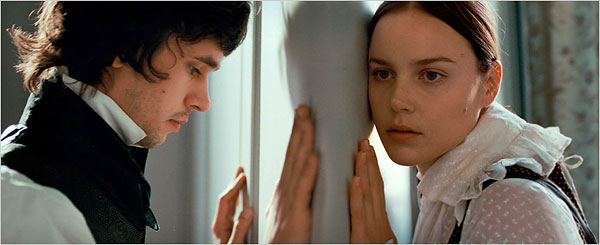
Their love story was made into a film - Bright Star in 2009. It stars Ben Whishaw as Keats and Abbie Cornish as Fanny. It was directed by Jane Campion, who wrote the screenplay inspired by Andrew Motion’s biography of Keats; Motion served as a script consultant on the film. The film was in the main competition at the 62nd Cannes Film Festival, and was first shown to the public on 15 May 2009.The film’s title is a reference to a sonnet by Keats titled “Bright star, would I were steadfast as thou art”, which he wrote while he was with Brawne.
For more see: http://englishhistory.net/keats/letters/love-letter-to-fanny-brawne-13-october-1819/
Julia Herdman writes #historical #fiction that puts women to the fore. Her latest book Sinclair, Tales of Tooley Street Vol. 1. is Available on Amazon – Paperback £10.99 Kindle £2.29 Also available on:
Amazon Australia
Amazon Canada
Amazon New Zealand
Amazon South Africa
Amazon USA

by Julia Herdman | May 2, 2017 | Blog
The Blue Stockings Society was founded in the early 1750s by Elizabeth Montagu (seen above), Elizabeth Vesey and others as a women’s literary discussion group, a revolutionary step away from traditional, non-intellectual, women’s activities. They invited both women and men to attend, including botanist, translator and publisher Benjamin Stillingfleet. One story tells that Stillingfleet was not rich enough to have the proper formal dress, which included black silk stockings, so he attended in everyday blue worsted stockings. The term came to refer to the informal quality of the gatherings and the emphasis on conversation over fashion.
Diarist, James Boswell wrote, “It was much the fashion for several ladies to have evening assemblies, where the fair sex might participate in conversation with literary and ingenious men, animated by a desire to please. These societies were denominated Bluestocking Clubs”.
It was a loose organisation of privileged women with an interest in education to gather together to discuss literature while inviting educated men to participate. The women involved in this group generally had more education and fewer children than most English women of the time. These women preferred to challenge the traditional view of what was ‘becoming’ such as proficiency in needlework and knitting preferring to read Greek or Latin, and many of the most immodest texts so they had their critics. Among them was one of their own members Mrs. Barbauld. Anna Laetitia Barbauld (1743 – 1825) was a prominent “woman of letters” who published in multiple genres; Barbauld had a successful writing career at a time when female professional writers were rare. To find out more about her read my blog No Exaggerated Praise. Barbauld wrote, “The best way for a woman to acquire knowledge is from conversation with a father, or brother, or friend.”
The original bluestocking circle included Hester Thrale, Hannah More, Hester Chapone, Mary Delany, Margaret Bentinck, Duchess of Portland, Elizabeth Carter, Sir Joshua Reynolds and his sister Frances, Fanny Burney, Samuel Johnson, William Pulteney, 1st Earl of Bath, James Boswell, David and Eva Garrick, Edmund Burke, George Lyttelton, Mrs Ord, Mrs Crewe and Benjamin Stillingfleet the man with the blue stockings.
The group has been described by many historians and authors as having preserved and advanced feminism due to the advocacy of women’s education, social complaints of the status and lifestyle expected of the women in their society as expressed by Elizabeth Montague in 1743. “In a woman’s education little but outward accomplishments is regarded … sure the men are very imprudent to endeavour to make fools of those to whom they so much trust their honour and fortune, but it is in the nature of mankind to hazard their peace to secure power, and they know fools make the best slaves.”
By the early 1800s, this sentiment had changed, and it was much more common to question “why a woman of forty should be more ignorant than a boy of twelve?”
The term ‘Blue Stocking’ today refers to an intellectual woman and the name is used frequently by feminist organisations and businesses, for example:
- Bluestockings (bookstore), a feminist bookshop in New York
- Bluestocking (magazine), a Japanese feminist magazine, Bluestocking (Seitō; 青鞜) was a Japanese feminist magazine founded in 1911 by a group of 5 women including Raichō Hiratsuka, Yasumochi Yoshiko, Mozume Kazuko, Kiuchi Teiko and Nakano Hatsuko, all founding members of the Bluestocking Society (Seitō-sha;青鞜社).Many members were referred to and referred to themselves as “New Women” (shin-fujin;新婦人). This term denoted women who wore fashionable Western dress, socialized with men in public, and chose their own romantic partners. Many in the press used this term pejoratively, but the members of the Seitō-sha rejected these negative connotations and embraced an identity as leaders in the reform of gender relations.
Though originally focusing on women’s literature, the magazine soon shifted focus towards women’s liberation, and the pages of Seitō are filled with essays and editorials on the question of gender equality. In many of these, members of the group air their differing opinions on issues of the day, such as the importance of a woman maintaining her virginity before marriage. Legalized prostitution, abortion, and women’s suffrage were also the subject of animated discussion. Such writings caught the attention of the Ministry of Home Affairs because criticism of the system of private capital (capitalism) was banned under the Public Order and Police Law of 1900. Two other issues would be banned by the Ministry’s censorship bureau and removed from store shelves because their frank expressions of female sexuality were deemed threats to public morality.
Even more than the content of the journal, the private behavior of the core members of the Bluestocking society drew public criticism. Several of them engaged in affairs with married men, rumors of which the press exploited with gusto. But this was not separate from the journal, because members of Bluestocking often wrote essays and semi-autobiographical stories that described their struggles to form equal relationships based on mutual romantic attachment (rather than through arranged marriage) both inside and outside of marriage. Their frank discussions about premarital sex and their advocacy for women’s independence in this regard led to further public condemnation.
An exhausted Hiratsuka turned over the reins to Noe Itō in 1915. Ito produced the journal with little assistance for almost another year. Its last issue was published in February 1916.
- M.P., an 1811 comic opera by Thomas Moore and Charles Edward Horn, subtitled The Blue Stocking
- Bluestockings: the Remarkable Story of the First Women to Fight for an Education, a 2009 book by Jane Robinson
- Blue Stockings (play), a 2013 play by Jessica Swale
Julia Herdman writes historical fiction that puts women to the fore. Her latest book Sinclair, Tales of Tooley Street Vol. 1. is Available on Amazon – Paperback £10.99 Kindle £2.42 Also available on:
Amazon Australia
Amazon Canada
Amazon New Zealand
Amazon South Africa
Amazon USA

Recent Comments