
by Julia Herdman | May 10, 2017 | Blog
Women in Art
Mary Moser (1744-1819) was “one of the most celebrated women in art in 18th-century Britain,” yet today she’s mostly overlooked.
Along with Angelica Kauffmann, Mary Moser was one of only two female founding members of 36 member Royal Academy.
It would be more than 115 years until the next woman, Dame Laura Knight, would be invited to become the next female member.

Mary Moser by George Romney
Moser specialised in flower-painting, which was at the bottom of the hierarchy of academic art, but she was ambitious for professional standing. In this portrait, which shows her at work on an oil painting, she is showing that she wanted to be taken seriously. Moser is placing herself on a par with men who had themselves painted at their easels, dressed in their painter’s robes. She shows that she understands it refers to a tradition of portraits of male artists dating back to the Renaissance.
At the time most male artists asserted their academic status by stressing the intellectual rather than the technical aspects of their work, the oil palette that Moser holds also distinguishes her from the many women amateurs who practised flower-painting using the less taxing medium of watercolour.
The close focus, dramatic colours and sidelong glance also emphasised that her professional status did not need to compromise her femininity.

Moser, Mary; Vase of Flowers; The Fitzwilliam Museum.
Moser’s flower paintings are less a celebration of the wonders of God’s creation as a careful observation of nature. Flowers were a favourite subject as far as consumers were concerned. London printsellers sold countless decorative flower prints, depicting them in baskets, vases, or tied in bouquets. Flower art was also used in pattern books providing templates for ladies to copy for embroidery or for glass painting. Drawings of flowers were also used for Japan work and were copied onto undecorated white china. By the latter part of the eighteenth century, drawing masters specialising in teaching this type of art were much in demand, and many women who had given up flower painting on their marriage found it a useful means of financial support, but it was always uncredited.
Due in part to her father’s connections and patronage by members of the royal family, Moser received several commissions from King George and Queen Charlotte. The most prestigious and famous of those commissions was a floral decorative scheme for the Frogmore House in the 1790s. The “prestigious and lucrative commission” Moser was paid £900, which made Moser “the envy of her male colleagues.” It was also one of her last professional works, as she retired upon her marriage in 1793.
She married remarkably late in life when she was 49 years old. The man she chose was Hugh Lloyd. However, she did not pack up her paint box and retire to the country. But the marriage did not live up to her expectations, and within six months she was on a sketching tour of Europe with miniaturist Richard Cosway.
Cosway left his Anglo-Italian artist wife Maria ho was 20 years Moser’s junior and chose to keep company with Moser. Cosway was a “well known as a libertine and commonly described as resembling a monkey.” The film Jefferson in Paris, which dramatises Maria Cosway’s own romance with the future American President Thomas Jefferson Richard Cosway was portrayed as effeminate, but it seems he was anything but in bed. His diary entries for the time he spent with Mary Moser describe a hot and steamy affair.

Richard Cosway - Self Portrait
Mary Moser’s death in 1819 marked the start of a long stretch of time when, despite no explicit ban, women remained excluded from the Academy.
Lady Elizabeth Butler, renowned at the time for her paintings that reported the realities of the Crimean War, came close to becoming a member in 1871 but according to committee reports, she missed out by a mere one vote.
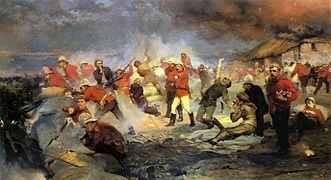
Lady Elizabeth ButlerIt wasn’t until 1936 that Dame Laura Knight became the next woman to be fully elected as an Academician, and although having previously had her work rejected by the Academy on grounds of embarrassing the art establishment with what a critic described as “vulgar” and “obviously an exercise” for a self-portrait, she helped pave the way for greater recognition of women in the arts and the continuation of female membership at the Academy.
Julia Herdman writes historical fiction. Her latest book Sinclair, Tales of Tooley Street Vol. 1. is Available on Amazon – Paperback £10.99 Kindle
Amazon. Click here to get your copy.
Sinclair is set in the London Borough of Southward, the Yorkshire town of Beverley and in Paris and Edinburgh in the late 1780s. Strong female leads include the widow Charlotte Leadam and the farmer’s daughter Lucy Leadam. Sinclair is a story of love, loss and redemption. Prodigal son James Sinclair is transformed by his experience of being shipwrecked on the way to India to make his fortune. Obstacles to love and happiness include ambition, conflict with a God, temptation and betrayal. Remorse brings restitution and recovery. Sinclair is an extraordinary book. It will immerse you in the world of 18th century London where the rich and the poor are treated with kindness and compassion by this passionate Scottish doctor and his widowed landlady, the owner of the apothecary shop in Tooley Street. Sinclair is filled with twists and tragedies, but it will leave you feeling good.
Also available on:
Amazon Australia
Amazon Canada
Amazon New Zealand
Amazon South Africa
Amazon USA
Against the Grain - 18th Century British Art
Maria Cosway the Artist who Captured the Heart of Thomas Jefferson

by Julia Herdman | May 4, 2017 | Blog
Anna Laetitia Barbauld, née Aikin; 20 June 1743 – 9 March 1825 was a prominent English poet, essayist, literary critic, editor, and children’s author. Anna was a “woman of letters” who published in multiple genres. Anna had a successful writing career at a time when female professional writers were rare. She was a noted teacher at the Palgrave Academy a school by English Dissenters run by Anna and her husband, Rochemont, 1774 to 1785 in Suffolk. The academy attracted parents who wished an alternative to traditional education for their sons.
Anna was born into the tradition of the so-called dissenting academies, as her father John Aikin taught first at Kibworth Academy, where she received a better education than most girls and women of the day, and then at the renowned Warrington Academy, known as “the Athens of the North” for its stimulating intellectual atmosphere. Rochemont Barbauld, the grandson of a Huguenot (French Dissenter), had been a pupil there.
Her marriage to Rochemont was viewed as an act of sacrifice by her friends and family. Prone to bouts of ‘insanity’ she did not want to make him more melancholic by refusing his offer. The couple spent eleven years teaching at Palgrave where Anna was not only responsible for running her own household but also the school’s; she was accountant, maid, and housekeeper. There she started to write ‘primers’ early text books. Her teaching materials remained popular for more than a century. She also engaged herself in politics through essays encouraging authors such as the abolitionist, poet and translator Elizabeth Benger to emulate her.
It seems that Barbaulds were concerned that they would never have a child of their own and in 1775, after only a year of marriage, they suggested that they should adopt one of Anna’s brother’s children. She wrote:
“I am sensible it is not a small thing we ask; nor can it be easy for a parent to part with a child. This I would say, from a number, one may more easily be spared. Though it makes a very material difference in happiness whether a person has children or no children, it makes, I apprehend, little or none whether he has three, or four; five, or six; because four or five are enow [sic] to exercise all his whole stock of care and affection. We should gain, but you would not lose.”
Eventually her brother conceded and the couple adopted Charles; it was for him that Anna wrote her most famous books: Lessons for Children (1778–79) and Hymns in Prose for Children (1781).
In September 1785, the Barbaulds left Palgrave for a tour of France; Rochemont’s mental health had been deteriorating and he was no longer able to carry out his teaching duties. In 1787, they moved to Hampstead where Rochemont was asked to serve as the minister at what later became Rosslyn Hill Unitarian Chapel. It was here that Anna became close friends with Joanna Baillie, the playwright. It was during this time, the heyday of the French Revolution, that Anna published her most radical political pieces. From 1787 to 1790, Charles James Fox attempted to convince the House of Commons to pass a law granting Dissenters full citizenship rights. When this bill was defeated for the third time, Anna wrote one of her most passionate pamphlets, An Address to the Opposers of the Repeal of the Corporation and Test Acts. Readers were shocked to discover that such a well-reasoned argument should come from a woman. In 1791, after William Wilberforce’s attempt to outlaw the slave trade failed, Anna published her Epistle to William Wilberforce Esq. On the Rejection of the Bill for Abolishing the Slave Trade, which not only lamented the fate of the slaves but also warned of the cultural and social degeneration the British could expect if they did not abandon slavery. In 1792, she continued this theme of national responsibility in an anti-war sermon entitled Sins of Government, Sins of the Nation.
Anna’s career ended abruptly in 1812 with the publication of Eighteen Hundred and Eleven, which criticised Britain’s participation in the Napoleonic Wars. The work received vicious reviews and she published nothing else during her lifetime. Her reputation was further damaged when many of the Romantic poets she had inspired in the heyday of the French Revolution turned against her.
Anna died in 1825, a renowned writer, and was buried in the family vault in St Mary’s, Stoke Newington. Afterwards, a marble tablet was erected in the Newington Green Chapel with the following inscription:
In Memory of ANNA LETITIA BARBAULD, Daughter of John Aikin, D.D.
And Wife of The Rev. Rochemont Barbauld, Formerly the Respected Minister of this Congregation.
She was born at Kibworth in Leicestershire, 20 June 1743, and died at Stoke Newington, 9 March 1825.
Endowed by the Giver of all Good With Wit, Genius, Poetic Talent, and a Vigorous Understanding
She Employed these High Gifts in Promoting the Cause of Humanity, Peace, and Justice,
of Civil and Religious Liberty,of Pure, Ardent, and Affectionate Devotion.
Let the Young, Nurtured by her Writings in the Pure Spirit of Christian Morality;
Let those of Maturer Years, Capable of Appreciating the Acuteness, the Brilliant Fancy, and Sound Reasoning of her Literary Compositions; Let the Surviving few who shared her Delightful and Instructive Conversation, Bear Witness That this Monument Records No Exaggerated Praise.
Source: Wikipedia
Illustration: Detail from Nine Living Muses of Great Britain by Richard Samuel (1779). From left: Elizabeth Carter, Barbauld gesturing, Angelica Kauffmann, Elizabeth Linley
Julia Herdman writes historical fiction that puts women to the fore. Her latest book Sinclair, Tales of Tooley Street Vol. 1. is Available on Amazon – Paperback £10.99 Kindle £2.29 Also available on:
Amazon Australia
Amazon Canada
Amazon New Zealand
Amazon South Africa
Amazon USA

by Julia Herdman | May 3, 2017 | Blog
Frances Barton or Frances “Fanny” Barton was the daughter of a private soldier and started her working life as a flower girl and a street singer. She performed in taverns and resorted to selling herself as many hard up women did in those days before she made it onto the stage. Her first step to success came when she got a job as a servant to a French milliner, there she learned about costume and acquired some French which afterwards stood her in good stead as she mingled in London’s high society.
Her first appearance on the stage was at Haymarket in 1755 as Miranda in Mrs Centlivre’s play, Busybody. Following that she became a member of the Drury Lane Company, where she was overshadowed by its more established actresses Hannah Pritchard and Kitty Clive. However she was ambitious and travelled to Ireland where she had her first major success Lady Townley in The Provok’d Husband by Vanbrugh and Cibber. She worked at her trade and five years late received an invitation from David Garrick to return to Drury Lane.
Fanny married her music teacher, James Abington, a royal trumpeter, in 1759. It was not a happy and the pair separated but she retained his name calling herself Mrs Abington. She remained at Drury Lane for eighteen years.

Mrs Abington as Miss Prue, Joshua Reynolds
Fanny played Mrs Teasel in Sheridan’s School for Scandal making the role her own. She also played Shakespearean heroines – Beatrice, Portia, Desdemona and Ophelia and the comic characters Miss Hoyden, Biddy Tipkin, Lucy Lockit and Miss Prue. Mrs. Abington’s Kitty in “High Life Below Stairs” put her in the foremost rank of comic actresses, making the mop cap she wore in the role the reigning fashion“. This cap was soon referred to as the “Abington Cap” and frequently seen on stage as well as in hat shops across Ireland and England. Adoring fans donned copies of this cap and it became an essential part of the well-appointed woman’s wardrobe. The actress soon became known for her avant-garde fashion and she even came up with a way of making the female figure appear taller. She began to wear a tall-hat called a ziggurat adorned with long flowing feathers and began to follow the French custom of putting red powder on her hair.

An example of Fanny’s influence on fashion - the high ziggurat style hat.
Sir Joshua Reynolds painted her as Miss Prue a character from Congreve’s Love for Love. The portrait is the the best-known of his half-dozen or more portraits of her. In 1782 she left Drury Lane for Covent Garden. After an absence from the stage from 1790 until 1797, she reappeared, quitting it finally in 1799. Her ambition, personal wit and cleverness won her a distinguished position in society, in spite of her humble origin.
Source; Wikipedia
Illustrations: Fanny Abington, Joshua Reynolds, Portrait of Marie-Dauncey,1789, James-Northcote, Fanny as Miss Prue, Joshua Reynolds.
Julia Herdman writes historical fiction that puts women to the fore. Her latest book Sinclair, Tales of Tooley Street Vol. 1. is Available on Amazon – Paperback £10.99 Kindle £2.29 Also available on:
Amazon Australia
Amazon Canada
Amazon New Zealand
Amazon South Africa
Amazon USA

by Julia Herdman | May 2, 2017 | Blog
The Blue Stockings Society was founded in the early 1750s by Elizabeth Montagu (seen above), Elizabeth Vesey and others as a women’s literary discussion group, a revolutionary step away from traditional, non-intellectual, women’s activities. They invited both women and men to attend, including botanist, translator and publisher Benjamin Stillingfleet. One story tells that Stillingfleet was not rich enough to have the proper formal dress, which included black silk stockings, so he attended in everyday blue worsted stockings. The term came to refer to the informal quality of the gatherings and the emphasis on conversation over fashion.
Diarist, James Boswell wrote, “It was much the fashion for several ladies to have evening assemblies, where the fair sex might participate in conversation with literary and ingenious men, animated by a desire to please. These societies were denominated Bluestocking Clubs”.
It was a loose organisation of privileged women with an interest in education to gather together to discuss literature while inviting educated men to participate. The women involved in this group generally had more education and fewer children than most English women of the time. These women preferred to challenge the traditional view of what was ‘becoming’ such as proficiency in needlework and knitting preferring to read Greek or Latin, and many of the most immodest texts so they had their critics. Among them was one of their own members Mrs. Barbauld. Anna Laetitia Barbauld (1743 – 1825) was a prominent “woman of letters” who published in multiple genres; Barbauld had a successful writing career at a time when female professional writers were rare. To find out more about her read my blog No Exaggerated Praise. Barbauld wrote, “The best way for a woman to acquire knowledge is from conversation with a father, or brother, or friend.”
The original bluestocking circle included Hester Thrale, Hannah More, Hester Chapone, Mary Delany, Margaret Bentinck, Duchess of Portland, Elizabeth Carter, Sir Joshua Reynolds and his sister Frances, Fanny Burney, Samuel Johnson, William Pulteney, 1st Earl of Bath, James Boswell, David and Eva Garrick, Edmund Burke, George Lyttelton, Mrs Ord, Mrs Crewe and Benjamin Stillingfleet the man with the blue stockings.
The group has been described by many historians and authors as having preserved and advanced feminism due to the advocacy of women’s education, social complaints of the status and lifestyle expected of the women in their society as expressed by Elizabeth Montague in 1743. “In a woman’s education little but outward accomplishments is regarded … sure the men are very imprudent to endeavour to make fools of those to whom they so much trust their honour and fortune, but it is in the nature of mankind to hazard their peace to secure power, and they know fools make the best slaves.”
By the early 1800s, this sentiment had changed, and it was much more common to question “why a woman of forty should be more ignorant than a boy of twelve?”
The term ‘Blue Stocking’ today refers to an intellectual woman and the name is used frequently by feminist organisations and businesses, for example:
- Bluestockings (bookstore), a feminist bookshop in New York
- Bluestocking (magazine), a Japanese feminist magazine, Bluestocking (Seitō; 青鞜) was a Japanese feminist magazine founded in 1911 by a group of 5 women including Raichō Hiratsuka, Yasumochi Yoshiko, Mozume Kazuko, Kiuchi Teiko and Nakano Hatsuko, all founding members of the Bluestocking Society (Seitō-sha;青鞜社).Many members were referred to and referred to themselves as “New Women” (shin-fujin;新婦人). This term denoted women who wore fashionable Western dress, socialized with men in public, and chose their own romantic partners. Many in the press used this term pejoratively, but the members of the Seitō-sha rejected these negative connotations and embraced an identity as leaders in the reform of gender relations.
Though originally focusing on women’s literature, the magazine soon shifted focus towards women’s liberation, and the pages of Seitō are filled with essays and editorials on the question of gender equality. In many of these, members of the group air their differing opinions on issues of the day, such as the importance of a woman maintaining her virginity before marriage. Legalized prostitution, abortion, and women’s suffrage were also the subject of animated discussion. Such writings caught the attention of the Ministry of Home Affairs because criticism of the system of private capital (capitalism) was banned under the Public Order and Police Law of 1900. Two other issues would be banned by the Ministry’s censorship bureau and removed from store shelves because their frank expressions of female sexuality were deemed threats to public morality.
Even more than the content of the journal, the private behavior of the core members of the Bluestocking society drew public criticism. Several of them engaged in affairs with married men, rumors of which the press exploited with gusto. But this was not separate from the journal, because members of Bluestocking often wrote essays and semi-autobiographical stories that described their struggles to form equal relationships based on mutual romantic attachment (rather than through arranged marriage) both inside and outside of marriage. Their frank discussions about premarital sex and their advocacy for women’s independence in this regard led to further public condemnation.
An exhausted Hiratsuka turned over the reins to Noe Itō in 1915. Ito produced the journal with little assistance for almost another year. Its last issue was published in February 1916.
- M.P., an 1811 comic opera by Thomas Moore and Charles Edward Horn, subtitled The Blue Stocking
- Bluestockings: the Remarkable Story of the First Women to Fight for an Education, a 2009 book by Jane Robinson
- Blue Stockings (play), a 2013 play by Jessica Swale
Julia Herdman writes historical fiction that puts women to the fore. Her latest book Sinclair, Tales of Tooley Street Vol. 1. is Available on Amazon – Paperback £10.99 Kindle £2.42 Also available on:
Amazon Australia
Amazon Canada
Amazon New Zealand
Amazon South Africa
Amazon USA

Recent Comments