
by Julia Herdman | Jul 3, 2017 | Blog
Humble Beginnings
Jeanne Baret was born on July 27, 1740, in the village of La Comelle in the Burgundy region of France. Her record of baptism survives and identifies her as the legitimate issue of Jean Baret and Jeanne Pochard. Her father is identified as a day labourer and seems likely to have been illiterate, as he did not sign the parish register.
Housekeeper and Servant
At some point between 1760 and 1764, Baret became employed as housekeeper to naturalist, Philibert Commerson, who had settled in Toulon-sur-Arroux, some 20 km to the south of La Comelle, upon his marriage in 1760. Commerson’s wife, who was the sister of the parish priest, died shortly after giving birth to a son in April 1762, and it seems that Baret took over management of Commerson’s household at that time, if not before.
Lover and Friend
It seems Baret and Commerson shared a more than an interest in his household as she became pregnant in 1764. French law at that time required women who became pregnant out of wedlock to obtain a “certificate of pregnancy” in which they could name the father of their unborn child. Baret’s certificate, from August 1764, survives; it was filed in a town 30 km away and witnessed by two men of substance who likewise had travelled a considerable distance from their homes. She refused to name the father of her child, but historians do not doubt that it was Commerson and that it was Commerson who had made the arrangements with the lawyer and witnesses on her behalf.
Paris and a Child
Shortly afterward, Baret and Commerson moved together to Paris, where she continued in the role of his housekeeper having left his legitimate son in the care of his brother-in-law in Toulon-sur-Arroux and never saw him again in his lifetime. Baret apparently changed her name to “Jeanne de Bonnefoy” during this period. Her child was born in December 1764 and was given the name Jean-Pierre Baret. Baret gave the child up to the Paris Foundlings Hospital and he was quickly placed with a foster mother. The child suffered the fate of so many at that time and died in the summer of 1765.
The Expedition
That year Commerson was invited to join Bougainville’s expedition to circumnavigate the globe to claim territory for the French king similar to the expeditions of his contemporary the English Captain Cook. Commerson hesitated in accepting because he was often in poor health; he required Baret’s assistance as a nurse as well as in running his household and managing his collections and papers. Finally, he accepted and as his appointment allowed him a servant, paid as a royal expense, he decided to take his companion and helpmate Jeanne with him. The problem was that women were completely prohibited on French navy ships at this time. Together they devised a plan for Jeanne to disguise herself as a man and join the ship just before it sailed. Before leaving Paris, Commerson drew up a will in which he left to “Jeanne Baret, known as de Bonnefoi, my housekeeper”, a lump sum of 600 livres along with back wages owed and the furnishings of their Paris apartment.
Breaking the Rules
The pair boarded the ship Étoile in December 1766 and because of the vast quantity of equipment Commerson brought with him the ship’s captain, François Chesnard de la Giraudais, gave up his own large cabin to Commerson and his “assistant”. This fortuitous act gave Baret significantly more privacy than she might otherwise have expected on board and she did not have to use the shared heads like other members of the crew to relieve herself.
Surviving accounts of the expedition differ on when Baret’s gender was first discovered. According to Bougainville, rumours that Baret was a woman had circulated for some time, but her gender was not finally confirmed until the expedition reached Tahiti in April 1768. As soon as she and Commerson landed on shore to botanize, Baret was immediately surrounded by Tahitians who cried out that she was a woman. It was necessary to return her to the ship to protect her from the excited Tahitians. Bougainville recorded this incident in his journal some weeks after it happened when he had an opportunity to visit the Étoile to interview Baret personally.
Another account says that there was much speculation about Baret’s gender early in the voyage and asserts that Baret claimed to be a eunuch when confronted directly by the Captain, La Giraudais (whose own official log has not survived). After crossing the Pacific, the expedition was desperately short of food. After a brief stop for supplies in the Dutch East Indies, the ships made a longer stop at the island of Mauritius in the Indian Ocean. This island, known as Isle de France, was then an important French trading station. Commerson was delighted to find that an old friend and fellow botanist Pierre Poivre was serving as governor on the island, and Commerson and Baret remained behind as Poivre’s guests, probably encouraged by Bougainville as it allowed him to rid himself of the problem of a woman illegally on board his expedition.
Assistant and Housekeeper
On Mauritius, Baret continued in her role as Commerson’s assistant and housekeeper. It is likely that she accompanied him to botanize on Madagascar and Bourbon Island in 1770-1772. Commerson continued to have serious health problems, and he died in Mauritius in February 1773. After Commerson’s death, Baret seems to have found work running a tavern in Port Louis for a time. Then, on 17 May 1774, she married Jean Dubernat, a non-commissioned officer in the French Army who was most likely on the island on his way home to France.
Marriage and Return to France
There is no record of exactly when Baret and her husband arrived in France, thus completing her voyage of circumnavigation. Most likely it was sometime in 1775. In April 1776, she received the money that was due to her under Commerson’s will after applying directly to the Attorney General. With this money, she settled with Dubernat in his native village of Saint-Aulaye where he may have set up as a blacksmith.
State Recognition of Services to Botany
In 1785, Baret was granted a pension of 200 livres a year by the Ministry of Marine. The document granting her this pension makes clear the high regard with which she was held by this point:
Jeanne Baret, by means of a disguise, circumnavigated the globe on one of the vessels commanded by Mr de Bougainville. She devoted herself in particular to assisting Mr de Commerson, doctor and botanist, and shared with great courage the labours and dangers of this savant. Her behaviour was exemplary and Mr de Bougainville refers to it with all due credit…. His Lordship has been gracious enough to grant to this extraordinary woman a pension of two hundred livres a year to be drawn from the fund for invalid servicemen and this pension shall be payable from 1 January 1785. She died in Saint-Aulaye on August 5, 1807, at the age of 67.
Honours and Publications
Commerson named many of the plants he collected after friends and acquaintances. One of them, a tall shrub with dark green leaves and white flowers that he found on Madagascar, he named Baretia Bonafidia. But Commerson’s name for this genus did not survive, as it had already been named by the time his reports reached Paris; it is currently known as Turraea. While over seventy species are named in honour of Commerson, only one, Solanum baretiae, honors Baret.
For many years, Bougainville’s published journal – a popular best-seller in its day, in English translation as well as the original French – was the only widely available source of information about Baret. More recent scholarship has uncovered additional facts and documentation about her life, but much of the new information remained little-known and inaccessible to the general public, particularly outside France. The first English-language biography of Baret, by John Dunmore, was not published until 2002, and then only in New Zealand. Other articles appeared only in scholarly journals.
The 2010 biography of Baret by Glynis Ridley, The Discovery of Jeanne Baret, brought Baret to the attention of a wider audience and helped to overturn some of the old misconceptions about her life.
Julia Herdman writes historical fiction that puts women to the fore. Her latest book Sinclair, Tales of Tooley Street Vol. 1. is Available on Amazon
Amazon Australia
Amazon Canada
Amazon New Zealand
Amazon South Africa
Amazon USA
by Julia Herdman | May 26, 2017 | Blog
Voltaire, the great rationalist, was always falling in love and had numerous love affairs. His love life began with great passion when he was just seventeen years old.
‘Voltaire in Love‘ is perhaps the best known work about his love life. It is a popular history of the sixteen-year relationship between Voltaire and the Émilie, the Marquise du Châtelet. I wrote about Emilie last month, she was a great physicist who died tragically young giving birth to her lover’s child (not Voltaire’s their affair was long since over). The book was written by Nancy Mitford and first published in 1957. As well as telling the story of Voltaire’s love for Emilie it explores the French Enlightenment.
A musical featuring the music of Leonard Bernstein with contributions from the greatest lyricists of the 20th century, Stephen Sondheim to Dorothy Parker, is an outrageous musical satire that tells the story of Voltaire’s character, the naïve Candide, who is banished for romancing the Baron’s daughter only to be plagued by a series of absurd hardships that challenge his optimistic outlook of life and love. Candide will leave you enchanted. As you will see from the letter below the story is somewhat based on his own experience.
In my novel Sinclair, Voltaire (1694-1778), the French philosopher is one of my eponymous hero’s favourite authors. He takes a copy of Candide to India with him and loses it when the ship goes down but once he’s established himself in Tooley Street he’s quick to buy himself another copy.
“Knowing there was no going back, he made himself comfortable. He lit his lamp, took out a battered copy of ‘Candide’, his favourite book, and checked the hour with his treasured pocket watch. Like the book, it was French, and the most beautiful thing he had ever owned. He cradled it in his palm. The warmth of its golden body reminded him of the smoothness of a woman’s skin; its pearly white face was elegantly marked with Roman numerals; and the back, the part that he loved most of all, was made of cobalt blue enamel and shimmered like the silk of Iona McNeal’s ballgown the night they had danced at the Edinburgh Assembly Rooms. He turned it in his hand and kissed it then he put it back in his waistcoat pocket and started to read.
He chose the scene where Candide, the hero of the story, and his professor friend, Dr Pangloss, are nearly drowned in Lisbon harbour along with a sailor called Jacques. Candide and Pangloss survive, but Jacques dies attempting to save a fellow sailor. To explain how this is all part of God’s harmonious plan, Pangloss says that Lisbon harbour was created specifically so that Jacques could drown there and fulfil God’s divine plan for him. This was an idea so preposterous, like so many in the book, that it made Sinclair laugh out loud.”
Voltaire was incarcerated in the local prison for his own good to keep him away from the girl he had fallen in love with,Olympe Dunove. Olympe’s mother and the French ambassador disapproved of their relationship. Such was the power of French aristocrats before the Revolution. Shortly after he wrote the letter below, he managed to escape by climbing out of the window.
Voltaire to Olympe Dunover, written in 1713 while in prison in the Hague.
“I am a prisoner here in the name of the King; they can take my life, but not the love that I feel for you. Yes, my adorable mistress, to-night I shall see you, and if I had to put my head on the block to do it.
For heaven’s sake, do not speak to me in such disastrous terms as you write; you must live and be cautious; beware of madame your mother as of your worst enemy. What do I say? Beware of everybody; trust no one; keep yourself in readiness, as soon as the moon is visible; I shall leave the hotel incognito, take a carriage or a chaise, we shall drive like the wind to Sheveningen; I shall take paper and ink with me; we shall write our letters.
If you love me, reassure yourself; and call all your strength and presence of mind to your aid; do not let your mother notice anything, try to have your pictures, and be assured that the menace of the greatest tortures will not prevent me to serve you. No, nothing has the power to part me from you; our love is based upon virtue, and will last as long as our lives. Adieu, there is nothing that I will not brave for your sake; you deserve much more than that. Adieu, my dear heart!”
Arout, (Voltaire)
According to Victor Hugo: “To name Voltaire is to characterize the entire eighteenth century.” Goethe regarded Voltaire to be the greatest literary figure in modern times, and possibly of all times. According to Diderot, Voltaire’s influence on posterity would extend far into the future.
Napoleon commented that till he was sixteen he “would have fought for Rousseau against the friends of Voltaire, today it is the opposite…The more I read Voltaire the more I love him. He is a man always reasonable, never a charlatan, never a fanatic.”
Frederick the Great commented on his good fortune for having lived in the age of Voltaire.
Catherine the Great had been reading Voltaire for sixteen years prior to becoming Empress of Russia in 1762. In October 1763, she began a correspondence with the philosopher that continued till his death. The content of these letters has been described as being akin to a student writing to a teacher.Upon Voltaire’s death, the Empress purchased his library, which was then transported and placed in The Hermitage.
In England, Voltaire’s views influenced Godwin, Paine, Mary Wollstonecraft, Bentham, Byron, and Shelley.[195] Macaulay made note of the fear that Voltaire’s very name incited in tyrants and fanatics. Voltaire was a man of reason and passion just like my character Sinclair. You can read about his escapades in my novel - see below.
Julia Herdman writes historical fiction that puts women to the fore. Her latest book Sinclair, Tales of Tooley Street Vol. 1. is Available on Amazon – Paperback £10.99 Kindle £2.42 Also available on:
Amazon Australia
Amazon Canada
Amazon New Zealand
Amazon South Africa
Amazon USA
by Julia Herdman | May 25, 2017 | Blog
Like my hero Sinclair, the Romantic poet John Keats (1795-1821) studied to become doctor but unlike Sinclair’s his heart was not really in it. Keats’s letters to Fanny Brawne are among the most famous love letters ever written. As next-door neighbours, they exchanged numerous short notes, and occasionally more passionate letters.

Fanny Brawne
Keats trained as an apothecary at Guy’s Hospital from 1815 to 1816 and attended lectures on the principles and practice of surgery by the famous surgeon Sir Astley Cooper who also makes a brief appearance in my novel. In 1816, Keats received his apothecary’s licence, which made him eligible to practise as an apothecary, physician, and surgeon.
Keats’s desire to become a poet led him to abandon medicine soon after he completed his training. In his ‘Ode to a Nightingale’ recalls his experience of caring for the dying:
The weariness, the fever and the fret
Here, where men sit and hear each other groan;
Where palsy shakes a few, sad, last grey hairs,
Where youth grows spectre-thin, and dies.
Ironically, it was his medical training that made him such a good carer for his brother Tom when he died from tuberculosis. In giving that care Keats became infected with the disease himself; there was no inoculation at the time, the now well-know BCG vaccine was first used in humans in 1921. Infection for Keats meant certain death but not before, he fell in love and wrote some of the world’s greatest poetry and love letters. Here is one of them.
“25 College Street, London
My dearest Girl,
This moment I have set myself to copy some verses out fair. I cannot proceed with any degree of content. I must write you a line or two and see if that will assist in dismissing you from my Mind for ever so short a time. Upon my Soul I can think of nothing else – The time is passed when I had power to advise and warn you again[s]t the unpromising morning of my Life – My love has made me selfish. I cannot exist without you – I am forgetful of every thing but seeing you again – my Life seems to stop there – I see no further. You have absorb’d me. I have a sensation at the present moment as though I was dissolving – I should be exquisitely miserable without the hope of soon seeing you. I should be afraid to separate myself far from you. My sweet Fanny, will your heart never change? My love, will it? I have no limit now to my love – You note came in just here – I cannot be happier away from you – ‘T is richer than an Argosy of Pearles. Do not threat me even in jest. I have been astonished that Men could die Martyrs for religion – I have shudder’d at it – I shudder no more – I could be martyr’d for my Religion – Love is my religion – I could die for that – I could die for you. My Creed is Love and you are its only tenet – You have ravish’d me away by a Power I cannot resist: and yet I could resist till I saw you; and even since I have seen you I have endeavoured often “to reason against the reasons of my Love.” I can do that no more – the pain would be too great – My Love is selfish – I cannot breathe without you. Yours for ever, John Keats
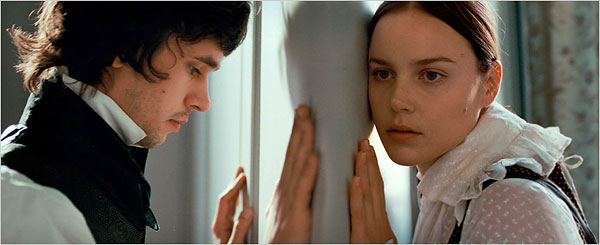
Their love story was made into a film - Bright Star in 2009. It stars Ben Whishaw as Keats and Abbie Cornish as Fanny. It was directed by Jane Campion, who wrote the screenplay inspired by Andrew Motion’s biography of Keats; Motion served as a script consultant on the film. The film was in the main competition at the 62nd Cannes Film Festival, and was first shown to the public on 15 May 2009.The film’s title is a reference to a sonnet by Keats titled “Bright star, would I were steadfast as thou art”, which he wrote while he was with Brawne.
For more see: http://englishhistory.net/keats/letters/love-letter-to-fanny-brawne-13-october-1819/
Julia Herdman writes #historical #fiction that puts women to the fore. Her latest book Sinclair, Tales of Tooley Street Vol. 1. is Available on Amazon – Paperback £10.99 Kindle £2.29 Also available on:
Amazon Australia
Amazon Canada
Amazon New Zealand
Amazon South Africa
Amazon USA

by Julia Herdman | May 5, 2017 | Blog
The Hipster, the Macaroni and the Fop
The emergence of the modern-day hipster is the antithesis of the 18th-century Macaroni, but they have some things in common.
Macaronis were fashionable fellows who dressed and even spoke in an outlandishly affected manner. The macaroni only wanted was new and expensive. They thrived on spending money on the most outlandish costumes and hair.
The term macaroni is a pejorative one and referred to a man who “exceeded the ordinary bounds of fashion” in terms of clothes, fastidious eating and gambling. It was used to describe young men who had been to Italy on the Grand Tour and developed a taste for maccaroni, a type of pasta little known in England then, and so they were said to belong to the Macaroni Club.
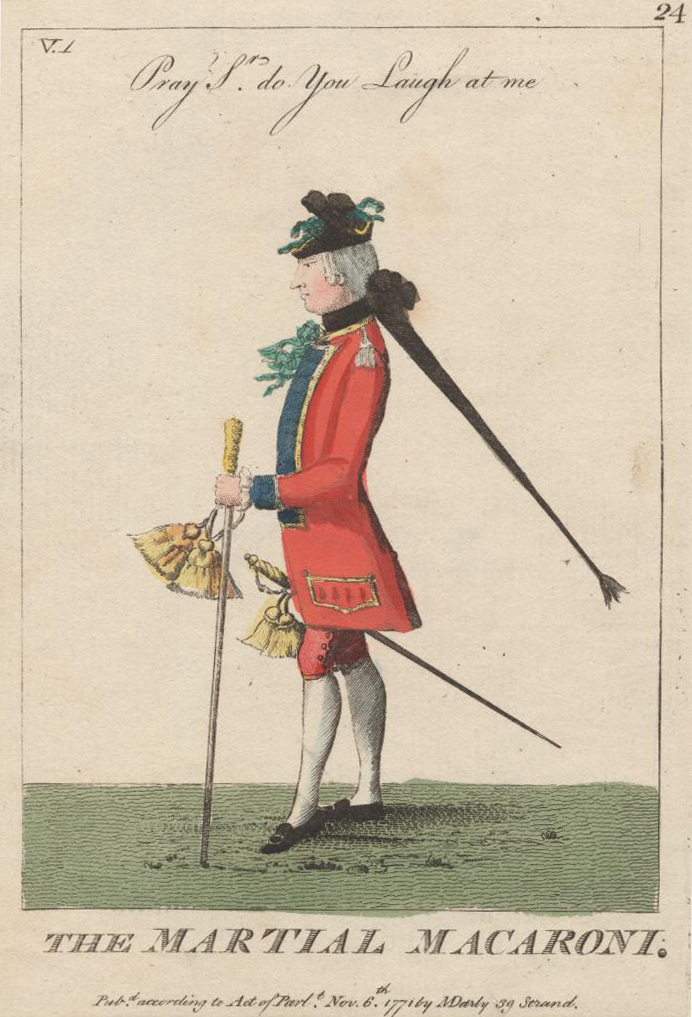
Macaronis were the object of some savage British satire. In the Middlesex Journal for November 7th, 1772 Juventis commented on the use of the term macaroni: “If I consult the prints, ’tis a figure with something uncommon in its dress or appearance; if the ladies, an effeminate fop; but if the’ prentice-boys, a queer fellow with a great large tail.” Basically, this meant that the author thought if a woman looked at an illustration of a Macaroni, she would think she was looking at an effeminate dandy, while a working-class boy would say the man was a homosexual.
Hipster men, gay and straight, have made Retro their cool. The environment they say is precious to them, so they have turned their backs on the ‘the new’. The purloin their style from the racks of the Vintage shops choosing tweeds, corduroy and shirts made of cotton. Hipsters want to wear Sylvia Plath’s cardigans and Buddy Holly’s glasses because to be cool isn’t to look like a television star. They have beards and wear their hair in ponytails and buns revelling in the irony of making what was once nerdy cool. The only new thing Hipsters want is technology and coffee. These latter-day dandies wish to live hi-tech and sustainably; eat organic, gluten-free grains and preen their whiskers in the Edwardian style barbers shops.

Dandies appeared in the late 18th-century. Of course, both the dandy and the macaroni appear in the popular American Revolution song ‘Yanki-doodle-dandy’ the song that describes how an American colonist stuck a feather in his cap and called it Macaroni.
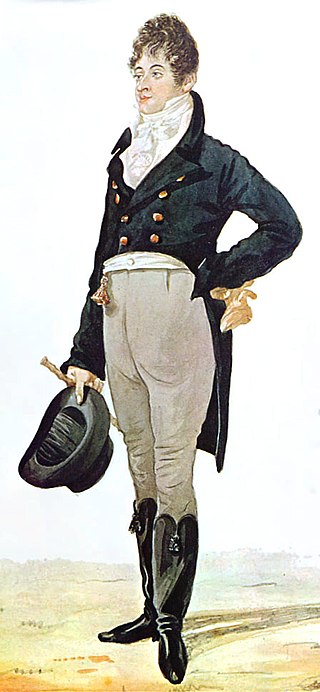
Napoleon and soldiering made ‘dandy’ a vogue word in the late 18th-century. Military men did not see themselves as men about town. Distinguishing a “dandy” from a “fop” was not difficult. The dandy was a rich, fashionable man about town, a man who could afford to copy the style of George Bryan “Beau” Brummell (1778–1840), in his early days, an undergraduate student at Oriel College, Oxford and later, an associate of the Prince Regent. The dandy’s dress was more refined and sober than the fop’s. The fop was a man of more modest means who made foolish and unfashionable choices about his wardrobe. The fop was a object of fun and was variously known as a coxcomb, a fribble, a popinjay (meaning ‘parrot’), a fashion-monger, or a ninny. He was the 18th-century equivalent of medallion man.
A 21st-century fop would be the hair-obsessed character Ulysses Everett McGill (played by George Clooney) in the Coen brothers film O Brother Where Art Thou (2001) and the character of Jack Sparrow (played by Johnny Depp) in the Pirates of the Caribbean film series. Depp’s style has been termed “grunge fop” because he has dreadlocks. The actor’s mannerisms caused concerns among executives at the Walt Disney Company Depp’s characterisation of Sparrow prevailed, thereby creating a new generation of fans of the fop.
Hipsters, dandies and fops are extremes in men’s fashion. It is often said that women do not dress for men but for other women. When we look at the history of men’s fashion, the hipster, the dandy and the fop seem to have no interest in the opposite sex, they like women are dressing to impress each other.
Julia Herdman writes historical fiction. Her latest book Sinclair, Tales of Tooley Street Vol. 1. is Available on Amazon – Paperback £10.99 and on Kindle.
Sinclair is available of Amazon. Click here to get your copy.
Sinclair is set in the London Borough of Southward, the Yorkshire town of Beverley and in Paris and Edinburgh in the late 1780s. Strong female leads include the widow Charlotte Leadam and the farmer’s daughter Lucy Leadam. Sinclair is a story of love, loss and redemption. Prodigal son James Sinclair is transformed by his experience of being shipwrecked on the way to India to make his fortune. Obstacles to love and happiness include ambition, conflict with a God, temptation and betrayal. Remorse brings restitution and recovery. Sinclair is an extraordinary book. It will immerse you in the world of 18th century London where the rich and the poor are treated with kindness and compassion by this passionate Scottish doctor and his widowed landlady, the owner of the apothecary shop in Tooley Street. Sinclair is filled with twists and tragedies, but it will leave you feeling good.
Also available on:
Amazon Australia
Amazon Canada
Amazon New Zealand
Amazon South Africa
Amazon USA
Coco, Blue Jeans and Fashion’s Glass Ceiling
by Julia Herdman | May 2, 2017 | Blog
The Royal Swedish Ballet is one of the oldest ballet companies in Europe. Based in Stockholm, Sweden, King Gustav III founded the ballet in 1773 as a part of his project to bring his kingdom to the fore in European culture. Gustav III wanted to create Swedish ballet dancers and to do this he encouraged foreign dancers to live and work in Sweden and Giovanna Bassi (1762–1834), an Italian trained ballet dancer, responded to the king’s request as her brother; the architect Carlo Bassi (1772–1840); was already living there.
Giovanna who had trained in Italy moved to Paris where she was the student of Jean Dauberval the creator of La Fille Mal Gardée, one of the most enduring and popular works of the ballet repertoire today. Giovanna became a star of the Paris Opera then in 1783, at the age 19, she moved to Sweden.
Her technique was entirely Italian; she was described as noble with beautiful black hair. At her debut in Stockholm, the applause was said to loud enough “to outdo the thunder”, and caused what was to be referred to as the “Bassi fever” to begin. She danced many roles and gave dancing classes for girls from the upper classes, and occasionally performed as an actor at the French Theatre. All this work made Giovanna a very wealthy woman.

She began an affair with one of the king’s close friends, Adolf, Count Munck. Munck was a notorious womaniser, the king even asked him to give sex lessons so that he could consummate his marriage to Sophia Magdalena of Denmark. Munck himself writes in his written account, which is preserved at the National Archives of Sweden, that in order to succeed, he was obliged to touch them both physically. This “aid” resulted in the birth of the future King Gustav IV in 1778. The story of baby Gustav’s conception did not however remain private and scandal erupted with rumours circulating that Munck was either the child’s father or the lover of both the king and queen. Accusations from the political opposition were circulating as late as 1786 and in 1789 there were still claims that the King had asked Munck to make the Queen pregnant.
Bassi had a daughter, Johanna Fredrika, by Munck in 1787; she was 25 and he was 38. Bassi’s daughter was said to have a strong resemblance to baby Gustav so Munck might have been his father after all. Munck was forced to leave Sweden 1792 when Gustav III died, he was too tainted with scandal and the rumours about the Regent’s parentage just would not go away. Bassi left the Swedish Ballet and followed him to Rome where she expected him to formally acknowledge their daughter and to marry her. He did neither.
During her stay in Italy, she received large sums of money from the Swedish government to spy on their ambassador Gustaf Mauritz Armfelt in Naples who was courting the support of Catherine the Great for a military intervention to change the Swedish government. With Bassi’s help the plot was discovered. The Swedes sent a man-of-war to Naples to seize him but he escaped with the help of the exiled British Queen Caroline and fled to Russia. At home, he was condemned to death as a traitor and his property confiscated. His mistress, Magdalena Rudenschöld, was judged for complicity and pilloried on the Riddarhus Square before being imprisoned for two years in Stockholm.
Bassi returned to Sweden in 1794 and re-entered the Swedish Ballet, but she was only to remain there for a short while. Munck later made her daughter a beneficiary in his will, but Bassi refused to accept it and denied Munck’s claim on her daughter. She made her break with Munck final in 1794, when she married the German-Swedish merchant Peter Hinrik Schön (1765–1821) following her last performance. In her marriage contract, Bassi stipulated that her spouse should acknowledge her daughter with Munck as his, and that her great fortune should remain her personal and sole property. Schön was bankrupt at the time of the marriage, but was afterwards able to buy Ekholmsnäs Manor at Lidingö; an island in the inner Stockholm archipelago, northeast of Stockholm; where Bassi spent the rest of her life as a business woman, attending to her manor, a brick factory and a snuff factory. She lived with her mother and her friend, the actress Elise Dubelloi from the French Theatre in Sweden and had three sons with Schön. She died a wealthy and successful woman in 1834, aged 72.
Sources: Wikipedia
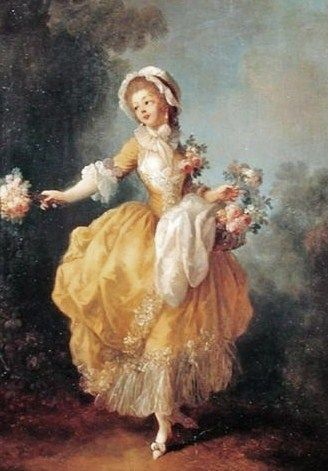
Illustrations: Ballet Dancer, Jean-Frederic Schall 1752-1825, miniature of Giavanna Bassi
Julia Herdman writes historical fiction that puts women to the fore. Her latest book Sinclair, Tales of Tooley Street Vol. 1. is Available on Amazon – Paperback £10.99 Kindle £2.29 Also available on:
Amazon Australia
Amazon Canada
Amazon New Zealand
Amazon South Africa
Amazon USA

Recent Comments