

Questions in Egyptology 8: Who was Babi / Baba?
Who was Babi or Baba?
Babi or Baba, the ‘Bull of the Baboons’ was an early version of Thoth. The earliest evidence of the worship of Babi and baboons comes from Early Dynastic ivory tags. He is depicted as a white-backed baboon.
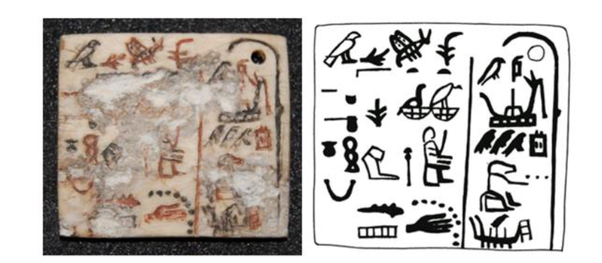
Ivory label of Semerkhet, Dynasty One, Abydos. Image of Babi the Baboon seated under three hawks - bottom right.
Tell Ibrahim Awad
Excavations in the Delta at Tell Ibrahim Awad, have uncovered evidence of Babi/Thoth or baboon worship dating to the 2nd Dynasty. A small fiance statue of seven baboons in one boat was found along with numerous other fragments of statues dedicated to Babi and Thoth.[1]
The Man in the Moon
Babi’s face was said to be that of the Man in the Moon, but he was not a friendly avuncular figure made of cheese. The ‘Great White One’ was the leader of the troop, the alpha male of the pack, and was thought by the ancient Egyptians to be an incarnation of a long-dead ancestor of a bloodthirsty and angry king who lived on the entrails of the unrighteous dead. His ghostly countenance was a reminder of the king’s wraithlike ancestors.
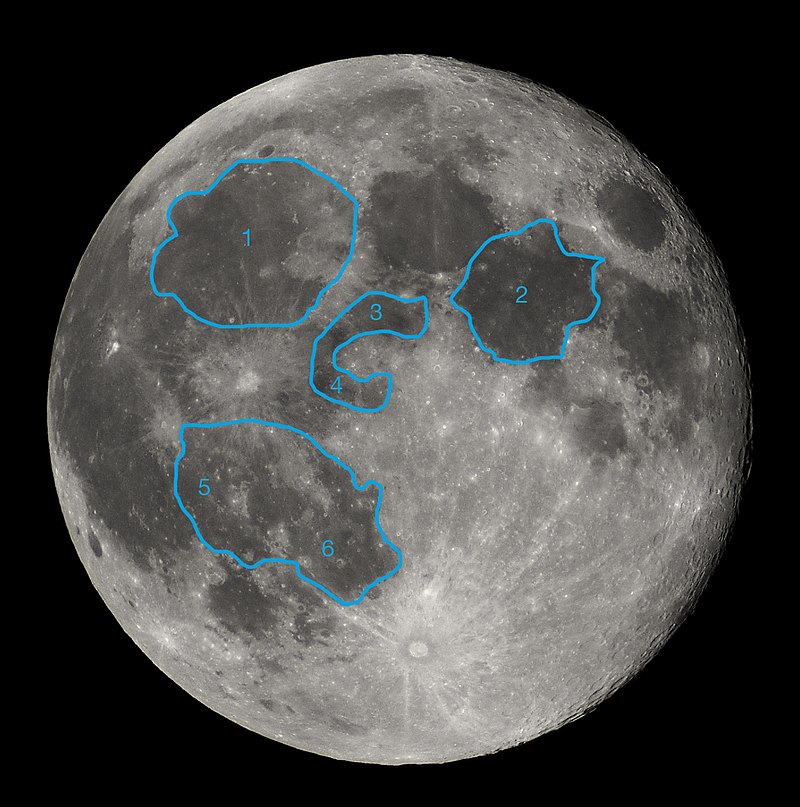
The Great White One - the Man in the Moon
Old Kingdom
In the Old Kingdom Pyramid Texts, the phallus of the ‘Bull of the Baboons Babi’ is described as the door-bolt of the sky. So Babi was the god who opened and closed the gate to the heavens. Later in the same text, we find the deceased king identifying himself with Babi and the moon calling himself, ‘Lord of the night sky.’
He is described as having red ears and purple hindquarters and living on the entrails of his enemies.
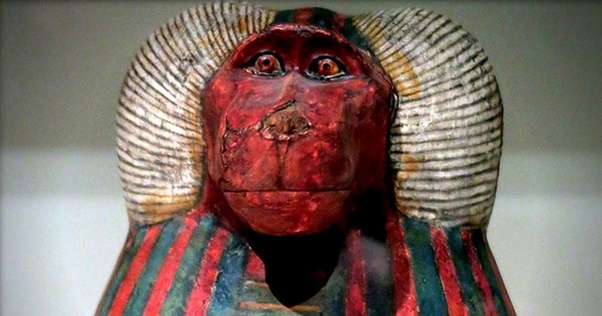
Image: Ancient Origins
Babi the Ferryman
The phallus of Babi, “which creates children and begets calves” is the mast of the netherworld ferry-boat in Coffin Text spell 397, and several other parts of the boat are identified with him in Spell 398. Babi’s body is the boat and his phallus the mast. His crew is the netherworld fishermen who catch the deceased with their nets. The god Mahaf, the one who looks backward, is the leader of the fishermen’ who threaten to trap the dead in their nets. It is therefore vital the deceased know the names of the parts of Babi’s boat. This secret knowledge appeases the bloodthirsty god and enables the lost soul to escape his fishermen’s evil clutches.
The Baboons of the West
The West in ancient Egypt was the place of the setting sun and of death, and the baboons of the west are connected with death. Thoth was the Foremost of the Westerners and Hathor the Lady of the West. In the Old Kingdom Pyramid Texts, the phallus of the ‘Bull of the Baboons Babi’ is described as the door-bolt of the sky. Images of squatting baboons appear in many tomb vignettes including in the famous tomb of Thutmoses III in the Valley of the Kings (tomb KV34). In Thutmoses III’s crypt, nine baboons appear at the beginning of the lower register of the Book of the Amduat or Hidden Chamber painted on its walls, they are the welcoming party for the sun as it enters the underworld. They are the baboons of the west who guard the western door to the akhet or horizon. Images of baboons and the mummified remains of baboons have been found in many New Kingdom tombs as for example in tomb KV 50 in the Valley of the Kings. Here the preserved bodies of a young baboon and a hunting dog were buried with the tomb owner either as pets or as sacred sacrifices to show the deceased the way to the afterlife.[3] As a devourer of the souls of the wicked, Babi resided near a lake of flame in the underworld.
Virility and Life
The baboon being an animal with a noticeably high sex drive and prominent genital markings connected Babi with male virility, particularly with the potency of the dead. This is an unusual concept for us today, but to the ancient Egyptians, it made sense, well to the men at least. Coffin Text Spell 304 promises the deceased that any woman who comes under this spell will make themselves available to the deceased for sex day or night.
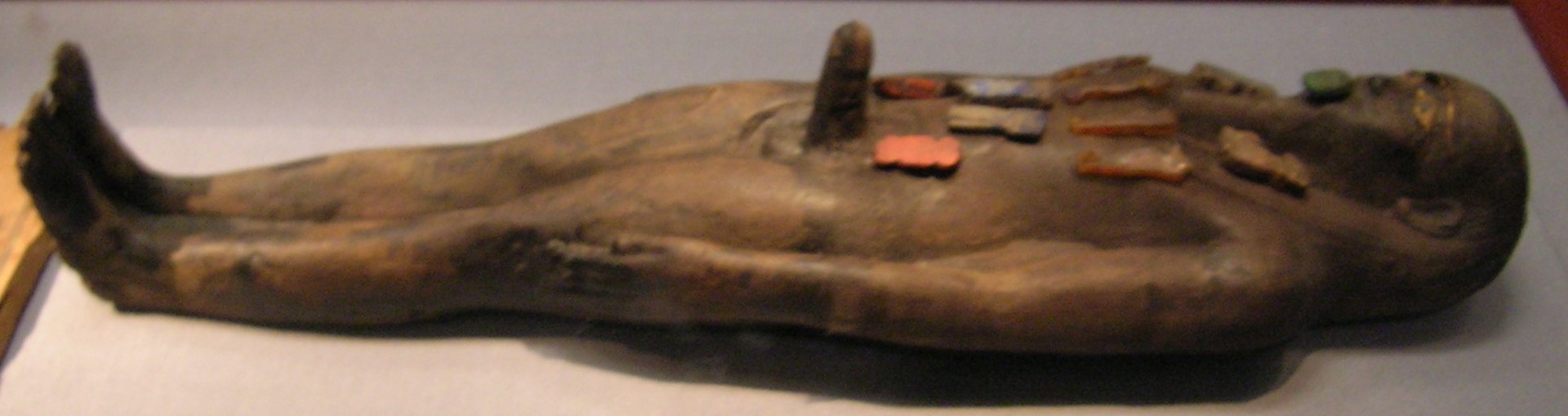
Egyptian statuette of Osiris with phallus and amulets. Wikipedia.
Such incantations were vital to the ancient Egyptian dead because the ability to perform the sex act after death was a sure sign that the dead were fully alive in the afterlife and also protected a man’s social status in the world of the dead, which was remarkably similar to the world of the living.
Later in the same text, we find the deceased king identifying himself with Babi and the moon calling himself, ‘Lord of the night sky.’ In Coffin Text 822, the dead king claims to be the phallus of Babi, and in CT 359 the king claims to be Babi, the oldest son of Osiris the first mythical king of Egypt.
So, right from the start, Babi or Thoth was associated with the dead king, guarding the entrance to the afterlife, the moon, and the mythical king Osiris.
University of Kent - Academia.edu
Sources:
Primates of Ancient Egypt: The Deification and Importance of Baboons and Monkeys—Part I
Baboons in Ancient Egyptian Art, Helena Pio, Stellenboch University.
[1] Egyptology at the Dawn of the Twenty-first Century: Proceedings of …, Volume 2 By INTERNATIONAL CONGRESS OF EGYPTOLOGISTS, Lyla Pinch Broc
[3] J. Murnane, William & Ikram, Salima & Dodson, Aidan. (2000). The Mummy in Ancient Egypt: Equipping the Dead for Eternity. Journal of the American Oriental Society. 120. 97. 10.2307/604889.
[4] Pyramid Text 1349.
Also available:
Questions in Egyptology 5: What was the punishment for Ancient Egyptians if caught tomb-robbing?
Questions in Egyptology No. 4: Did the Ancient Egyptians Have a Religion?
Questions in Egyptology No 3. Did the Egyptians Influence the Greeks?
Questions in Egyptology No. 2: How Long Did it Take to Mummify a Pharaoh?
Recent Comments