
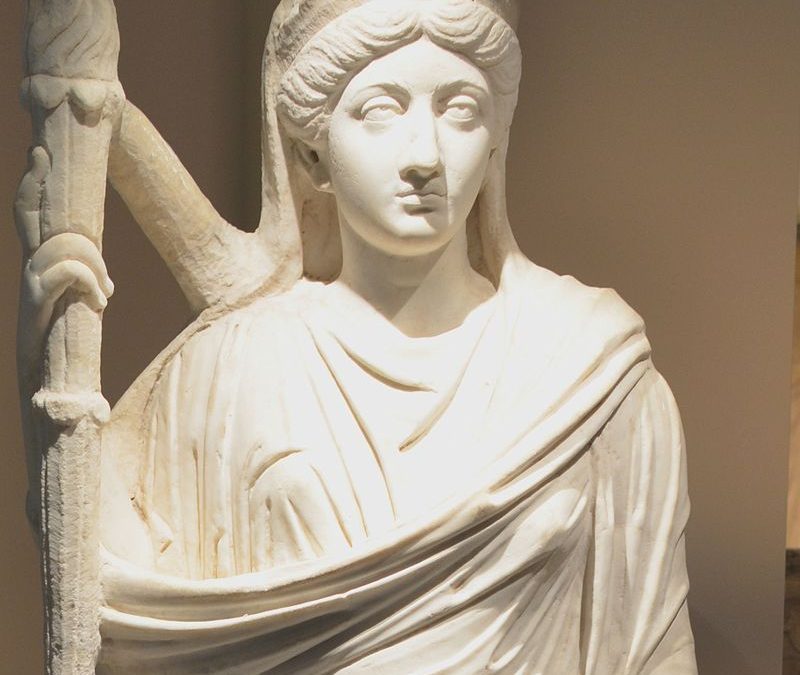
The Tragic Annia Aurelia Galeria Lucilla was born around 150 AD.
Her father was the Roman Emperor Marcus Aurelius, her mother the Empress Faustina the Younger. Lucilla was the elder sister of Emperor Commodus.
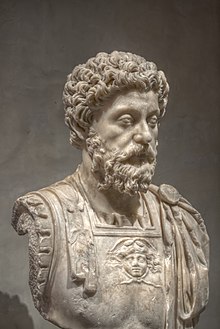
A marble bust of Marcus Aurelius at the Musée Saint-Raymond, Toulouse, France
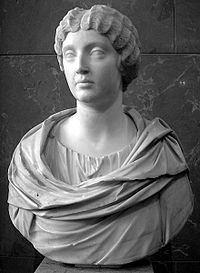
Faustina the Younger
A character loosely based on Lucilla was the love interest to Russell Crowe in the blockbuster film Gladiator in 2000. The film was directed by Ridley Scott.
In the film, the character based on Lucilla was played by the Danish actress Connie Nielsen. Crowe portrays the Hispano-Roman general Maximus Decimus Meridius, the man betrayed by Commodus.
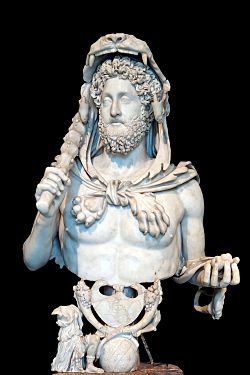
Bust of Commodus as Hercules, hence the lion skin, the club and the golden apples of the Hesperides. Part of a statuary group representing Commodus’ apotheosis.
Reduced to slavery, the character Maximus rises through the ranks of the gladiatorial arena to avenge the murders of his family. That, of course, was fiction. If you haven’t seen the film, try the clip below. The film’s great by the way.
Back to Real Life
Lucilla’s Marriages
The real Lucilla was married her father’s dashing co-ruler Lucius Verus in 164 CE when she was just 14.
Lucius Aurelius Verus (15 December 130 – 23 January 169) was Roman emperor from 161 until his death in 169, alongside his adoptive brother Marcus Aurelius. He was a member of the Nerva-Antonine dynasty. Verus’ succession together with Marcus Aurelius marked the first time that the Roman Empire was ruled by multiple emperors.
Her husband was 18 years her senior. On her wedding day, the groom would have led a procession to her family home, where she and her bridesmaids were waiting to meet him. She would be wearing a tunica recta — a white woven tunic — belted with an elaborate “Knot of Hercules.”
The marriage knot or knot of Hercules ( a reef knot, or square knot), originated as a religious symbol in ancient Egypt but is best known as a wedding symbol, incorporated into the protective girdles worn by brides, which were ceremonially untied by the new groom on the wedding night. This custom is the likely origin of the phrase “tying the knot.” According to Roman lore, the knot symbolized the legendary fertility of the God Hercules and the legendary power of Girdle of Diana captured from the Amazon Queen Hippolyta. Both are symbols of the moon, the ancient symbol of fertility.
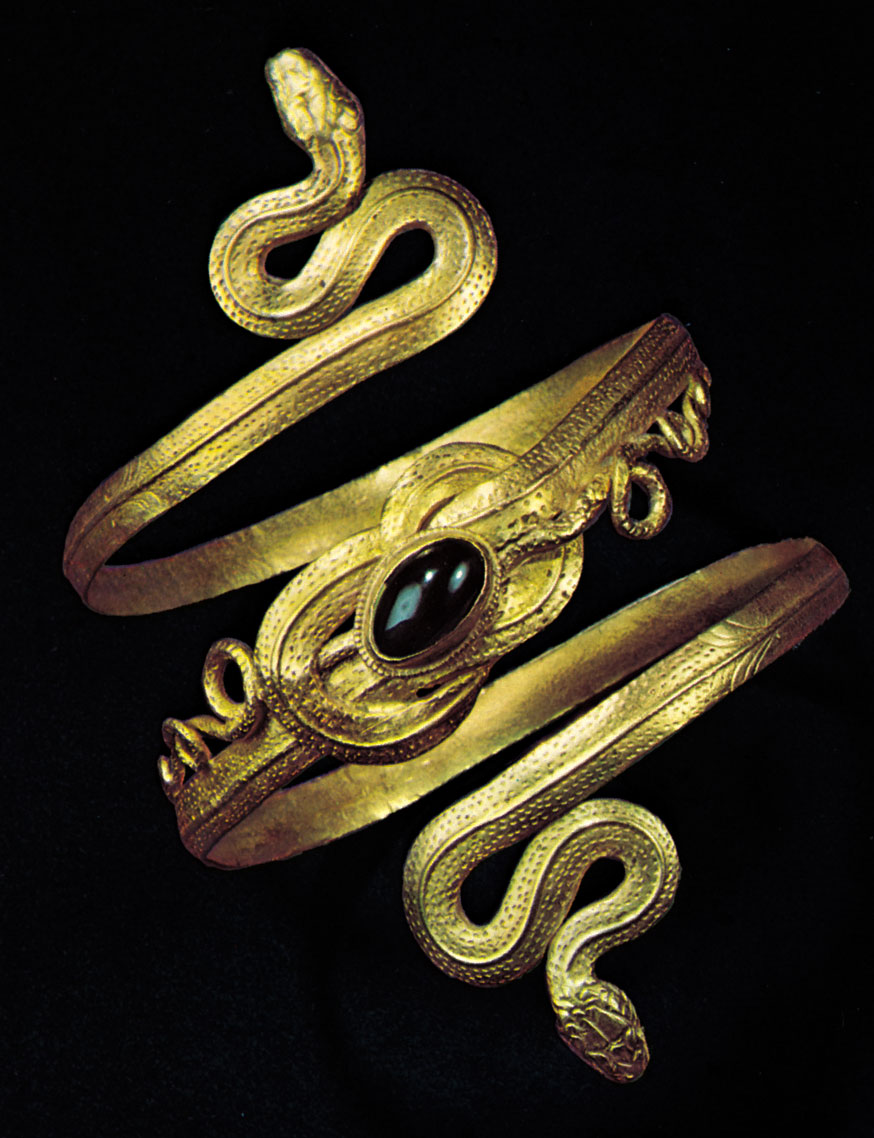
Greek gold spiral bracelet of two snakes whose tails are tied in a Hercules knot that is decorated with a garnet in a bezel setting; in the Schmuckmuseum Pforzheim, Germany.
Lucilla would have carefully arranged hair and would be wearing a red wedding veil, a flammeum and red shoes to show that she was full of life and for good luck. After the marriage contract was signed, there was an enormous feast. The day ended with a noisy procession to the couple’s new home where her husband would carry his new bride over the threshold. Upon marriage, Lucilla received the title of Augusta and became a Roman Empress.
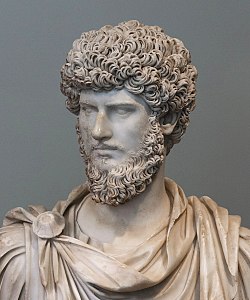
Bust of Lucius Verus at the Metropolitan Museum of ArtMarriage at such a young age was normal in the Roman world. Early marriages led to an astonishingly high death rate among the aristocracy. Even today a woman getting pregnant in her early teens runs higher risks than a more mature woman. Today’s teenage mums often suffer hyperemesis gravid arum or severe vomiting and dehydration, eating disorders, anaemia, bleeding, and pre-eclampsia during pregnancy. Most find giving birth and breastfeeding difficult due to their physical immaturity.
Lucilla gave Lucius three children: Aurelia Lucilla was born in 165 in Antioch, Lucilla Plautia and Lucius Verus. Aurelia and another boy died young.
After Lucius Verus died, in 169, her father arranged a second marriage for her. This time it was to Tiberius Claudius, a Syrian Roman general who distinguished himself during Rome’s wars against the Parthians and the Marcomanni. Quintianus was a hero amongst his men but he was at least twice Lucilla’s age. Nevertheless, they were married in 170 CE.
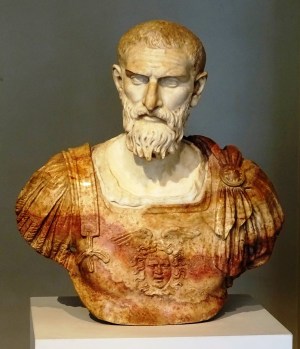
Tiberius Claudius Pompeianus (Museo Archeologico Nazionale di Venezia)
After the death of her mother Faustina her father honoured Lucilla as Emperess, an honour continued by her brother Commodus until he married. Lucilla Quintianus a son named Pompeianus.
Find out more: https://www.redbubble.com/people/greenlillies/shop?asc=u
Her Cowardly Brother
The Roman historian Cassius Dio wrote that Commodus ‘was not naturally wicked, but, on the contrary, was as guileless as any man that ever lived.’
Commodus was nineteen years old when his father died. He was the 10th of 14 children and the only male to survive. He was the anthesis of his father, Marcus because he was simple and cowardly and a slave to his companions.
Commodus was a very handsome man, with clear eyes and curly hair that was naturally blond. Dio claims he was left-handed and was very proud of this fact, but busts of Commodus as Hercules show him with a club in his right hand. Left-handedness was frowned upon in antiquity – as the word for left-handed, sinister, demonstrates – so it is possible this fact was obscured by the sculptors. Dio was in his twenties when Commodus became Emperor so his claim may be true.
Upon his accession, he had advice from his many guardians in the Senate, which he steadfastly ignored. He hated exertion of duty and craved the comfortable life of the city.’
Commodus’ behaviour became increasingly disturbing as the years went by. Dio reported that ‘many plots were formed by various people against Commodus, and he killed a great many, both men and women, some openly and some by means of poison, secretly, making away, in fact, with practically all those who had attained eminence during his father’s reign and his own, with the exception of Pompeianus, Pertinax and Victorinus; these men for some reason or other he did not kill. I state these and subsequent facts, not, as hitherto, on the authority of others’ reports, but from my own observation.’
When Sextus Condianus, a noble heard that Commodus had passed a sentence of death on him he was said to have drunk the blood of a hare, then mounted a horse and purposely fell from it vomiting blood. Feigning death, a ram was burnt on his funeral pyre and Sextus made his escape. The escapade did not stay a secret for very long. Soon Commodus was on his trail. Many were punished in his stead on account of their resemblance to him, and many, who helped him were also put to the sword. Many severed heads were brought to Rome, but whether any one of them was Sextus remains a mystery. Perhaps he really did get away.
Commodus gave himself up to chariot-racing and licentiousness and performed scarcely any of the duties pertaining to his office. He renamed Rome Commodiana. The legions became Commodian, and he renamed himself, Hercules. He re-styled Rome as the “Immortal, Fortunate Colony of the Whole Earth”. A 1000 pound gold statue was erected of him together with a bull and a cow - the bull no doubt representing Zeus/Jupiter and the cow Hera/Juno. Finally, all the months were named after him, so that they were enumerated as follows: Amazonius, Invictus, Felix, Pius,12 Lucius, Aelius, Aurelius, Commodus, Augustus, Herculeus, Romanus, Exsuperatorius.
Her brother’s increasing savagery and mental aberrations led Lucilla to hatch a plot to kill and replace him.
The Plot
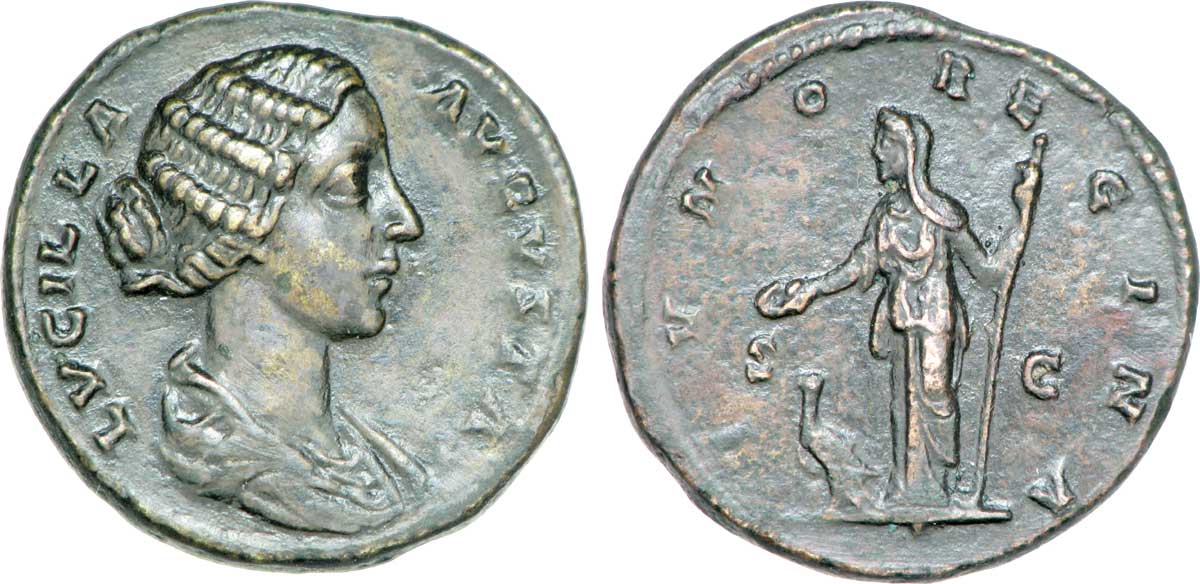
Dupondius depicting Lucilla Augusta (obverse) and Juno Regina with a peacock (reverse). The peacock was a symbol of immortality because the ancients believed that the peacock had flesh that did not decay after death.
Lucilla planned to put an end to Commodus with the help of her husband Pompeianus Quintianus, her nephew, her daughter, and two of her cousins; one of which was her lover Marcus Ummidius Quadratus Annianus.
The murder was to done by Quintianus who Lucilla loathed. If the plan failed and she did not become Empress then she would at least be free of Quintianus. The attack took place as Commodus was entering the hunting theatre. Standing in its narrow entrance passage Quintianus stood next to his nephew who thrust his sword at his brother-in-law. But, he missed his target, and Commodus survived unscathed.
Needless to say, the male members of the plot were immediately put to death. When Lucilla’s involvement in the plot came out she, her daughter and Commodus’ wife Crispina were imprisoned on the island of Capri. Crispina was not part of the plot, her crime was adultery. However, they did not escape death for long, Commodus had them all executed a year later, in 182 AD.
- In the 1964 film The Fall of the Roman Empire, Lucilla is played by Sophia Loren, her part in the film’s plot bearing only a very loose relation to Lucilla’s real life.
- In the 2016 six-part docuseries Roman Empire: Reign of Blood, Lucilla is played by Tai Berdinner-Blades.
Sources:
Epitome of Book LXXIII, Roman History by Cassius Dio, Vol. IX of the Loeb Classical Library edition, 1927
Wikipedia and Wikiwand
Julia Herdman writes historical fiction.
Buy eBook Now
 Sinclair is set in the London Borough of Southward, the Yorkshire town of Beverley and in Paris and Edinburgh in the late 1780s. Strong female leads include the widow Charlotte Leadam and the farmer’s daughter Lucy Leadam. Sinclair is a story of love, loss and redemption. Prodigal son James Sinclair is transformed by his experience of being shipwrecked on the way to India to make his fortune. Obstacles to love and happiness include ambition, conflict with a God, temptation and betrayal. Remorse brings restitution and recovery. Sinclair is an extraordinary book. It will immerse you in the world of 18th century London where the rich and the poor are treated with kindness and compassion by this passionate Scottish doctor and his widowed landlady, the owner of the apothecary shop in Tooley Street. Sinclair is filled with twists and tragedies, but it will leave you feeling good.
Recent Comments